Quick Answer
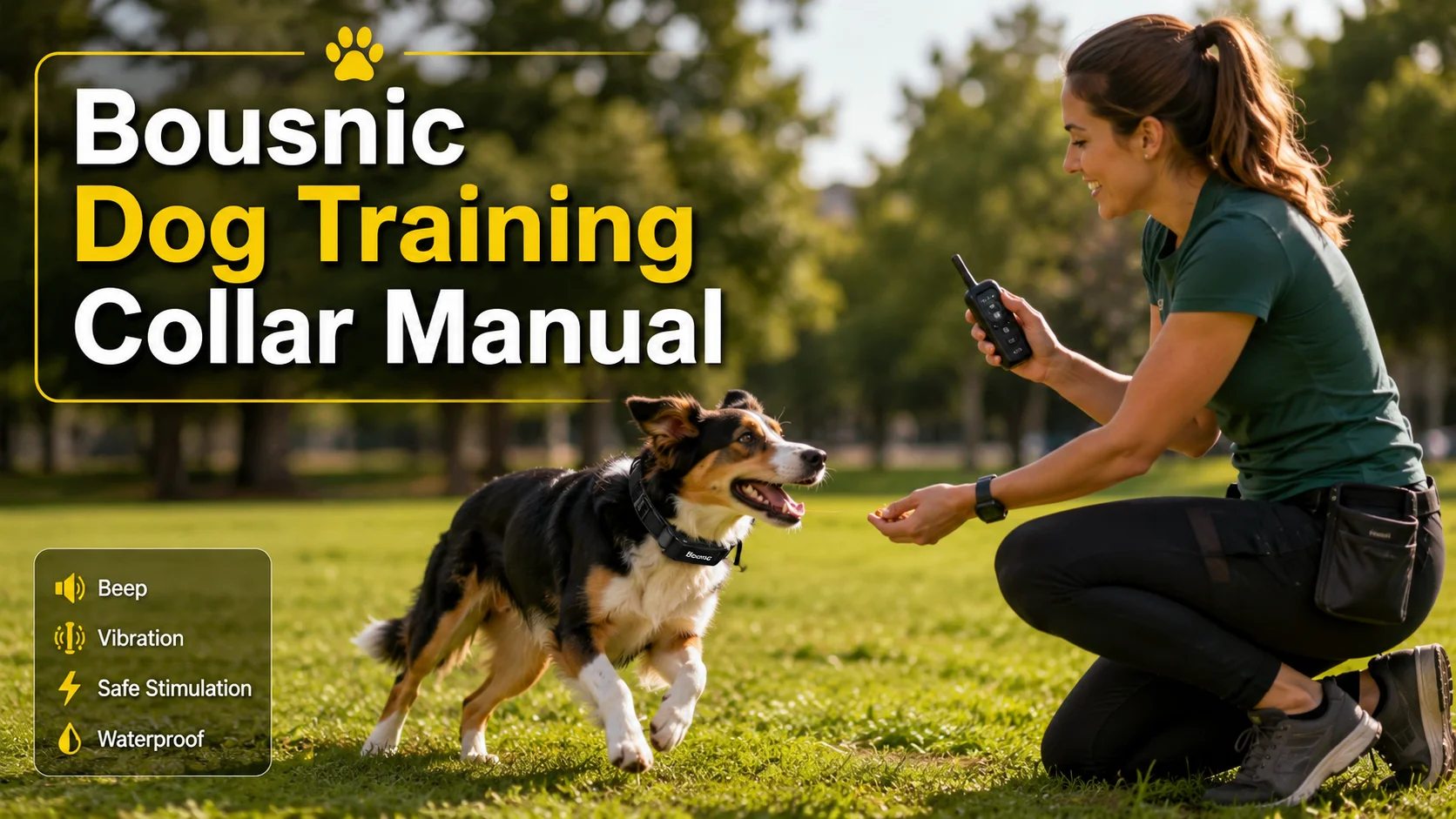
The Bousnic dog training collar manual helps owners learn how to set up, pair, and use a Bousnic training collar safely and effectively. While these collars offer beep, vibration, and stimulation functions, they should be used alongside positive reinforcement, treats, praise, and consistent training. Proper fit, correct timing, and humane use are essential for both safety and training success.
Introduction
Many dog owners reach a point where basic obedience training feels stalled. A dog may ignore recall commands, pull hard on the leash, chase wildlife, or become distracted outdoors. In these situations, some owners consider tools such as remote training collars.
Understanding the bousnic dog training collar manual is important before using any electronic training equipment. A training collar is not a shortcut, nor should it replace reward-based training. Instead, it is a tool that should support communication while teaching desired behaviors through consistency and positive reinforcement.
Whether you’re researching a Bousnic collar for the first time, trying to understand pairing instructions, or comparing it with alternatives such as the NVK, PATPET, Slopehill, Bebang, or Invirox collars, this guide explains what you need to know. We’ll cover features, benefits, limitations, safety recommendations, and situations where another training approach may be the better choice.
What the Bousnic Dog Training Collar Manual Is Used For
The primary purpose of a Bousnic training collar manual is to help owners correctly set up and operate the training system.
Most manuals cover:
- Initial collar charging
- Receiver and remote pairing
- Adjusting collar fit
- Beep functions
- Vibration settings
- Static stimulation levels
- Waterproof features
- Range information
- Troubleshooting
- Safety precautions
The manual is designed to reduce user errors and ensure that the collar is used as intended.
A properly used training collar may assist with:
- Recall training
- Off-leash reliability
- Excessive barking management
- Leash manners
- Boundary training
- Basic obedience reinforcement
However, training success depends far more on the dog’s learning experience than on the equipment itself.
Understanding the Features of a Bousnic Training Collar
Most versions of the Bousnic remote waterproof dog training collar include several communication options.
Beep Mode
The beep function provides an audible signal.
Many trainers prefer starting with beep training because it is non-physical and easy for dogs to understand through repetition.
For example:
- Say “Come.”
- Use the beep.
- Reward with treats when the dog returns.
Over time, some dogs learn to associate the sound with a known command.
Vibration Mode
Vibration creates a physical sensation without delivering electrical stimulation.
Many owners use vibration as a way to get a dog’s attention when distractions are high.
Vibration may be useful for:
- Outdoor recall practice
- Dogs that ignore verbal commands
- Reinforcing known behaviors
Static Stimulation Mode
This feature provides adjustable electronic stimulation.
Different models offer varying intensity levels.
The goal should never be punishment.
Instead, if used at all, stimulation should remain at the lowest effective level and only after the dog understands the desired behavior.
Waterproof Receiver
Many Bousnic models include waterproof receivers.
This can be useful for:
- Rainy weather walks
- Outdoor training
- Water-loving breeds
- Recall practice near lakes or beaches
Always verify the waterproof rating for your specific model before submerging the collar.
Long-Range Remote
Many remote training collars advertise ranges suitable for:
- Large yards
- Parks
- Rural properties
- Advanced recall practice
Real-world range often varies based on:
- Terrain
- Trees
- Buildings
- Weather conditions
- Signal interference
Pros and Cons of the Bousnic Dog Training Collar
Like any training equipment, Bousnic collars have advantages and limitations.
Pros
Multiple Communication Options
Many dogs respond effectively to beep or vibration functions alone.
This allows owners to avoid stronger correction methods.
Adjustable Levels
Most models allow customization based on a dog’s size, sensitivity, and temperament.
Useful for Long-Distance Communication
Remote systems can help maintain communication during recall training in open spaces.
Waterproof Design
Many models support outdoor activities and active lifestyles.
Relatively Easy to Learn
Most owners can understand basic operation after reading the manual and practicing with the controls.
Cons
Can Be Misused
Poor timing, excessive stimulation, or inconsistent training can confuse dogs.
Not Suitable for Every Dog
Some dogs are highly sensitive and may become fearful or stressed.
Does Not Teach New Behaviors
A collar cannot teach a command by itself.
Dogs still need structured training sessions and rewards.
May Create Dependence
Some owners become overly reliant on the collar instead of developing strong obedience skills.
Limited Effectiveness for Fear-Based Behaviors
Training collars are generally not recommended as a primary solution for the following:
- Fear
- Anxiety
- Resource guarding
- Aggression
- Severe reactivity
Safe Use Guidelines
Safety should always come before training goals.
Important Safety Note
If your dog shows aggression, fear-based behavior, anxiety, guarding, or severe reactivity, work with a qualified professional dog trainer, certified behavior consultant, or veterinary behaviorist before using any electronic training equipment.
Fit the Collar Correctly
A training collar should:
- Sit high on the neck
- Maintain contact without excessive pressure
- Not slide freely
- Not restrict breathing
Improper fit can lead to discomfort and inconsistent performance.
Avoid Long Wearing Times
Training collars should not remain on continuously throughout the day.
Extended wear may increase the risk of:
- Skin irritation
- Pressure sores
- Discomfort
Follow manufacturer recommendations for wear time.
Start With the Lowest Level
Begin with:
- Verbal command
- Reward opportunity
- Beep
- Vibration
Only consider stimulation if necessary and after proper training has been established.
Combine With Positive Reinforcement
Always reward desired behaviors using:
- Treats
- Praise
- Toys
- Play
- Affection
Dogs learn faster when they understand what earns rewards.
Watch for Stress Signals
Stop training and reassess if your dog shows the following:
- Cowering
- Tail tucked tightly
- Excessive panting
- Avoidance behavior
- Shaking
- Vocal distress
These signs may indicate confusion, fear, or excessive pressure.
Check the Neck Regularly
Inspect your dog’s neck for:
- Redness
- Hair loss
- Irritation
- Swelling
Any skin issues should be addressed immediately.
When a Bousnic Training Collar Is Not Suitable
A training collar is not the right solution for every dog or training challenge.
Dogs With Fear or Anxiety Issues
Fearful dogs often benefit more from:
- Desensitization
- Counterconditioning
- Confidence-building exercises
- Reward-based training
Adding aversive pressure may worsen emotional responses.
Young Puppies
Very young puppies should focus on:
- Socialization
- Crate training
- Potty training
- Basic obedience
- Positive reinforcement
Training collars are generally not necessary during early puppy development.
Dogs With Medical Concerns
If your dog suddenly develops behavior problems, consult a veterinarian.
Changes in behavior can sometimes be linked to:
- Pain
- Injury
- Illness
- Hearing loss
- Vision changes
- Age-related conditions
Owners New to Dog Training
Many training challenges can be resolved using:
- Clicker training
- Treat-based rewards
- Long-line recall practice
- Harness training
- Consistent routines
Learning these foundations often produces excellent results without electronic equipment.
Situations Involving Aggression
Aggression cases require professional assessment.
Electronic collars should never be considered a simple fix for:
- Biting
- Dog aggression
- Human-directed aggression
- Resource guarding
- Severe reactivity
Improper use can increase risk and make behavior problems more difficult to address
Step-by-Step Guide to Using a Bousnic Dog Training Collar
Before beginning any training session, read your specific model’s manual carefully. Features and button layouts may vary slightly between models.
Remember that the goal is communication and reinforcement, not punishment.
Step 1: Fully Charge the Collar and Remote
Most Bousnic collars require charging before first use.
Before training:
- Charge the receiver collar completely.
- Charge the remote transmitter.
- Verify that battery indicators show sufficient power.
- Test basic functions before placing the collar on your dog.
A low battery can cause inconsistent performance and confusion during training.
Step 2: Pair the Collar With the Remote
The exact pairing procedure differs by model, but the general process is similar.
Bousnic Dog Training Collar Pairing Process
- Turn on the remote.
- Turn on the receiver collar.
- Enter pairing mode according to the manual.
- Select the desired channel on the remote.
- Press the pairing button or designated key combination.
- Wait for confirmation signals such as flashing lights or vibration.
- Test beep mode to confirm connection.
If pairing fails:
- Recharge both devices.
- Move closer together.
- Restart both units.
- Repeat the pairing procedure.
Most pairing issues are caused by low battery levels or skipped setup steps.
Step 3: Fit the Collar Correctly
Proper fit is critical.
The receiver should:
- Sit high on the dog’s neck.
- Make proper contact with the skin.
- Remain secure without excessive tightness.
- Allow comfortable movement.
You should be able to slide one or two fingers between the collar and the dog’s neck.
A loose collar may not work consistently. An overly tight collar can cause discomfort.
Step 4: Introduce the Collar Without Training Pressure
Before using any correction feature:
- Allow your dog to wear the collar during normal activities.
- Provide treats and praise.
- Play games.
- Take short walks.
This helps prevent the collar from becoming associated with stress.
Many professional trainers recommend several days of simple collar conditioning before active training begins.
Step 5: Start With Known Commands
Never use a training collar to teach a brand-new behavior.
Instead, reinforce commands your dog already understands, such as the following:
- Sit
- Down
- Come
- Stay
- Leave it
- Heel
The collar should support communication, not replace learning.
Step 6: Begin With Beep Mode
Beep mode is often the best starting point.
Example recall session:
- Say “Come.”
- Press the beep button.
- Reward immediately when your dog returns.
- Repeat consistently.
Over time, many dogs learn that the beep predicts a known command.
Step 7: Use Vibration if Needed
If your dog becomes distracted outdoors:
- Give the verbal command.
- Use vibration.
- Reward compliance immediately.
Vibration often serves as an attention-getter rather than a correction.
Many owners find this feature sufficient for daily training.
Step 8: Focus on Rewards
Successful training depends on rewards.
Keep high-value treats available:
- Chicken
- Turkey
- Cheese
- Commercial training treats
Pair correct responses with:
- Treats
- Praise
- Play
- Access to favorite activities
Dogs repeat behaviors that produce positive outcomes.
Training a Dog With an E-Collar Responsibly
Electronic collars remain one of the most debated training tools.
Some trainers use them carefully within structured programs, while others prefer entirely reward-based methods.
Regardless of your approach, humane use matters.
Start With Foundation Training First
Before introducing any training collar, your dog should already understand:
- Recall
- Sit
- Stay
- Down
- Loose-leash walking
Training tools should reinforce communication, not compensate for missing training skills.
Use the Lowest Effective Setting
If stimulation is used:
- Start at the lowest possible level.
- Observe your dog’s response.
- Increase only if absolutely necessary.
The goal is awareness, not discomfort.
Avoid Emotional Training Moments
Never use a collar when:
- You are angry.
- You feel frustrated.
- The dog is fearful.
- The dog is panicking.
Training should remain calm and predictable.
Pair Corrections With Guidance
A dog should always know how to succeed.
Instead of simply interrupting behavior:
- Give a clear command.
- Guide the correct response.
- Reward success immediately.
This creates learning rather than confusion.
Sample Bousnic Training Routine
Many owners benefit from a structured routine.
Daily 10-Minute Recall Session
Minutes 1-2
Warm-up commands:
- Sit
- Down
- Stay
Reward generously.
Minutes 3-5
Short-distance recall:
- Call your dog.
- Use beep if needed.
- Reward every successful response.
Minutes 6-8
Moderate distractions:
- Backyard practice.
- Family members present.
- Toys nearby.
Continue rewarding correct choices.
Minutes 9-10
End with a fun activity:
- Tug game
- Fetch
- Praise session
Dogs remember the emotional ending of training sessions.
Keeping sessions positive helps maintain enthusiasm.
Equipment Comparison: Training Collar vs Other Training Tools
Many owners automatically assume an e-collar is the best solution. In reality, other tools may achieve similar or better results depending on the dog.
Training Collar
Best for:
- Long-distance communication
- Advanced recall
- Rural properties
- Off-leash training
Limitations:
- Requires proper education
- Risk of misuse
- Not ideal for fearful dogs
Clicker Training
Best for:
- Teaching new behaviors
- Precision training
- Puppies
- Positive reinforcement programs
Advantages:
- Clear communication
- Low risk
- Strong learning benefits
Harness
Best for:
- Leash manners
- Pulling prevention
- Everyday walks
Advantages:
- Comfortable
- Humane
- Beginner-friendly
Standard Leash
Best for:
- Basic obedience
- Recall foundations
- Public outings
Advantages:
- Simple
- Affordable
- Effective when used consistently
Long Training Line
Best for:
- Recall practice
- Outdoor training
- Building reliability
Advantages:
- More control
- Less risk than off-leash training
- Excellent alternative to electronic tools
Training Pads
Best for:
- Puppy potty training
- Apartment living
- Temporary indoor toileting needs
Not intended for obedience training but useful during early development.
Best Alternatives to a Bousnic Training Collar
Not every owner wants an electronic collar. Others simply want to compare available options.
Below are common alternatives.
Positive Reinforcement Training Programs
Many dogs achieve excellent results through:
- Treat rewards
- Praise
- Clicker training
- Consistency
This remains the preferred starting point for most pet dogs.
Long-Line Recall Training
A long training leash provides the following:
- Distance control
- Safety
- Reliable practice opportunities
Many trainers use long lines before considering remote collars.
Front-Clip Harnesses
Helpful for:
- Pulling dogs
- Leash training
- Urban walking
These harnesses provide additional control without electronic stimulation.
Whistle Recall Training
A whistle creates a consistent recall signal.
Benefits include:
- Long-distance communication
- Clear sound
- Consistency among family members
Many sporting dog owners rely heavily on whistle recall training.
Professional Training Programs
A qualified trainer can often solve issues involving:
- Recall failure
- Jumping
- Pulling
- Excessive barking
- Impulse control
Professional guidance frequently reduces the need for electronic equipment.
Comparing Bousnic With Other Popular Training Collar Brands
Owners researching the Bousnic dog training collar manual often compare it with similar brands.
NVK Dog Training Collar
The NVK dog training collar manual covers many of the same functions:
- Beep
- Vibration
- Adjustable stimulation
- Remote operation
Some models focus on beginner-friendly controls.
PATPET Dog Training Collar
The PATPET dog training collar manual typically emphasizes the following:
- Waterproof designs
- Adjustable training modes
- Multi-dog support
PATPET collars are often considered suitable for owners managing multiple dogs.
Slopehill Dog Training Collar
The Slopehill dog training collar manual generally includes the following:
- Remote operation
- Adjustable settings
- Obedience support tools
Users often compare range and ease of use against other brands.
Bebang Dog Training Collar
The Bebang dog training collar manual usually focuses on the following:
- Basic obedience applications
- Recall support
- Training versatility
Invirox Dog Training Collar
The Invirox dog training collar manual commonly highlights the following:
- Safety-focused design
- Durable construction
- Outdoor training capability
The best choice depends more on your training goals, experience level, and dog’s temperament than on brand name alone.
Common Mistakes to Avoid
Many training setbacks happen because of user error rather than equipment failure.
Using the Collar Before Training Basics
Dogs should understand commands before the collar is introduced.
Skipping foundation work creates confusion.
Relying on the Collar Too Much
The collar should support communication.
It should not become the only reason your dog obeys.
Training Too Long
Keep sessions short.
Most dogs learn best through:
- 5 to 15-minute sessions
- Frequent breaks
- Consistent repetition
Ignoring Positive Reinforcement
Rewards remain one of the strongest learning tools available.
A collar should never replace praise and treats.
Poor Timing
Rewards and signals must occur at the correct moment.
Late responses make learning difficult.
Using High Levels Too Quickly
Starting with excessive stimulation can create stress and reduce trust.
Always begin conservatively.
Failing to Practice in Different Locations
Dogs do not automatically generalize skills.
Practice in:
- The house
- Backyard
- Quiet parks
- Busier environments
Gradually increase distractions.
Signs Your Dog Is Making Progress
Training results rarely happen overnight. Most dogs improve gradually through repetition, consistency, and clear communication.
When using any training method, including a Bousnic training collar, look for these positive signs of progress.
Faster Response to Commands
One of the earliest improvements is quicker compliance.
For example, your dog may begin responding to the following:
- Come
- Sit
- Stay
- Leave it
- Heel
with fewer reminders.
This shows the dog understands what is being asked and is beginning to form reliable habits.
Improved Recall Around Distractions
A dog that once ignored recall commands at the park may start returning consistently even when distractions are present.
Common distractions include:
- Other dogs
- People
- Wildlife
- Toys
- Interesting smells
Reliable recall is often one of the most valuable obedience skills a dog can learn.
Better Leash Manners
Progress often appears during walks.
Signs include:
- Less pulling
- More attention to the handler
- Better impulse control
- Improved focus near distractions
Reduced Need for Training Signals
As training advances, many dogs require fewer reminders.
You may notice:
- Less dependence on vibration cues
- Better response to verbal commands alone
- Greater consistency in familiar situations
This is a strong indicator that learning is taking place.
Increased Confidence
A well-trained dog is often more confident because expectations are clear.
You may observe:
- Better focus
- Reduced frustration
- More engagement during training sessions
- Faster learning of new skills
Consistent Behavior Across Locations
True obedience develops when the dog performs reliably in multiple environments.
Practice should eventually include:
- Home
- Backyard
- Neighborhood walks
- Parks
- Pet-friendly public areas
A dog that listens in various settings is making meaningful progress.
When to Seek Professional Help
Training collars are not appropriate for every dog or every behavioral challenge.
Professional guidance can prevent mistakes and improve results.
Aggression Toward People or Dogs
Seek professional assistance immediately if your dog displays:
- Biting
- Lunging
- Snapping
- Threatening behavior
- Resource guarding
These issues require a behavior assessment rather than simple obedience training.
A qualified trainer or veterinary behaviorist can create a safe behavior modification plan.
Fear or Anxiety Problems
Electronic training tools are generally not recommended as a primary solution for:
- Fearfulness
- Noise sensitivity
- Separation anxiety
- Severe stress responses
A professional can help identify the underlying cause and recommend humane treatment strategies.
Lack of Progress After Several Weeks
If your dog shows little improvement after several weeks of consistent training, consider consulting an experienced trainer.
Possible reasons include the following:
- Timing mistakes
- Inconsistent reinforcement
- Insufficient motivation
- Medical concerns
- Training plan issues
An outside perspective can often identify problems quickly.
Sudden Behavior Changes
Contact your veterinarian if your dog suddenly:
- Stops responding to commands
- Becomes aggressive
- Shows unusual fear
- Appears uncomfortable
- Develops new behavior problems
Pain, illness, hearing loss, or other medical issues can affect training performance.
First-Time E-Collar Users
Owners who have never used a remote training collar may benefit from professional instruction before beginning.
Learning proper timing and technique can significantly improve training outcomes and reduce mistakes.
Conclusion
Understanding the Bousnic dog training collar manual is essential before using any remote training collar. While Bousnic collars can assist with recall, obedience, and communication at a distance, they are not a replacement for consistent training, patience, and positive reinforcement.
The most successful dog training programs focus on teaching dogs what to do rather than simply correcting mistakes. Treats, praise, clicker training, leash work, and structured practice sessions remain the foundation of good behavior.
If you choose to use a Bousnic collar, prioritize safety, proper fit, low-level settings, and humane handling. For fear, anxiety, aggression, or complex behavior issues, seek guidance from a qualified professional trainer or veterinary behaviorist.
With realistic expectations and reward-based methods, most dogs can develop reliable obedience and stronger communication with their owners.
FAQs
Q1. Is the Bousnic dog training collar safe?
When used correctly according to the bousnic dog training collar manual, many owners find it safe for obedience training. Proper fit, limited wear time, and reward-based training are essential for safety.
Q2. How do I pair a Bousnic dog training collar?
Most models require turning on both the receiver and remote, entering pairing mode, selecting a channel, and following the pairing instructions in the manual. Exact steps vary by model.
Q3. Can I train a dog using only the beep function?
Yes. Many dogs learn effectively through verbal commands combined with the beep feature and positive reinforcement. Some owners rarely need vibration or stimulation modes.
Q4. What age should a dog be before using a training collar?
Dogs should first have a solid foundation in basic obedience. Very young puppies generally benefit more from socialization, crate training, potty training, and reward-based learning.
Q5. Is a Bousnic collar better than a harness?
They serve different purposes. A harness is typically used for walking and leash training, while a remote training collar is designed for communication during obedience and recall training.
Q6. What are the best alternatives to a Bousnic training collar?
Popular alternatives include clicker training, long-line recall training, whistle recall training, front-clip harnesses, and structured positive reinforcement programs.
Q7. Can training collars help with recall?
Some owners use them as part of recall training programs. However, reliable recall is built primarily through repetition, rewards, consistency, and gradual exposure to distractions.
Q8. Should I use a training collar for aggressive behavior?
No. Aggression cases should be evaluated by a qualified trainer, certified behavior consultant, or veterinary behaviorist. A training collar is not a substitute for professional behavior modification.