Quick Note
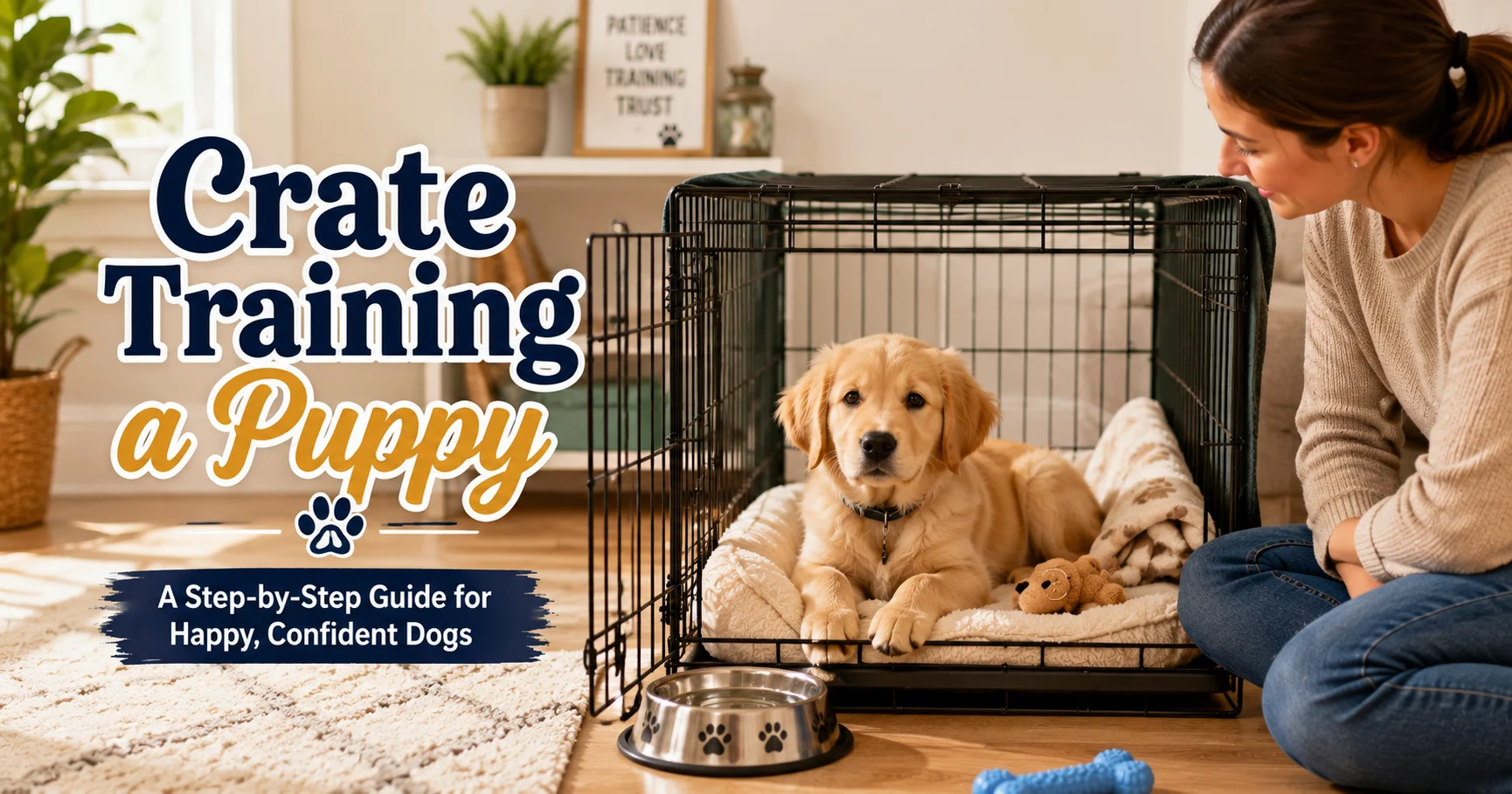
Crate training a puppy works best when you start slowly, keep sessions short, and make the crate feel safe and rewarding. Begin with a comfortable crate, soft bedding, water when appropriate, and small treats. Use praise and rewards every time your puppy enters the crate calmly. Stay consistent with potty breaks, bedtime routines, and feeding schedules. Never use the crate for punishment, and avoid forcing your puppy inside.
Introduction
Bringing home a new puppy feels exciting, but the first few weeks often come with stress, sleepless nights, potty accidents, whining, chewing, and confusion about routines. Many new dog owners struggle with puppy crying at night, indoor accidents, destructive chewing, and puppies that follow them everywhere. Without structure, puppies can feel overwhelmed in a new environment.
That is why crate training a puppy helps so many families create calm routines from the start. A crate gives your puppy a secure resting place, supports puppy potty training, helps prevent dangerous chewing, and teaches healthy independence. When done correctly, crate training also helps puppies settle faster at bedtime and during quiet hours.
Many people worry that crate training feels cruel or restrictive. In reality, most puppies learn to enjoy their crate when owners introduce it slowly with rewards, comfort, and patience. The goal is not confinement. The goal is safety, structure, rest, and confidence.
This guide covers everything beginners need to know about crate training a puppy. You will learn how to choose the right crate, how to start training step by step, how to handle nighttime whining, common mistakes to avoid, puppy schedules by age, potty routines, troubleshooting tips, safety advice, and what to do if crate training is not working.
Why Crate Training Helps Puppies
A properly used crate gives puppies a calm and predictable place to rest. Puppies naturally look for quiet sleeping areas, especially when they feel tired or overstimulated.
Crate training supports:
- Puppy potty training
- Safer sleep routines
- Prevention of chewing accidents
- Travel safety
- Easier vet recovery if needed later
- Better independence
- Reduced stress during alone time
- Structured daily routines
A crate also protects your puppy from household dangers when you cannot supervise closely. Young puppies often chew cords, swallow unsafe objects, or have accidents when left loose too early.
Choosing the Right Crate for Your Puppy
The crate should feel comfortable and secure, not too large or too cramped.
Best Crate Size
Your puppy should be able to:
- Stand comfortably
- Turn around easily
- Lie down fully
- Stretch naturally
A crate that feels too large may encourage indoor potty accidents because puppies might sleep on one side and use the other side as a bathroom.
Many adjustable crates include divider panels. These panels help you create the correct size while your puppy grows.
Common Crate Types
| Crate Type | Best For | Things to Know |
|---|---|---|
| Wire crate | Home training and airflow | Often includes divider panels |
| Plastic crate | Travel and nervous puppies | Feels enclosed and cozy |
| Soft-sided crate | Calm older puppies | Not ideal for heavy chewers |
| Furniture style crate | Home appearance | Usually costs more |
What to Put Inside the Crate
| Supply | Why it helps |
| Soft, washable bedding | Helps puppies relax |
| Safe chew toy | Reduces boredom and chewing |
| Small treats | Builds positive associations |
| Crate cover if needed | Helps some puppies settle |
| Water bowl for longer periods | Prevents dehydration |
Avoid unsafe items like stuffed toys with loose parts, thick ropes for aggressive chewers, or bedding that your puppy destroys and swallows.
What You Need Before You Start
Preparation makes puppy crate training much easier.
Helpful Puppy Training Supplies
| Supply | Why it helps |
| Small soft treats | Quick rewards during training |
| Puppy crate | Creates a safe sleeping space |
| Puppy pen | Helps manage freedom safely |
| Enzyme cleaner | Removes potty accident smells |
| Lightweight leash | Helps guide calm behavior |
| Interactive chew toy | Keeps puppies occupied |
| Feeding bowls | Supports routine feeding times |
| Puppy blanket | Adds comfort and familiar scent |
Choose the Best Crate Location
Place the crate in a quiet area where the puppy still feels included.
Good crate locations include the following:
- Living room corners
- Bedroom areas at night
- Calm family spaces
Avoid placing the crate:
- In direct sunlight
- Near loud televisions
- Beside heating vents
- In isolated rooms far from family
- In cold garages or unsafe outdoor areas
Step-by-Step Guide to Crate Training a Puppy
Crate training works best in small stages. Rushing the process often creates fear and resistance.
Step 1: Let Your Puppy Explore the Crate
Leave the crate door open and allow your puppy to investigate freely.
You can:
- Toss treats near the entrance
- Place toys inside
- Feed meals beside the crate
- Praise calm curiosity
Do not push or force the puppy inside.
Some puppies enter immediately. Others need several days to feel comfortable.
Step 2: Feed Meals Near the Crate
Food builds positive associations quickly.
Start by feeding meals near the crate entrance. Slowly move the bowl farther inside over several meals.
Once your puppy eats comfortably inside the crate, close the door briefly during meals and open it calmly afterward.
Step 3: Practice Short Crate Sessions
After your puppy enters comfortably, begin short crate sessions.
Early Practice Routine
- Ask the puppy to enter the crate
- Reward with a treat
- Close the door for a few seconds
- Stay nearby
- Open the door calmly before whining starts
- Repeat several times daily
Keep sessions very short at first.
Puppies learn faster through repeated positive experiences.
Step 4: Increase Time Slowly
Slow progress helps puppies stay calm.
Gradually increase crate time while:
- Sitting nearby
- Walking around the room
- Leaving briefly and returning
Avoid suddenly disappearing for long periods.
Step 5: Begin Nighttime Crate Training
Nighttime often feels hardest for new puppy owners.
Young puppies may cry because they:
- Need potty breaks
- Feel lonely
- Feel confused in a new home
- Have not learned routines yet
Place the crate near your bed during the first weeks if possible. Your presence helps many puppies settle faster.
Puppy Crate Training Schedule by Age
8 to 10 Weeks
- Potty breaks every 2 to 3 hours
- Very short crate sessions
- Frequent naps
- Gentle reward-based training
- Nighttime potty trips likely needed
10 to 12 Weeks
- Slightly longer crate sessions
- More predictable potty routine
- Begin short alone-time practice
- Continue daytime supervision
3 to 4 Months
- Better bladder control
- Longer naps in crate
- More structured daily routine
- Basic puppy commands improving
5 to 6 Months
- Longer calm crate periods possible
- Improved self-control
- Better overnight sleep
- Continue exercise and mental stimulation
Every puppy develops differently. Small breeds often need more frequent potty breaks than larger breeds.
Sample Daily Puppy Crate Training Routine
| Time | Activity |
| 6:30 AM | Potty break outside |
| 7:00 AM | Breakfast and water |
| 7:30 AM | Short play and training |
| 8:00 AM | Crate nap |
| 10:00 AM | Potty break |
| 10:15 AM | Gentle play and socialization |
| 11:00 AM | Crate rest |
| 1:00 PM | Lunch and potty break |
| 1:30 PM | Short training session |
| 2:00 PM | Crate nap |
| 4:00 PM | Potty break and exercise |
| 5:30 PM | Dinner |
| 6:00 PM | Calm family time |
| 8:00 PM | Final play and potty break |
| 9:00 PM | Bedtime crate routine |
How Long Can a Puppy Stay in a Crate?
Puppies cannot hold their bladder for long periods.
General guidelines:
| Puppy Age | Approximate Maximum Time |
| 8 to 10 weeks | 1 to 2 hours |
| 11 to 14 weeks | 2 to 3 hours |
| 15 to 16 weeks | 3 to 4 hours |
| 5 to 6 months | 4 to 5 hours |
These are general estimates. Puppies still need regular exercise, social interaction, and supervision.
Avoid leaving puppies crated too long during the day.
Signs Your Puppy Needs to Potty
Learning potty signals helps prevent accidents.
Common signs include:
- Sniffing the floor
- Circling repeatedly
- Suddenly wandering away
- Whining near doors
- Restlessness after naps
- Squatting
- Stopping play suddenly
Take your puppy outside immediately when you notice these signs.
How Crate Training Supports Puppy Potty Training
Puppies naturally avoid soiling their sleeping area when possible.
Crate training helps create:
- More predictable potty habits
- Better supervision
- Faster routine learning
- Fewer hidden accidents
However, owners still need consistent potty schedules.
Best Potty Training Tips
- Take puppies outside after waking up
- Take them out after meals
- Use the same potty area
- Reward immediately after potty success
- Supervise closely indoors
- Clean accidents with enzyme cleaners
What to Do After Potty Accidents
Accidents happen during puppy training.
Stay calm and focus on prevention.
After an Accident
- Interrupt calmly if you catch it early
- Take the puppy outside immediately
- Reward outdoor potty success
- Clean thoroughly with enzyme cleaner
- Review supervision and schedule
Do not:
- Rub the puppy’s nose in accidents
- Yell or punish
- Chase the puppy
- Crate the puppy angrily
Punishment often creates fear and hidden accidents.
How to Handle Puppy Crying in the Crate
Some whining is normal during adjustment.
Your job is to determine why the puppy cries.
Common Reasons Puppies Cry
| Reason | What to do |
| Needs potty break | Take outside calmly |
| Feels lonely | Stay nearby briefly |
| Too much energy | Add exercise before crate time |
| Overtired | Keep environment calm |
| Wants attention | Avoid rewarding nonstop barking |
| The crate was introduced too fast | Return to shorter sessions |
Nighttime Crate Training Tips
- Use a bedtime potty break
- Keep lights dim and calm
- Avoid exciting play before bed
- Use soft background noise if helpful
- Keep a predictable bedtime schedule
Most puppies improve with consistency.
Puppy Biting and Chewing During Crate Training
Puppies explore the world with their mouths.
Biting and chewing often increase because of the following:
- Teething discomfort
- Tiredness
- Excitement
- Lack of sleep
- Overstimulation
- Boredom
Safe Ways to Redirect Chewing
- Offer safe chew toys
- Freeze puppy-safe teething toys
- Redirect calmly
- Reward calm chewing habits
- Provide naps before overtired behavior starts
Avoid rough play that encourages hard biting.
Safe Socialization During Crate Training
Crate training should support confidence, not isolation.
Puppies still need:
- Gentle handling
- Calm visitors
- Positive sounds and sights
- Short car rides
- Controlled exposure to new environments
Avoid unsafe dog areas until your vet confirms appropriate vaccine protection.
Never force frightened puppies into stressful greetings.
Common Crate Training Mistakes
Many crate training problems happen because owners move too fast.
Mistakes to Avoid
| Mistake | Why it causes problems |
| Using crate as punishment | Creates fear and resistance |
| Leaving puppy too long | Causes stress and accidents |
| Skipping potty breaks | Increases indoor accidents |
| Moving too quickly | Creates anxiety |
| Giving too much freedom too soon | Leads to setbacks |
| Ignoring exercise needs | Causes restless behavior |
| Letting puppy out during demand barking | Encourages barking habits |
Do’s and Don’ts of Crate Training a Puppy
| Do | Don’t |
| Reward calm crate behavior | Force puppy inside |
| Keep sessions short at first | Leave puppy alone too long |
| Follow a potty schedule | Punish accidents |
| Use safe chew toys | Use unsafe bedding |
| Create bedtime routines | Yell at whining |
| Increase crate time slowly | Rush training progress |
| Supervise indoor freedom | Expect instant results |
How to Make the Crate More Comfortable
Some puppies settle faster with extra comfort.
Helpful Comfort Ideas
- Add soft bedding
- Use calming routines
- Cover part of the crate if helpful
- Place familiar scented blankets nearby
- Keep room temperature comfortable
- Use safe chew toys during quiet time
Watch for chewing or destruction that could create choking risks.
Should the Puppy Sleep in the Bedroom?
Many trainers recommend keeping the crate near your bed during early weeks.
Benefits include:
- Easier nighttime potty trips
- Reduced loneliness
- Faster response to distress
- Better sleep for many puppies
Once the puppy adjusts, some owners slowly move the crate farther away if desired.
How to Crate Train a Puppy While Working
Busy schedules make puppy training harder but still possible.
Young puppies need frequent bathroom breaks and social interaction.
Helpful Options
- Ask family members for help
- Hire a pet sitter or dog walker
- Use puppy-safe exercise pens
- Schedule midday potty breaks
- Provide safe enrichment toys
Avoid leaving young puppies crated all day.
What to Do if Crate Training Is Not Working
Some puppies need slower progress or extra support.
Signs Training Needs Adjustment
- Panic barking
- Excessive drooling
- Attempting escape constantly
- Refusing food in crate
- Severe stress behaviors
- Repeated accidents despite schedule
How to Improve Crate Training
- Shorten crate sessions
- Increase exercise and enrichment
- Return to easier training steps
- Reward more often
- Practice calm entries and exits
- Keep routines predictable
If severe anxiety continues, contact a qualified trainer or veterinarian.
Crate Training Troubleshooting Guide
| Problem | Likely reason | What to do |
| The puppy cries nonstop | Crate time increased too fast | Return to shorter sessions |
| The puppy pees inside the crate. | Crate too large or missed potty breaks | Adjust size and schedule |
| The puppy bites crate bars | Stress or boredom | Add exercise and safe chews |
| The puppy refuses the crate. | Negative associations | Rebuild slowly with rewards |
| The puppy wakes often at night | Young bladder or overstimulation | Add potty breaks and calm routine |
| The puppy barks for attention | Learned barking works | Reward quiet behavior instead |
| The puppy sleeps outside crate only | The crate is not comfortable yet | Add positive experiences slowly |
Basic Commands That Help Crate Training
Simple puppy commands improve communication.
Helpful Commands
| Command | Why it helps |
| Sit | Builds focus and calm behavior |
| Come | Helps during potty trips |
| Crate | Creates positive crate cue |
| Leave it | Prevents unsafe chewing |
| Down | Encourages calm settling |
Keep puppy training sessions short, usually 2 to 5 minutes.
Exercise and Mental Stimulation Matter
Many crate problems happen because puppies have too much energy.
Puppies need:
- Age-appropriate exercise
- Sniffing opportunities
- Short training games
- Puzzle toys
- Social interaction
- Rest periods
Too much exercise can also overstimulate very young puppies.
Balance matters.
When to Ask a Professional Trainer
Professional help may benefit puppies showing:
- Severe separation anxiety
- Aggressive behavior
- Extreme fear reactions
- Self-injury attempts in crate
- Ongoing panic behaviors
- Unsafe chewing habits
Choose reward-based trainers who use gentle methods.
Avoid trainers who recommend harsh punishment for young puppies.
When to Contact a Veterinarian
Sudden behavior changes sometimes connect to pain or illness.
Contact a veterinarian if your puppy shows:
- Sudden refusal to eat
- Vomiting or diarrhea
- Extreme lethargy
- Frequent painful urination
- Panic behavior that appears sudden
- Injury from crate attempts
- Breathing problems
This article does not replace professional veterinary care.
Safety Tips Every Puppy Owner Should Know
Crate Safety Basics
- Remove collars during unsupervised crate time if snagging risks exist
- Use strong crates for heavy chewers
- Keep cords away from crate areas
- Avoid overheating
- Use puppy-safe bedding only
- Never leave puppies crated in hot vehicles
Household Safety Matters Too
Puppies explore constantly.
Keep dangerous items away, including:
- Medications
- Cleaning products
- Electrical cords
- Small swallowable objects
- Toxic foods
- Unsafe plants
Indoor vs Outdoor Potty Training Differences
Most owners prefer outdoor potty training.
However, apartment living or weather conditions sometimes require indoor solutions.
Indoor Potty Training Tips
- Keep potty area consistent
- Use reward-based training
- Reduce freedom indoors
- Transition slowly if moving outdoors later
Outdoor Potty Training Tips
- Use consistent timing
- Choose one potty spot
- Reward immediately outdoors
- Keep nighttime trips calm and quiet
Crate Training Small Breed vs Large Breed Puppies
Different puppy sizes may need slightly different approaches.
Small Breed Puppies
- Need more frequent potty breaks
- May feel colder at night
- Often mature slightly slower physically
- Need smaller, safe chew toys
Large Breed Puppies
- Grow rapidly
- Need adjustable crate dividers
- Require joint safe exercise
- Can become strong chewers quickly
Can Older Puppies Still Learn Crate Training?
Yes. Older puppies and even adult dogs can learn crate training.
Older dogs may need:
- Slower trust building
- More patience
- Different reward strategies
- Short sessions at first
The same reward-based approach still works.
How Long Does Crate Training Take?
Every puppy learns differently.
Some puppies relax in the crate within days. Others need several weeks.
Factors that affect progress include:
- Puppy age
- Temperament
- Previous experiences
- Consistency
- Daily routine
- Exercise levels
- Training approach
Patience matters more than speed.
Signs Your Puppy Is Becoming Comfortable With the Crate
Positive signs include the following:
- Entering willingly
- Resting calmly
- Sleeping quietly
- Choosing crate naps voluntarily
- Relaxed body language
- Less whining over time
These signs usually appear gradually.
Conclusion
Crate training a puppy takes patience, consistency, and realistic expectations. Puppies need time to adjust to new routines, new environments, and time away from their littermates. When owners use reward-based training, short sessions, regular potty breaks, and calm routines, most puppies learn to see the crate as a safe and comfortable place.
Focus on building positive experiences instead of rushing progress. Avoid punishment, keep training predictable, and support your puppy with exercise, mental stimulation, and rest. With steady practice, crate training can help create better sleep habits, easier potty training, safer chewing behavior, and a calmer daily routine for both you and your puppy.
FAQs
How long does crate training a puppy usually take?
Many puppies adjust within a few weeks, but every puppy learns differently. Consistency, short sessions, rewards, and regular potty breaks help speed up progress.
Should I ignore the puppy crying in the crate at night?
First check whether your puppy needs a potty break. Young puppies often cannot hold their bladder overnight. Avoid rewarding nonstop attention barking, but do not ignore distress completely.
Is crate training a puppy cruel?
No. A properly introduced crate gives puppies a safe resting place. Problems usually happen only when owners use the crate for punishment or leave puppies inside too long.
Can an 8-week-old puppy start crate training?
Yes. Most puppies can begin crate training as soon as they arrive home. Keep sessions short and positive.
What should I put inside my puppy’s crate?
Use soft bedding, safe chew toys, and comfort items that your puppy cannot destroy easily. Always supervise new items first.
How do I stop puppy accidents inside the crate?
Use a proper crate size, follow a potty schedule, and avoid leaving your puppy inside too long. Take puppies outside after naps, meals, and play sessions.
Why does my puppy bark every time I leave the room?
Your puppy may feel anxious, overstimulated, or unprepared for alone time. Practice very short departures and reward calm behavior.
Can puppies sleep in a crate all night?
Young puppies usually need nighttime potty breaks. Older puppies gradually learn to sleep longer overnight.
What if crate training is not working?
Slow the process down and return to shorter sessions. Increase rewards and review your routine. If panic behaviors continue, contact a professional trainer or veterinarian.
Should I cover my puppy’s crate?
Some puppies relax better with partial crate covers, while others prefer open airflow and visibility. Watch your puppy’s behavior and avoid overheating