Quick Answer
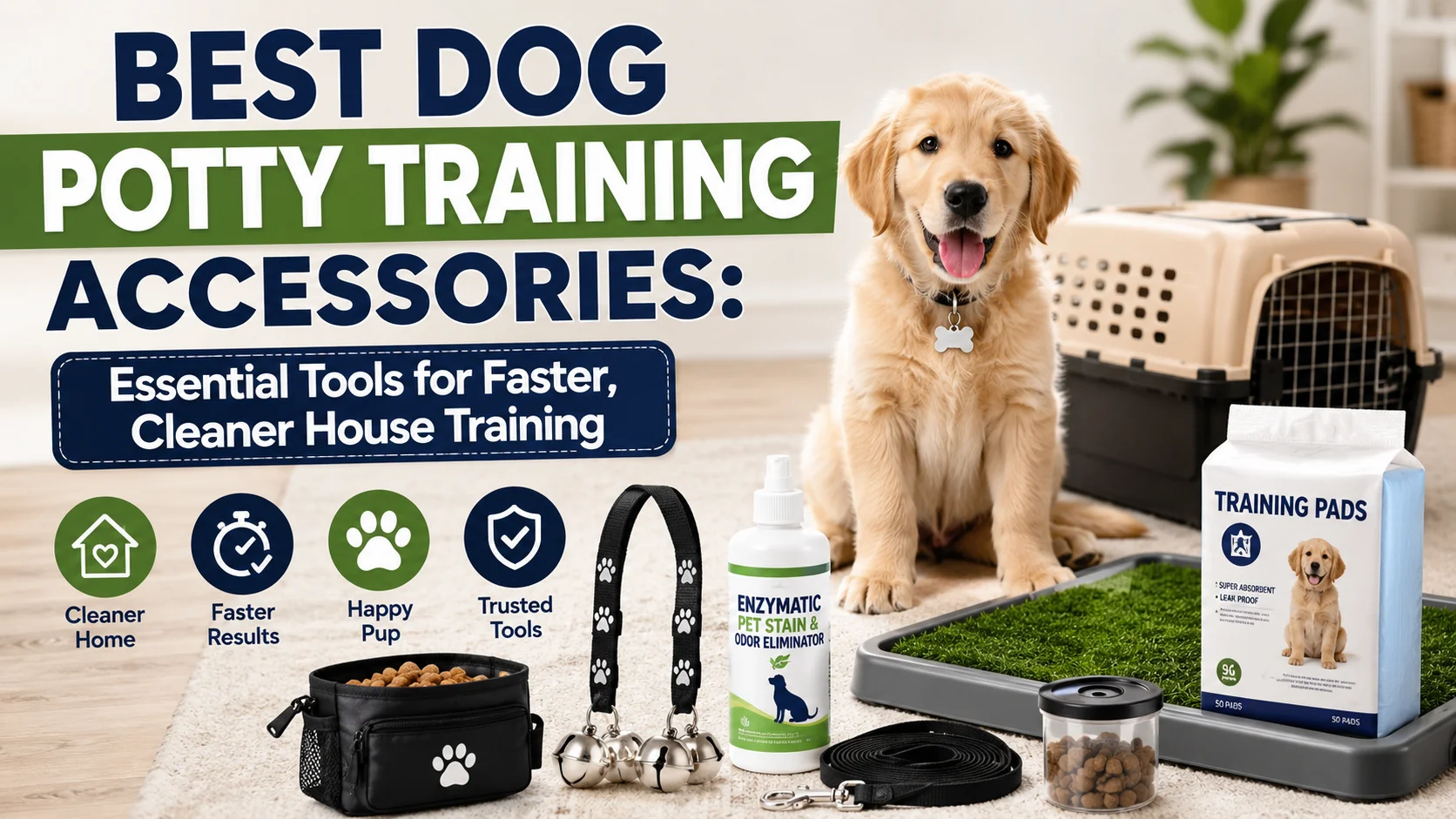
The best dog potty training accessories help establish a consistent bathroom routine, reduce indoor accidents, and make house training less stressful for both dogs and owners. Essentials like a properly sized crate, potty bells, enzymatic cleaners, high-value treats, and indoor potty solutions support positive reinforcement and encourage faster, more reliable house training.
Introduction
Potty training is one of the first challenges every new dog owner faces. Whether you’ve welcomed a young puppy into your home or adopted an adult rescue dog, teaching appropriate bathroom habits requires patience, consistency, and the right equipment. While no product can replace regular training, the right dog potty training accessories can make the learning process much smoother.
These accessories help create routines that are easy for dogs to understand while making cleanup and supervision easier for owners. From crate training supplies to potty bells and enzymatic cleaners, each tool has a specific purpose that supports successful house training.
This guide explains which potty training accessories are worth buying, how to use them correctly, and how they fit into a reward-based training plan. By choosing practical tools and following a consistent schedule, you’ll help your dog develop reliable bathroom habits that last a lifetime.
Why Dog Potty Training Accessories Matter
Successful potty training isn’t about luck. Dogs learn best through repetition, clear routines, and positive experiences. The right accessories don’t teach your dog on their own, but they make it much easier to reinforce good habits every day.
Quality potty training tools help you:
- Create a predictable daily routine.
- Reduce accidents inside the house.
- Reward successful potty trips immediately.
- Keep your home cleaner during training.
- Improve communication between you and your dog.
- Build your dog’s confidence through consistent expectations.
Whether you live in a suburban home with a backyard or an apartment in a busy city, these accessories can simplify house training and reduce frustration for everyone involved.
Essential Dog Potty Training Accessories
Choosing the right products can save time and help your dog understand expectations more quickly. Here are the most useful accessories for successful potty training.
A Properly Sized Crate
A crate is one of the most valuable house training tools available. Dogs naturally avoid soiling the area where they sleep, making crate training an effective way to encourage bladder control.
A properly sized crate should allow your dog to:
- Stand comfortably.
- Turn around easily.
- Lie down fully stretched.
Avoid choosing a crate that’s too large. If there’s extra space, your puppy may use one corner as a bathroom while sleeping in another.
A crate should never be used as punishment. Instead, it should become a comfortable, secure place where your dog can relax between potty breaks.
Puppy Pee Pads
Puppy pee pads provide a convenient indoor potty option, especially during the early stages of training.
They’re particularly useful for:
- Very young puppies.
- Apartment living.
- Senior dogs with mobility challenges.
- Owners who work in high-rise buildings.
- Temporary indoor potty needs during severe weather.
If your goal is outdoor potty training, use pee pads only as a temporary solution. Gradually move the pad closer to the door before transitioning your dog to outdoor bathroom breaks.
Indoor Dog Potty Tray
Indoor potty trays provide a reusable alternative to disposable pee pads. Many feature artificial grass or absorbent surfaces that better mimic outdoor conditions.
These systems work well for:
- Small dog breeds.
- Apartment owners.
- Elderly dogs.
- Homes without immediate yard access.
- Temporary indoor use during storms or extreme temperatures.
Clean the tray regularly to prevent lingering odors and encourage your dog to continue using it.
Potty Training Bells
Potty bells are one of the easiest ways to teach your dog how to signal when they need to go outside.
Hang the bells on the door you use for potty breaks. Each time you head outside, encourage your dog to touch the bells with their nose or paw before opening the door.
Over time, many dogs learn that ringing the bells leads to an outdoor bathroom trip.
Potty bells can help:
- Reduce scratching at doors.
- Prevent unnecessary barking.
- Improve communication.
- Give your dog more independence.
Reward your dog immediately after they ring the bells and successfully eliminate outside.
High-Value Training Treats
Positive reinforcement is one of the most effective training methods available. Rewarding your dog immediately after a successful potty trip helps strengthen the connection between the behavior and the reward.
Choose treats that are:
- Small enough to eat quickly.
- Soft and easy to chew.
- Highly motivating.
- Low in calories.
The reward should happen within a few seconds after your dog finishes going to the bathroom. Delayed rewards are much less effective because your dog may not connect the treat with the correct behavior.
Treat Pouch
A treat pouch may seem like a small accessory, but it makes a big difference during house training.
Keeping treats within easy reach allows you to reward your dog instantly after every successful potty trip. This quick timing helps reinforce the behavior far more effectively than searching for treats after returning indoors.
A good treat pouch should be:
- Easy to clip onto your waistband.
- Simple to open with one hand.
- Large enough to hold treats for multiple potty trips.
- Easy to clean after daily use.
Many owners find that carrying treats consistently during the first few weeks significantly improves potty training success.
More Essential Dog Potty Training Accessories
Enzymatic Cleaner
Accidents are a normal part of house training, but cleaning them properly is essential. Ordinary household cleaners often remove the visible stain without eliminating the odor that your dog’s sensitive nose can still detect.
An enzymatic cleaner breaks down urine proteins and odor-causing bacteria, helping prevent your dog from returning to the same spot.
Benefits include:
- Removes urine odors completely.
- Helps prevent repeat accidents.
- Protects carpets and flooring.
- Makes indoor training cleaner and more hygienic.
Always follow the product directions and allow the cleaner enough time to work effectively.
Long Training Leash
A long training leash gives your dog enough freedom to sniff and choose an appropriate potty spot while allowing you to maintain control.
This accessory is especially helpful for:
- Backyard potty training.
- Large outdoor spaces.
- Apartment complexes.
- Parks and shared green areas.
- Puppies learning recall alongside potty training.
Avoid retractable leashes during training, as they can make supervision less consistent.
Portable Water Bottle
Hydration directly affects your dog’s potty schedule. Bringing fresh water on walks helps your dog stay comfortable while allowing you to better predict bathroom breaks.
Portable water bottles are useful for:
- Long walks.
- Hiking.
- Road trips.
- Camping.
- Outdoor training sessions.
Knowing when your dog drinks makes it easier to anticipate when they’ll need another potty break.
Portable Dog Potty
If you travel frequently, a portable potty system can help maintain your dog’s routine in unfamiliar environments.
These are useful for:
- Hotel stays.
- RV travel.
- Camping trips.
- Visiting family and friends.
- Long vacations.
Maintaining familiar bathroom habits while traveling reduces confusion and helps prevent accidents.
Step-by-Step Guide to Using Dog Potty Training Accessories
Using these accessories consistently is just as important as choosing the right ones. Follow this simple routine to build good habits.
Step 1: Establish a Consistent Schedule
Dogs thrive on routine. Take your dog outside at the same times every day.
Important potty times include:
- Immediately after waking up.
- After every meal.
- After naps.
- After play sessions.
- Before bedtime.
- After drinking large amounts of water.
Young puppies may need bathroom breaks every one to two hours.
Step 2: Always Use the Same Potty Area
Bring your dog to the same outdoor location each time.
The familiar scent encourages your dog to eliminate more quickly and helps build a predictable habit.
Avoid walking around too much before your dog finishes, especially during the early weeks of training.
Step 3: Reward Immediately
The moment your dog finishes going to the bathroom, reward them.
Your reward can include:
- A small training treat.
- Calm verbal praise.
- Gentle petting if your dog enjoys it.
Immediate rewards help your dog understand exactly which behavior earned the reward.
Step 4: Supervise Indoors
Until your dog is reliably house trained, supervision is essential.
When you cannot actively watch your puppy:
- Use a crate.
- Use a puppy playpen.
- Keep your dog attached to you with a lightweight leash.
Preventing accidents is much easier than correcting bad habits later.
Step 5: Clean Every Accident Thoroughly
If an accident happens indoors:
- Stay calm.
- Do not punish your dog.
- Clean the area immediately with an enzymatic cleaner.
- Review your potty schedule to identify what may have gone wrong.
Most accidents happen because the puppy wasn’t taken outside soon enough, not because they were being stubborn.
Sample Daily Potty Training Routine
Every household is different, but a predictable schedule helps dogs learn faster.
Morning
- Take your dog outside immediately after waking.
- Reward successful potty behavior.
- Feed breakfast.
- Return outside within 10 to 20 minutes after eating.
Midday
- Offer another potty break after playtime.
- Take your dog outside after naps.
- Reward every successful bathroom trip.
Afternoon
- Continue scheduled potty breaks every two to three hours for young puppies.
- Provide fresh water throughout the day.
- Supervise indoor activities closely.
Evening
- Take your dog outside after dinner.
- Offer another potty break before bedtime.
- Remove unnecessary distractions during the final potty trip so your dog stays focused.
Following a routine every day helps your dog understand exactly what is expected.
Common Potty Training Mistakes to Avoid
Many potty training setbacks happen because owners unknowingly create inconsistent routines.
Avoid these common mistakes.
Waiting Too Long Between Potty Breaks
Young puppies have limited bladder control.
Waiting too long often results in accidents that could have been prevented.
Punishing Accidents
Scolding or punishing your dog after an accident can create fear and confusion.
Instead, calmly clean the mess and focus on rewarding future success.
Forgetting to Reward Good Behavior
Some owners stop rewarding too early.
Continue rewarding successful potty trips until the behavior becomes a consistent habit.
Using Multiple Potty Locations
Changing potty spots every day can slow learning.
Choose one primary outdoor location whenever possible.
Leaving Puppies Unsupervised
Many accidents occur simply because puppies are left alone for too long.
Close supervision helps you recognize signs that your puppy needs to go outside.
Not Cleaning Accidents Properly
If urine odor remains, your dog may continue using the same area.
Always use an enzymatic cleaner designed specifically for pet accidents.
Signs Your Dog Is Making Progress
Potty training rarely happens overnight, but you’ll notice steady improvement with consistency.
Positive signs include:
- Fewer accidents indoors.
- Going to the door independently.
- Ringing potty bells before going outside.
- Waiting patiently before eliminating.
- Longer periods of bladder control.
- More predictable bathroom habits.
Celebrate these small successes. They show your training routine is working.
Puppy vs. Adult Dog Potty Training
While the same reward-based principles apply to dogs of all ages, puppies and adult dogs often learn at different speeds and have different needs.
Potty Training Puppies
Young puppies have small bladders and are still developing bladder control, so frequent bathroom breaks are essential.
Keep these tips in mind:
- Take your puppy outside every one to two hours.
- Always go outside after eating, drinking, playing, and waking up.
- Keep potty trips calm and consistent.
- Reward every successful bathroom break immediately.
- Supervise closely when indoors.
Most puppies need several months before they become fully reliable, so patience is important.
Potty Training Adult Dogs
Adult dogs, especially rescue dogs, may already have some house training experience. Others may need to learn completely new routines after moving into a new home.
Adult dogs often benefit from:
- A consistent daily schedule.
- Regular outdoor bathroom breaks.
- Positive reinforcement for every success.
- Clear household routines.
- Extra patience during the adjustment period.
Many adult dogs learn faster than puppies because they have better bladder control.
Indoor vs. Outdoor Potty Training
The best option depends on your living situation and your long-term goals.
Indoor Potty Training
Indoor potty systems can be helpful if you:
- Live in an apartment.
- Have limited outdoor access.
- Care for a very young puppy.
- Own a senior dog with mobility challenges.
- Experience severe weather that occasionally prevents outdoor trips.
If you eventually want your dog to potty outside, gradually move the potty area closer to the door before transitioning outdoors.
Outdoor Potty Training
Outdoor potty training is the preferred long-term solution for many families.
Benefits include:
- Cleaner indoor environment.
- More consistent bathroom habits.
- Less odor inside the home.
- Easier long-term routine.
- Better opportunities to reinforce outdoor behavior.
Choose one outdoor potty location and use it consistently throughout training.
Safety Tips for Potty Training
House training should always be a positive experience for your dog.
Follow these safety guidelines:
- Never punish accidents or rub your dog’s nose in urine.
- Supervise puppies around training accessories that could become chewing hazards.
- Clean potty areas regularly to reduce bacteria and odors.
- Replace damaged potty trays, bells, or leashes when needed.
- Make sure your crate is appropriately sized and well ventilated.
- Keep treats in moderation to avoid overfeeding.
- Use positive reinforcement instead of fear or physical corrections.
If your dog suddenly starts having accidents after being reliably house trained, schedule a veterinary appointment. Medical conditions such as urinary tract infections, digestive problems, pain, or age-related changes can contribute to house training setbacks.
When to Seek Professional Help
Most dogs can be successfully house trained with patience and consistency. However, professional guidance may be helpful if progress has stalled.
Consider contacting a qualified, reward-based dog trainer or certified behavior consultant if:
- Your puppy shows little progress after several weeks of consistent training.
- Your adult rescue dog continues to have frequent accidents despite a structured routine.
- Fear or anxiety prevents your dog from eliminating outdoors.
- Your dog becomes highly stressed during potty training.
- You feel unsure about how to adjust your training plan.
If accidents appear suddenly in a previously house-trained dog, consult your veterinarian before assuming it is a behavioral issue.
Practical Example: A Successful Potty Training Routine
Imagine you’re training a 10-week-old Labrador Retriever puppy.
You begin each morning by taking your puppy directly outside before breakfast. After they eliminate, you immediately offer a small training treat and calm praise. Following every meal, nap, and play session, you repeat the same routine using the same potty spot.
Inside the house, your puppy is either supervised, relaxing in a properly sized crate, or playing safely in a puppy pen. If an accident happens, you calmly clean the area with an enzymatic cleaner and continue following the schedule without punishment.
After several weeks of consistency, your puppy begins walking toward the door before needing to go outside. This gradual progress is exactly what successful potty training looks like.
Conclusion
Choosing the right dog potty training accessories can make house training easier, cleaner, and less stressful for both you and your dog. Helpful tools like crates, potty bells, enzymatic cleaners, treat pouches, indoor potty systems, and quality training treats support consistent routines and encourage good habits from the very beginning.
Remember that accessories are only part of the process. Successful potty training depends on patience, supervision, regular bathroom breaks, and reward-based training. Every dog learns at their own pace, so stay consistent, celebrate small successes, and focus on building lifelong habits rather than expecting overnight results.
FAQs
Q1.What are the most important dog potty training accessories?
The most useful accessories include a properly sized crate, potty bells, puppy pee pads or an indoor potty tray, an enzymatic cleaner, a treat pouch, high-value training treats, and a leash for supervised potty trips.
Q2. Are puppy pee pads a good idea?
Yes. Puppy pee pads can be very helpful for young puppies, apartment living, and temporary indoor potty needs. If your goal is outdoor potty training, gradually transition your puppy from pee pads to outdoor bathroom breaks.
Q3. How long does potty training usually take?
Every dog learns at a different pace. Many puppies show noticeable progress within a few weeks, while complete house training often takes several months of consistent practice and supervision.
Q4. Should I use potty bells for my dog?
Potty bells are an excellent communication tool. Many dogs quickly learn to ring the bells before going outside, making it easier for owners to recognize when a bathroom break is needed.
Q5. What should I do if my puppy has an accident?
Stay calm, clean the area thoroughly with an enzymatic cleaner, and continue following your potty training routine. Avoid punishment, as it can create fear and slow the learning process.
Q6. Can older dogs still be potty trained?
Absolutely. Adult dogs can successfully learn new bathroom habits with consistent routines, positive reinforcement, and patience. Many rescue dogs adapt surprisingly quickly once they understand their new schedule.
Q7. Which cleaner works best for dog urine?
An enzymatic cleaner designed specifically for pet accidents is the best choice because it breaks down odor-causing proteins that ordinary household cleaners often leave behind.
Q8. Are dog potty training accessories enough to house train a puppy?
No. Dog potty training accessories make the process much easier, but successful house training also requires consistency, supervision, regular potty breaks, and immediate rewards for good behavior.