Quick Answer
A dog trainer for excessive barking helps identify the reason behind the barking and teaches owners how to reduce it using reward-based training, management, consistency, and impulse control exercises. The best approach is to understand the barking trigger, prevent unwanted rehearsals of the behavior, reward calm behavior, and practice structured training sessions daily.
Introduction
Living with a dog that barks constantly can be frustrating, stressful, and exhausting. Whether your dog barks at strangers, other dogs, noises outside the window, visitors at the door, or when left alone, excessive barking can affect your household and relationships with neighbors.
Many owners search for a dog trainer for excessive barking because they have already tried telling their dog to “be quiet” without success. The reality is that barking is a normal form of canine communication. Dogs bark to alert, express excitement, seek attention, respond to fear, or react to their environment.
The key is not to eliminate barking completely but to teach your dog when barking is appropriate and when calm behavior is more rewarding. With patience, positive reinforcement, and a clear training plan, most dogs can learn better impulse control and quieter habits.
Why Dogs Develop This Behavior
Before learning how to train a dog to stop barking, it helps to understand why the behavior occurs.
Common barking triggers include:
- Strangers approaching the house
- Other dogs during walks
- Doorbells and knocking sounds
- Boredom and lack of exercise
- Attention-seeking behavior
- Frustration behind fences or windows
- Fear and anxiety
- Separation-related distress
- Excitement during play
- Territorial behavior
Different causes require different solutions. A dog barking at strangers needs a different training approach than a dog barking because of boredom or separation anxiety.
Understanding Barking Motivation
Ask yourself:
- What happens immediately before the barking starts?
- Where does it happen most often?
- Who or what is your dog barking at?
- What causes the barking to stop?
Keeping a simple journal for one week can help identify patterns and triggers.
Quick Management Steps
Training takes time. Management helps prevent your dog from practicing unwanted barking while learning new habits.
Block Visual Triggers
Many dogs bark because they constantly monitor activity outside.
Try:
- Closing curtains
- Using frosted window film
- Moving furniture away from windows
- Creating a quiet resting area
Increase Physical Exercise
A tired dog is often easier to train.
Depending on breed, age, and health, consider the following:
- Daily walks
- Fetch sessions
- Structured play
- Hiking
- Swimming
- Interactive games
Add Mental Stimulation
Mental exercise can reduce boredom-related barking.
Options include:
- Food puzzles
- Snuffle mats
- Training games
- Scent work
- Stuffed enrichment toys
Manage Visitor Situations
If guests trigger barking:
- Use baby gates
- Keep your dog on a leash initially
- Reward calm behavior
- Give visitors clear instructions
Management is not the final solution, but it creates an environment where learning becomes easier.
Training Plan By Situation
How to Train Dog to Stop Barking at Strangers
Stranger-directed barking often comes from fear, uncertainty, excitement, or territorial instincts.
Step-by-Step Method
Step 1: Create distance from the trigger.
Your dog should notice the stranger without becoming overwhelmed.
Step 2: The moment your dog sees the person, reward them with a high-value treat.
Step 3: Continue rewarding while the dog remains calm.
Step 4: Stop treats when the stranger disappears.
Step 5: Repeat consistently.
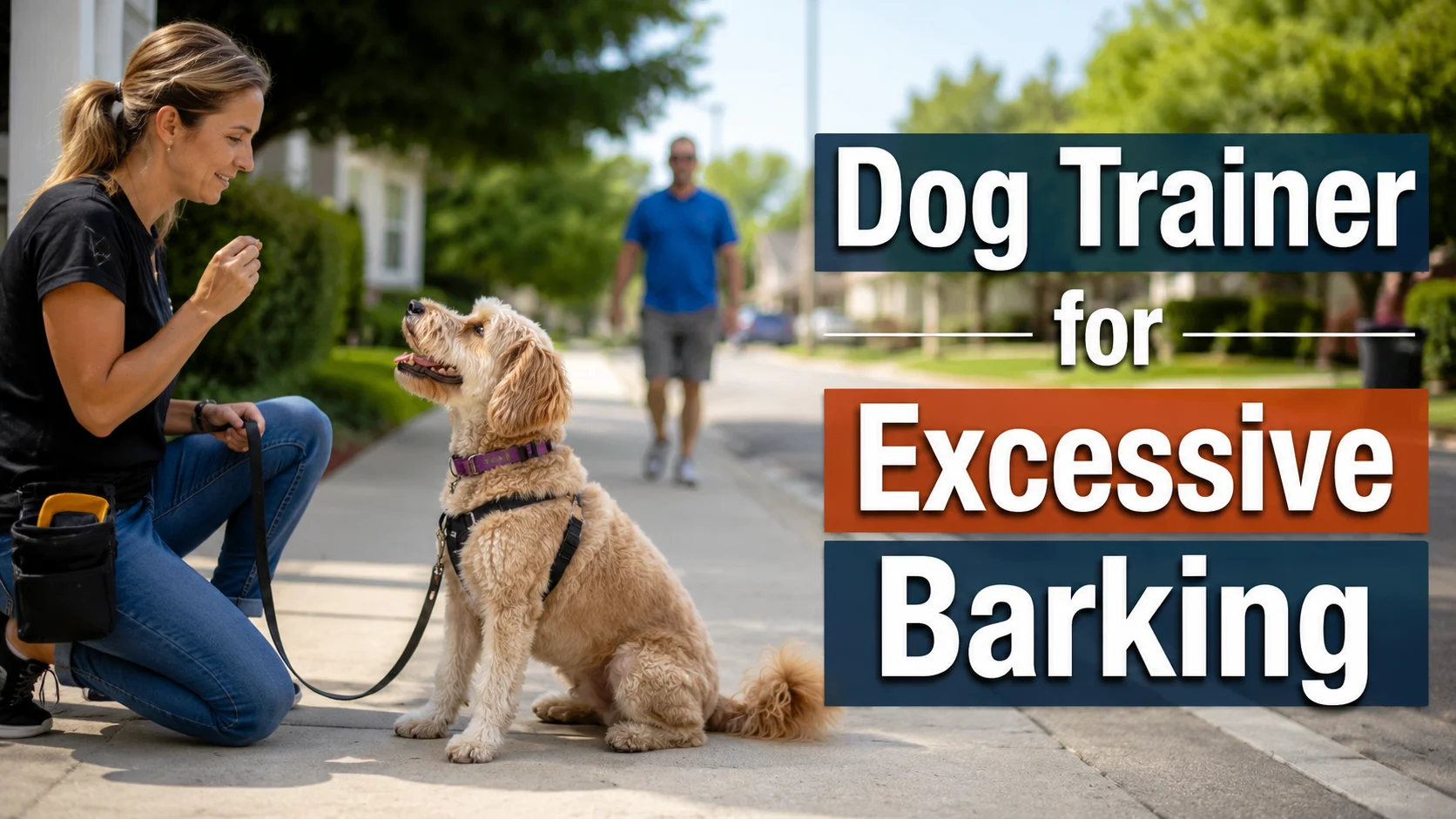
Over time, strangers begin predicting rewards rather than triggering barking.
Example
Your dog notices a neighbor walking past.
Instead of waiting for barking:
- Dog sees neighbor
- You say “Yes.”
- Give treat
- Repeat until neighbor passes
This teaches calm observation rather than reactive barking.
Dog Training for Barking at Other Dogs
Many owners struggle with dog training for barking at other dogs during walks.
Common reasons include:
- Frustration
- Fear
- Overexcitement
- Lack of social skills
- Previous negative experiences
Training Steps
- Identify your dog’s reaction distance.
- Stay far enough away that your dog can focus.
- Reward attention toward you.
- Practice simple commands such as the following:
- Sit
- Watch me
- Touch
- Gradually decrease distance over multiple sessions.
Avoid forcing greetings.
Not every dog wants to meet every dog.
How to Train Your Dog to Stop Barking at the Door
Doorbell barking is extremely common.
Step 1: Teach a Place Command
Choose a bed or mat.
Reward your dog for:
- Going to the mat
- Staying on the mat
- Relaxing on the mat
Step 2: Practice Without Visitors
Have a family member ring the doorbell.
Guide your dog to the mat.
Reward heavily.
Step 3: Increase Difficulty
Gradually add:
- Knocking
- Opening the door
- Guest entry
Practice in short sessions several times weekly.
Rewards and Redirection
Reward-based training works because it teaches dogs what to do instead of simply punishing what not to do.
Useful rewards include:
- Small treats
- Praise
- Toys
- Play sessions
- Access to favorite activities
Redirect Before Barking Escalates
Watch for early signs:
- Staring
- Body tension
- Raised ears
- Forward posture
Redirect to:
- Name recognition
- Hand target
- Sit command
- Recall
- Find-it treat game
Intervening early is usually easier than stopping a full barking episode.
Building Impulse Control
Impulse control helps dogs make better decisions around distractions.
Useful exercises include:
Wait
Ask your dog to wait before:
- Meals
- Doorways
- Toys
- Going outside
Leave It
Teach your dog to disengage from distractions.
Settle on a mat.
Reward calm resting behavior.
Many barking issues improve when dogs learn how to relax around everyday triggers.
Sample Daily Training Schedule
Morning
- 20-minute walk
- 5-minute obedience session
- Reward calm behavior
Midday
- Food puzzle
- Short impulse control game
Evening
- Training around barking triggers
- Settle-on-mat practice
- Calm enrichment activity
Total training time can be as little as 15 to 20 focused minutes per day.
Safety Note
If barking is accompanied by:
- Lunging
- Growling
- Snapping
- Biting attempts
- Severe fear
Work with a qualified professional dog trainer, certified behavior consultant, or veterinary behaviorist. Sudden behavior changes may also require a veterinary examination to rule out pain or medical causes.
Separation Anxiety and Barking
Some dogs bark excessively when left alone. This type of barking is often linked to separation-related distress rather than simple boredom.
Common signs include:
- Barking immediately after the owner leaves
- Whining and pacing
- Destructive chewing
- Scratching doors or windows
- House-soiling despite being house-trained
- Inability to settle when alone
Step-by-Step Approach
Step 1: Rule Out Medical Issues
If the behavior develops suddenly, schedule a veterinary checkup first.
Step 2: Build Independence
Encourage your dog to spend short periods relaxing away from you while you are still home.
Examples:
- Resting on a bed across the room
- Enjoying a food toy in another area
- Practicing calm alone time behind a baby gate
Step 3: Practice Short Departures
Start with departures that last only a few seconds.
- Leave
- Return before barking begins
- Reward calm behavior
Gradually increase the duration over weeks.
Step 4: Create Positive Associations
Before leaving, provide:
- Stuffed food toys
- Puzzle feeders
- Safe chew items
- Snuffle mats
These activities help create a positive experience around your departure.
Important Safety Note
Severe separation anxiety can be challenging to resolve without professional support. If your dog shows panic behaviors, contact a qualified trainer or veterinary behaviorist.
How Long Does It Take to Stop Excessive Barking?
One of the most common questions owners ask is, “How do I train my dog to stop barking quickly?”
The honest answer depends on:
- The cause of the barking
- How long the behavior has existed
- Your consistency
- Your dog’s temperament
- The training methods used
General Timeline
Week 1-2
- Identify triggers
- Begin management
- Start reward-based exercises
Week 3-4
- Improved focus around mild distractions
- Reduced barking in controlled situations
Month 2-3
- Better impulse control
- More reliable responses to cues
Month 3-6
- Significant improvement for many dogs
- Better behavior in real-world situations
Progress is rarely perfectly linear. Some days will be easier than others.
Signs Your Training Is Working
Improvement often appears before barking disappears completely.
Look for:
- Shorter barking episodes
- Faster recovery after excitement
- Increased attention toward you
- Better response to commands
- Less intense reactions to triggers
- Ability to disengage from distractions
Celebrate these small wins. They indicate that your dog is learning.
Common Mistakes Owners Make
Many well-meaning owners accidentally reinforce barking.
1. Yelling at the Dog
From your dog’s perspective, yelling can sound like you’re joining the barking.
Instead:
- Stay calm
- Redirect
- Reward desired behavior
2. Being Inconsistent
If barking is ignored one day and rewarded the next, learning becomes confusing.
Consistency is critical.
3. Waiting Too Long to Intervene
It is easier to redirect a dog before barking begins than after the dog becomes highly aroused.
Watch for early warning signs.
4. Not Providing Enough Exercise
Many dogs bark more when they have excess energy.
Physical exercise and mental stimulation should be part of the plan.
5. Punishment-Based Methods
Harsh corrections may suppress barking temporarily but often fail to address the underlying cause.
They can also increase:
- Fear
- Anxiety
- Stress
- Reactivity
Reward-based training is generally safer and more effective for long-term behavior change.
6. Expecting Immediate Results
Training is a process.
Most barking behaviors develop over months or years and require time to improve.
Indoor Practice Tips
Indoor training can be extremely valuable.
Try:
- Doorbell practice sessions
- Place command training
- Settle exercises
- Impulse control games
- Quiet behavior rewards
Short sessions are often more productive than long ones.
Aim for:
- 3 to 5 minutes
- Several times daily
Outdoor Practice Tips
Outdoor environments contain more distractions.
Start in quiet locations before progressing to busier areas.
Practice:
- Loose leash walking
- Recall
- Focus exercises
- Calm observation of triggers
- Engagement games
Bring high-value treats when working around barking triggers.
Puppy vs Adult Dog Barking Training
Puppies
Puppies generally learn quickly but need guidance.
Focus on:
- Socialization
- Positive experiences
- Basic obedience
- Preventing bad habits
Adult Dogs
Adult dogs can absolutely learn new behaviors.
However, established barking habits may take longer to change.
Remain patient and consistent.
Breed and Temperament Considerations
Some breeds naturally vocalize more than others.
Examples include:
- Beagles
- Shetland Sheepdogs
- Miniature Schnauzers
- German Shepherds
- Terriers
A dog’s breed may influence barking tendencies, but training still plays a major role.
Even naturally vocal breeds can learn appropriate barking habits and improved impulse control.
When to Call a Dog Trainer for Excessive Barking
Professional help can save time and prevent frustration.
Consider hiring a dog trainer for excessive barking if
- Barking is worsening
- Progress has stalled
- The behavior creates safety concerns
- Neighbors are complaining
- The dog barks aggressively at people or dogs
- Anxiety appears severe
- Family members feel overwhelmed
Questions to Ask a Trainer
- What training methods do you use?
- Do you use positive reinforcement?
- Have you worked with barking cases before?
- What management strategies do you recommend?
- How will progress be measured?
Red Flags
Avoid trainers who:
- Promote dominance-based methods
- Guarantee instant results
- Rely heavily on punishment
- Discourage owner involvement
The best trainers teach both dogs and owners.
Conclusion
Finding the right solution for excessive barking starts with understanding why your dog is barking in the first place. Whether the issue involves strangers, other dogs, excitement, boredom, or separation-related distress, the most effective approach combines management, positive reinforcement, impulse control training, and consistency.
A dog trainer for excessive barking can provide valuable guidance when progress is slow or the behavior feels overwhelming. Focus on rewarding calm behavior, preventing unwanted barking rehearsals, and practicing regularly in manageable situations. With patience and a structured plan, most dogs can learn quieter, more appropriate responses to everyday triggers.
FAQs
How do I train my dog to stop barking all the time?
Identify the trigger first, then reward calm behavior, manage the environment, and practice consistent training sessions. Excessive barking usually improves when the underlying cause is addressed.
How long does it take to train a dog to stop barking?
Many dogs show improvement within a few weeks, but long-term behavior change often takes several months depending on the cause and consistency of training.
Should I ignore my dog’s barking?
It depends on the reason. Attention-seeking barking may improve when ignored, but fear, anxiety, or reactivity-related barking usually requires active training and management.
Can a professional dog trainer help with excessive barking?
Yes. A dog trainer for excessive barking can identify triggers, create a customized training plan, and help owners improve behavior more efficiently.
Why does my dog bark at strangers?
Dogs may bark at strangers because of fear, territorial instincts, excitement, uncertainty, or lack of socialization. Training should focus on creating positive associations and rewarding calm behavior.
How do I stop my dog from barking at other dogs on walks?
Work at a distance where your dog can remain calm, reward attention toward you, and gradually decrease the distance over multiple sessions.
Are bark collars recommended?
Many trainers prefer reward-based training and behavior modification before considering equipment designed to suppress barking. Some bark collars may increase fear or stress in sensitive dogs.
When should I contact a veterinary behaviorist?
Consult a veterinary behaviorist if barking is linked to severe anxiety, aggression, panic behaviors, or sudden behavior changes or if standard training approaches are not producing results.