Quick Note
If you are bringing home your first dog, start with the basics first. Create a daily routine, prepare safe supplies, use reward-based training, and keep training sessions short and consistent. Focus on potty breaks, feeding schedules, gentle socialization, and building trust. Avoid punishment, stay patient during accidents or chewing, and contact a vet if your dog suddenly acts sick, fearful, or aggressive.
Introduction
Getting your first dog feels exciting, emotional, and sometimes overwhelming. Many first-time owners imagine fun walks, cuddles, and happy moments, but real life with a dog also includes accidents indoors, barking at night, chewing shoes, leash pulling, and confusion about feeding or training.
Some dogs settle in quickly, while others feel nervous, stressed, or overly excited during the first few weeks. Puppies may cry at night, bite during play, or struggle with potty training. Adult rescue dogs may hide, fear strangers, or need extra patience while adjusting to a new home.
Many new owners also worry about doing something wrong. Questions about food, exercise, training, grooming, and safety appear almost immediately after bringing a dog home.
This first-time dog owner guide explains everything beginners need to know in a simple and practical way. You will learn how to prepare your home, choose the right supplies, feed your dog properly, handle potty training, build a healthy routine, avoid common mistakes, and create a safe and happy environment for your new companion.
What First-Time Dog Owners Should Know Before Bringing a Dog Home
Owning a dog requires daily time, patience, and consistency. Dogs depend on their owners for food, exercise, emotional comfort, training, and safety.
Before bringing a dog home, think about:
- Your daily schedule
- Living space
- Activity level
- Budget for food and vet care
- Grooming needs
- Training commitment
- Family lifestyle
A high-energy dog may struggle in a very small space without exercise. A shy rescue dog may need a quieter environment than a busy social puppy.
Choose a dog that matches your lifestyle instead of choosing only based on appearance.
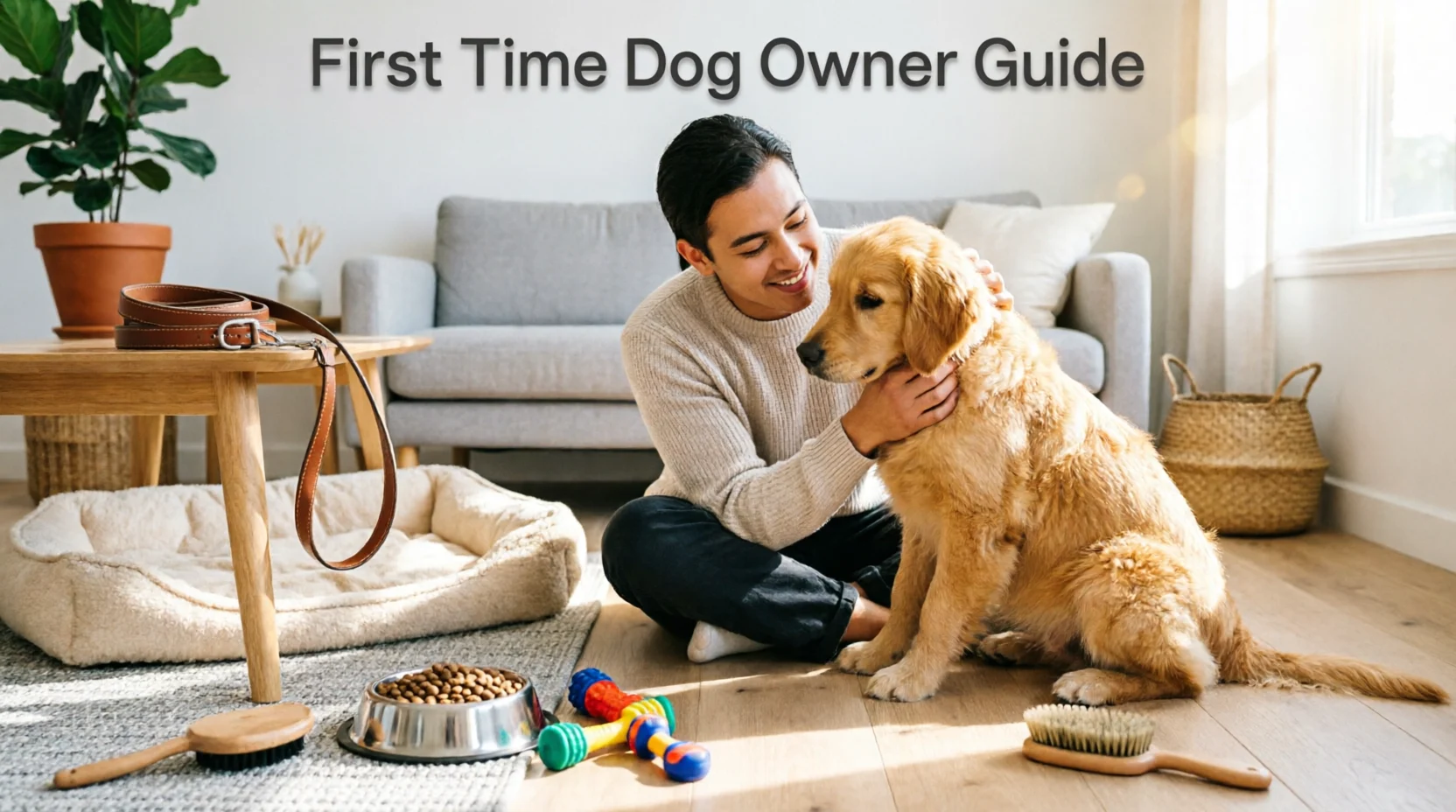
Supplies Every First-Time Dog Owner Needs
Preparing supplies before your dog arrives helps reduce stress and confusion.
| Supply | Why it helps |
|---|---|
| Food and water bowls | Supports regular feeding and hydration |
| Comfortable dog bed | Gives your dog a safe resting area |
| Crate or puppy pen | Helps with safety and potty training |
| Collar with ID tag | Improves safety outdoors |
| Harness and leash | Helps with walks and leash training |
| Soft training treats | Rewards good behavior quickly |
| Chew toys | Reduces chewing on furniture or shoes |
| Dog brush | Helps coat care and bonding |
| Enzyme cleaner | Removes potty accident smells properly |
| Nail trimmer | Supports healthy paw care |
Avoid buying too many toys at once. Start simple and learn what your dog enjoys.
Preparing Your Home for a New Dog
Dogs explore with their mouth and nose, especially puppies.
Before your dog arrives:
- Remove toxic plants
- Hide electrical cords
- Store cleaning products safely
- Keep small objects off the floor
- Block unsafe areas
- Secure trash bins
- Remove foods dogs should not eat
Create a calm area where your dog can rest quietly.
A crate or dog bed in a peaceful corner often helps new dogs feel secure.
Understanding the First Few Days at Home
The first few days may feel emotional for both you and your dog.
Some dogs act playful immediately, while others feel nervous and quiet.
Common Behaviors During Adjustment
Your dog may:
- Cry at night
- Refuse food temporarily
- Follow you everywhere
- Hide under furniture
- Bark at sounds
- Have potty accidents
- Feel overly excited
Stay calm and patient during this adjustment period.
Avoid overwhelming your dog with too many visitors or busy activities early on.
Feeding Tips for First-Time Dog Owners
Food plays a major role in your dog’s health and behavior.
Choose Age-Appropriate Food
Puppies, adults, and senior dogs need different nutrition.
Large breed puppies also need food designed for slower, healthy growth.
Feed on a Schedule
Dogs usually do better with routine feeding times.
| Dog Age | Feeding Frequency |
|---|---|
| Young puppies | 3 to 4 meals daily |
| Older puppies | 2 to 3 meals daily |
| Adult dogs | 2 meals daily |
| Senior dogs | Usually 2 smaller meals |
Avoid Sudden Food Changes
Sudden changes may cause stomach upset.
Transition slowly over several days when switching food.
Unsafe Foods Dogs Should Avoid
Some foods can seriously harm dogs.
Avoid:
- Chocolate
- Grapes
- Raisins
- Onions
- Garlic
- Alcohol
- Cooked bones
- Xylitol sweeteners
Contact a vet immediately if your dog eats something toxic.
Potty Training Basics
Potty training challenges almost every first-time dog owner.
Consistency matters more than perfection.
Signs Your Dog Needs to Potty
Watch for:
- Sniffing the floor
- Circling
- Restlessness
- Walking toward doors
- Sudden wandering away
Take your dog outside quickly when you notice these signs.
Basic Potty Training Routine
Take your dog outside:
- After waking up
- After eating
- After drinking water
- After playtime
- Before bedtime
- Every few hours during the day
Reward successful potty trips immediately.
What to Do After Accidents
Clean accidents calmly using an enzyme cleaner.
Do not shout or punish your dog. Fear makes potty training harder and may create anxiety.
What to Do at Night
Nighttime often feels difficult during the first weeks.
Young puppies may need overnight potty breaks.
Helpful Night Routine Tips
- Keep bedtime consistent
- Use a calm sleeping area
- Avoid rough play before bed
- Take your dog outside before sleeping
- Keep lights low and quiet
If your puppy cries, check potty needs first before giving attention.
Basic Training for Beginners
Training helps dogs understand household rules and improves communication.
Start With Simple Commands
Focus on:
- Sit
- Stay
- Come
- Leave it
- Down
Keep training sessions short, around 5 to 10 minutes.
Reward-Based Training Works Best
Reward good behavior quickly using:
- Treats
- Praise
- Toys
- Gentle affection
Avoid harsh punishment or fear-based methods.
Dogs learn better when training feels positive and clear.
Socialization Tips for New Dog Owners
Socialization helps dogs feel comfortable around people, sounds, and environments.
Poor socialization may lead to fear or anxiety later.
Safe Socialization Matters
Start slowly with calm experiences.
Good examples include:
- Quiet walks
- Friendly visitors
- Calm dogs
- Car rides
- Household sounds
Do not force nervous dogs into crowded or stressful situations.
Puppy Socialization Safety
Avoid unsafe dog areas until your vet confirms safe exposure based on your puppy’s vaccine stage.
Start with calm environments before busy parks or crowded public places.
Exercise and Daily Activity
Dogs need physical and mental exercise every day.
Without enough activity, many dogs develop behavior problems like barking, chewing, or hyperactivity.
Exercise Needs Depend on the Dog
Small calm dogs may need shorter walks.
High-energy dogs may need:
- Longer walks
- Fetch games
- Training exercises
- Puzzle toys
- Running space
Avoid overexercising young puppies because growing joints remain sensitive.
Grooming Basics Every Owner Should Know
Regular grooming keeps dogs healthier and more comfortable.
Brushing
Brush your dog regularly to reduce shedding and prevent tangles.
Long coats usually need more brushing than short coats.
Bathing
Bathe dogs only when needed.
Too many baths may dry the skin.
Use dog-safe shampoo only.
Nail Trimming
Long nails can cause pain while walking.
Trim nails carefully and slowly.
Ear and Dental Care
Check ears regularly for redness, odor, or dirt buildup.
Brush teeth consistently to help reduce dental problems.
Common Behavior Problems for First-Time Owners
Many new owners feel worried when behavior problems appear.
Most issues improve with consistency and patience.
Chewing
Dogs chew because of:
- Teething
- Boredom
- Stress
- Curiosity
Provide safe chew toys and supervise closely.
Jumping
Dogs often jump because they feel excited.
Reward calm greetings instead of giving attention during jumping.
Barking
Dogs bark for many reasons, including:
- Fear
- Excitement
- Alert behavior
- Boredom
Identify the reason before trying to correct barking.
Separation Anxiety
Some dogs panic when left alone.
Start with short alone-time sessions and build confidence slowly.
Daily Routine for First-Time Dog Owners
Dogs usually feel safer with predictable routines.
| Time | Activity |
|---|---|
| Morning | Potty break and breakfast |
| Mid-morning | Short walk or playtime |
| Afternoon | Rest and calm activities |
| Evening | Walk, training, and dinner |
| Night | Final potty break and bedtime |
A steady routine often reduces stress and unwanted behavior.
Do’s and Don’ts for First-Time Dog Owners
| Do | Don’t |
|---|---|
| Use reward-based training | Punish accidents harshly |
| Keep routines consistent | Change rules every day |
| Supervise puppies closely | Give too much freedom early |
| Reward calm behavior | Encourage rough biting games |
| Visit a vet regularly | Ignore sudden behavior changes |
| Use safe chew toys | Leave unsafe items within reach |
| Socialize slowly and safely | Force scary interactions |
Common Mistakes First-Time Dog Owners Make
Expecting Perfect Behavior Too Quickly
Dogs need time to learn routines and rules.
Progress happens gradually.
Giving Too Much Freedom Early
Puppies and new dogs often make mistakes when unsupervised.
Use baby gates, crates, or puppy pens when needed.
Inconsistent Rules
If one family member allows jumping while another corrects it, dogs become confused.
Keep rules consistent.
Skipping Mental Stimulation
Dogs need brain activity too.
Training games, puzzle toys, and sniffing activities help reduce boredom.
Ignoring Early Training
Small problems often grow larger without training.
Start teaching basic manners early.
Troubleshooting Guide for First-Time Dog Owners
| Problem | Likely reason | What to do |
|---|---|---|
| The puppy pees indoors | Inconsistent schedule | Increase potty breaks and supervision |
| The dog cries at night | Fear or potty need | Keep a calm bedtime routine |
| Dog bites during play | Teething or excitement | Redirect to chew toys |
| The dog ignores commands | Too many distractions | Practice indoors first |
| The dog refuses food | Stress or sudden food change | Monitor closely and transition slowly |
| Dog pulls on leash | Lack of leash training | Reward loose-leash walking |
| The dog chews furniture | Boredom or teething | Provide safe chew toys |
| The dog suddenly acts aggressive | Fear, pain, or stress | Contact a vet or trainer |
When to Call a Vet
Contact a vet if your dog shows:
- Vomiting or diarrhea that continues
- Trouble breathing
- Sudden aggression
- Refusing food for long periods
- Extreme tiredness
- Limping
- Seizures
- Swollen stomach
- Severe itching
- Sudden behavior changes
Behavior changes sometimes connect to pain or illness.
Do not ignore serious symptoms.
When to Ask a Professional Trainer
Professional help may improve difficult situations faster.
Consider a trainer if your dog:
- Shows aggression
- Bites seriously
- Displays severe fear
- Escapes constantly
- Guards food aggressively
- Cannot settle indoors
Choose reward-based trainers who focus on safe and humane methods.
Conclusion
This first-time dog owner guide covers the most important basics every beginner should know. Focus on patience, routine, positive training, safe socialization, and consistent daily care. Your dog does not need perfection from you. Dogs need trust, structure, kindness, and clear guidance.
Small daily habits make a big difference over time. Stay calm during accidents, celebrate progress, and ask for professional help when needed. With proper care and realistic expectations, you can build a strong and happy bond with your dog.
FAQs
What should first-time dog owners buy first?
Start with food bowls, a leash, a collar, a bed, a crate, training treats, chew toys, and grooming supplies.
How long does it take for a new dog to adjust?
Many dogs need several days to several weeks to feel fully comfortable in a new home.
What is the best dog breed for first-time owners?
Friendly, trainable, and lower-maintenance breeds often work well for beginners, but personality and lifestyle match matter most.
How often should I feed my dog?
Most adult dogs eat twice daily, while puppies usually need more frequent meals.
How do I stop my puppy from biting?
Redirect biting to chew toys, keep play calm, and avoid rough games that encourage biting.
What is the biggest mistake first-time dog owners make?
Many owners give too much freedom too early and skip consistent training routines.
Should first-time dog owners use crate training?
Yes. Crate training can help with safety, potty training, and creating a calm resting space.
How much exercise does a dog need daily?
Exercise needs depend on age, breed, health, and energy level. Most dogs need daily walks and mental stimulation.
What should I do if my first-time dog owner training is not working?
Go back to simple steps, reduce distractions, use better rewards, and consider help from a professional trainer.
When should first-time dog owners contact a vet?
Contact a vet if your dog shows severe illness signs, sudden aggression, breathing trouble, repeated vomiting, or major behavior changes.