Quick Note
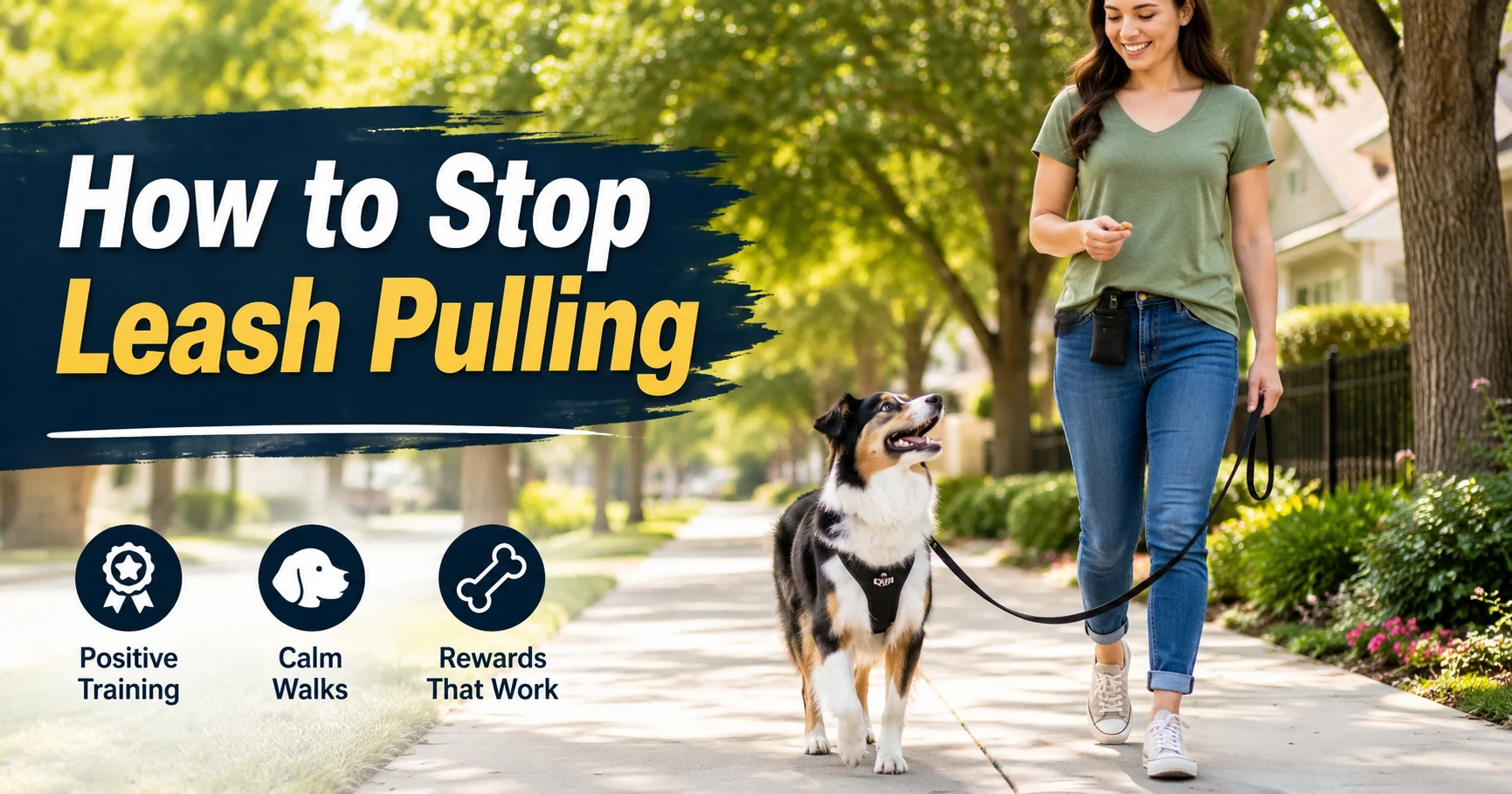
If you want to learn how to stop leash pulling, start with short daily walks in a low distraction area and reward your dog every time the leash stays loose. Keep training sessions calm, positive, and consistent. Avoid pulling back on the leash, yelling, or punishing your dog. Most dogs improve faster when owners reward good walking behavior early and practice every day for 5 to 10 minutes.
Introduction
Walking your dog should feel relaxing and enjoyable, but leash pulling can quickly turn a simple walk into a frustrating experience. Many dog owners struggle with sore arms, tangled leashes, sudden lunging, and embarrassing moments when their dog drags them down the sidewalk. Some dogs pull because they feel excited. Others pull because they never learned how to walk calmly beside their owner.
Puppies often pull because everything around them feels new and exciting. Adult dogs may pull from habit, lack of training, extra energy, fear, or overstimulation. Small dogs can pull constantly without owners noticing the behavior early, while larger dogs can become difficult and unsafe to handle if the problem continues.
The good news is that leash pulling usually improves with patient and reward-based dog training. You do not need harsh corrections or painful tools to teach polite leash manners. Most dogs learn better when owners stay consistent, reward calm behavior, and practice in the right environment.
This guide explains how to stop leash pulling step by step. You will learn why dogs pull, what supplies help most, common mistakes to avoid, how to train puppies and adult dogs, what to do if training stops working, and how to make walks calmer and safer for both you and your dog.
Why Dogs Pull on the Leash
Dogs naturally move faster than humans. When they pull and still reach something interesting, they learn that pulling works. Over time, the behavior becomes a habit.
Some common reasons dogs pull include:
- Excitement before walks
- Too much energy
- Lack of leash training
- Fear or anxiety
- Wanting to greet people or dogs
- Strong smells and distractions
- Inconsistent training
- Long periods without exercise
Puppies usually pull because they have not learned leash manners yet. Adult dogs often continue pulling because owners accidentally reward the behavior by walking forward while the leash stays tight.
What You Need Before You Start
The right supplies make dog leash training easier and safer.
| Supply | Why it helps |
|---|---|
| Front clip harness | Helps reduce pulling pressure |
| Standard 4 to 6-foot leash | Gives better control during walks |
| Small, soft treats | Rewards calm walking quickly |
| Treat pouch | Keeps rewards easy to reach |
| Comfortable collar with ID tag | Adds safety during walks |
| Quiet training area | Reduces distractions for beginners |
Avoid retractable leashes during training because they often encourage constant tension and pulling.
Do not use harsh tools or punishment-based training methods without professional guidance. Fear-based corrections can increase anxiety, frustration, and reactive behavior.
How to Stop Leash Pulling Step by Step
Start Indoors First
Many owners begin leash training outside too early. Start inside your home where distractions stay low.
Attach the leash and reward your dog for standing calmly beside you. Take a few steps forward and reward again when the leash stays loose.
Keep sessions short. Five minutes works well for beginners.
Reward the Exact Behavior You Want
Timing matters during dog training.
Reward your dog immediately when:
- The leash becomes loose
- Your dog walks beside you
- Your dog checks in with you
- Your dog slows down voluntarily
Dogs repeat behaviors that bring rewards.
Stop Moving When the Dog Pulls
One simple method works well for many dogs.
The moment your dog pulls:
- Stop walking immediately
- Stay still and calm
- Wait for slack in the leash
- Reward the loose leash
- Continue walking
Your dog learns that pulling stops the walk, while calm walking makes the walk continue.
Consistency matters. If pulling sometimes works, the habit stays strong.
Change Direction Often
If your dog rushes ahead constantly, calmly change direction before the leash becomes tight.
This teaches your dog to pay attention to your movement instead of dragging you forward.
Reward your dog every time they catch up calmly.
Practice in Low Distraction Areas First
Busy parks and crowded sidewalks make training harder in the beginning.
Start in:
- Your yard
- Quiet streets
- Empty parking lots
- Calm neighborhood paths
Once your dog improves, slowly add more distractions.
Best Rewards for Loose Leash Training
Most dogs learn faster with high-value rewards.
Good training treats include:
- Small chicken pieces
- Soft dog treats
- Tiny cheese pieces
- Freeze-dried treats
Use tiny rewards so your dog does not fill up quickly during training.
Praise also helps, especially for dogs that enjoy attention.
Puppy Leash Training Tips
Puppy leash training should feel gentle and fun. Young puppies tire quickly and lose focus fast.
Keep Puppy Training Sessions Short
Most puppies learn best with:
- 2 to 5 minute sessions
- Several short sessions daily
- Calm praise
- Frequent rewards
Do not expect perfect leash manners immediately.
Let Puppies Explore Safely
Puppies need time to sniff and explore the world. Balanced walks help prevent frustration.
Allow safe sniffing breaks while still rewarding loose leash behavior.
Avoid Overwhelming Public Areas
Young puppies may feel nervous around:
- Loud traffic
- Large crowds
- Fast-moving dogs
- Busy parks
Start with calm exposure first.
Ask your veterinarian which public areas match your puppy’s vaccine stage before visiting crowded dog spaces.
Adult Dog Leash Training Tips
Adult dogs can absolutely learn better leash manners even if they pulled for years.
Older dogs may simply need:
- Clear communication
- Daily practice
- Better consistency
- Improved exercise routines
Some adult dogs improve within a few weeks. Others need several months depending on habit strength and energy level.
Stay patient.
Common Mistakes That Make Leash Pulling Worse
Many owners accidentally reinforce pulling behavior.
Walking Faster When the Dog Pulls
If your dog pulls and still reaches exciting places, pulling becomes rewarding.
Stop moving when tension appears.
Training Too Long
Long sessions often frustrate both dogs and owners.
Short sessions work better.
Using Inconsistent Rules
Dogs become confused when:
- Pulling works sometimes
- Different family members use different commands
- Rewards happen randomly
Everyone should follow the same training rules.
Practicing in Busy Areas Too Soon
Dogs cannot focus well around heavy distractions during early training.
Start easy first.
Punishing Fearful Dogs
Fearful dogs may pull from anxiety instead of excitement.
Harsh corrections can worsen stress and fear.
Daily Loose Leash Walking Routine
A simple routine helps dogs learn faster.
| Time | Activity |
| Before walk | Calmly waiting at the door |
| First 5 minutes | Loose leash practice in quiet area |
| Middle of walk | Sniff breaks and reward moments |
| Final minutes | Calm walking home |
| After walk | Water and quiet rest |
Dogs often pull more when owners rush the beginning of walks.
Start calmly.
Do’s and Don’ts of Leash Training
| Do | Don’t |
| Reward loose leash walking | Yank the leash harshly |
| Keep sessions short | Train for too long |
| Stay patient and calm | Yell at your dog |
| Practice daily | Expect instant results |
| Use clear commands | Change rules constantly |
| Start in quiet places | Begin in crowded areas |
Helpful Commands for Loose Leash Walking
Basic commands improve leash manners significantly.
Watch Me
This command teaches your dog to focus on you.
Hold a treat near your face and reward eye contact.
Heel
“Heel” means walking closely beside you.
Use short practice sessions first before expecting longer walking periods.
Leave It
This command helps prevent lunging toward distractions.
Practice indoors before using it outside.
Let’s Go
This simple cue encourages your dog to move with you calmly.
Use an upbeat voice.
What to Do If Your Dog Pulls Toward Other Dogs
Some dogs pull from excitement while others pull from fear or frustration.
First, create distance from the trigger. Reward calm behavior before your dog becomes overexcited.
Avoid forcing greetings with unfamiliar dogs.
Not every dog wants social interaction during walks.
If your dog barks, lunges, or reacts aggressively, contact a qualified professional trainer or veterinarian. Sudden behavior changes may also relate to pain, fear, or health issues.
Small Dog vs Large Dog Leash Pulling
Small Dogs
Small dogs often receive less leash training because owners can physically manage them easier.
However, constant pulling still creates bad habits and neck strain.
Large Dogs
Large dogs require early leash training for safety.
Strong pulling can:
- Cause falls
- Injure owners
- Increase stress during walks
- Create dangerous situations near roads
Large breed puppies should begin gentle leash manners early.
How Much Exercise Helps Reduce Pulling
Many dogs pull harder when they feel overly energetic.
Exercise needs vary by:
- Age
- Breed
- Health
- Energy level
Helpful activities include:
- Fetch
- Puzzle toys
- Training games
- Sniff walks
- Structured play sessions
Mental exercise also helps calm excited dogs.
Troubleshooting Guide for Leash Pulling
| Problem | Likely reason | What to do |
| Dog pulls constantly | Training inconsistency | Practice daily with rewards |
| Dog ignores treats outside | Environment too distracting | Train in quieter areas first |
| Puppy bites the leash | Teething or excitement | Redirect to chew toy and reward calm behavior |
| Dog lunges at people | Overexcitement or fear | Create distance and reward calm focus |
| Dog pulls harder near parks | Anticipation and excitement | Slow down before reaching exciting areas |
| Dog walks well indoors only | Outdoor distractions too strong | Gradually increase distractions |
| The dog suddenly starts pulling | Stress, pain, or change in routine | Contact a veterinarian if behavior continues |
What to Do at Night
Some dogs become more excited during evening walks because they stored energy all day.
For calmer nighttime walks:
- Allow potty time before training
- Use reflective gear for safety
- Avoid overstimulating areas
- Keep training sessions short
- Reward calm walking often
If your dog becomes nervous in the dark, avoid forcing exposure too quickly.
Safety Tips Every Owner Should Know
Leash safety matters just as much as training.
Check Equipment Regularly
Inspect:
- Harness clips
- Leash stitching
- Collar fit
- ID tags
Replace damaged equipment immediately.
Avoid Dangerous Walking Areas
Be careful near:
- Busy roads
- Crowded dog areas
- Broken sidewalks
- Loose dogs
Watch for Signs of Stress
A stressed dog may:
- Pant heavily
- Refuse treats
- Freeze suddenly
- Bark excessively
- Pull frantically
Calm distance often helps nervous dogs feel safer.
When to Ask a Professional Trainer
Some leash-pulling situations need extra help.
Consider professional dog training if:
- Your dog shows aggression
- Pulling causes safety risks
- Your dog lunges suddenly
- Training progress stops completely
- Fear or anxiety seems severe
Choose reward-based trainers who use humane methods.
When to Call a Veterinarian
Behavior changes sometimes connect to health problems.
Contact a veterinarian if your dog:
- Suddenly starts pulling aggressively
- Shows pain while walking
- Limping appears
- Refuses normal walks
- Pants excessively during light activity
- Seems fearful unexpectedly
Pain and discomfort can affect dog behavior.
How Long Does Loose Leash Training Take?
Every dog learns differently.
Some dogs improve within days while others need several months.
Progress depends on:
- Consistency
- Practice frequency
- Energy level
- Training history
- Environment
- Owner patience
Small improvements matter. Focus on steady progress instead of perfection.
Conclusion
Learning how to stop leash pulling takes patience, consistency, and daily practice, but most dogs can improve with calm and reward-based training. Start in quiet areas, reward loose leash walking quickly, and avoid harsh corrections that increase stress or frustration. Keep training sessions short and positive. Whether you train a puppy or an older dog, steady routines and clear communication help create calmer, safer, and more enjoyable walks for both of you.
FAQs
How do I stop leash pulling quickly?
Start rewarding loose leash walking immediately and stop walking every time your dog pulls. Practice daily in low-distraction areas for faster results.
Why does my dog pull so much on walks?
Dogs often pull from excitement, energy, distractions, habit, or lack of training.
Can puppies learn loose leash walking?
Yes. Puppies can start gentle leash training early with short and positive sessions.
What is the best leash for leash training?
A standard 4- to 6-foot leash usually works best for beginner leash training.
Should I use treats during dog leash training?
Yes. Small rewards help dogs understand which behavior earns praise and movement.
How long does it take to stop leash pulling?
Some dogs improve within weeks while others need several months of consistent practice.
What should I do if leash training is not working?
Reduce distractions, shorten sessions, improve reward timing, and consider help from a professional trainer if progress completely stops.
Is leash pulling dangerous?
Strong pulling can cause neck strain, injuries, stress, and unsafe situations near roads or crowded areas.
Can older dogs still learn leash manners?
Yes. Adult dogs can absolutely learn better leash behavior with consistent training.
Should I punish my dog for pulling on the leash?
No. Harsh punishment can increase fear, stress, and frustration. Reward-based training works better for most dogs.