Quick Answer
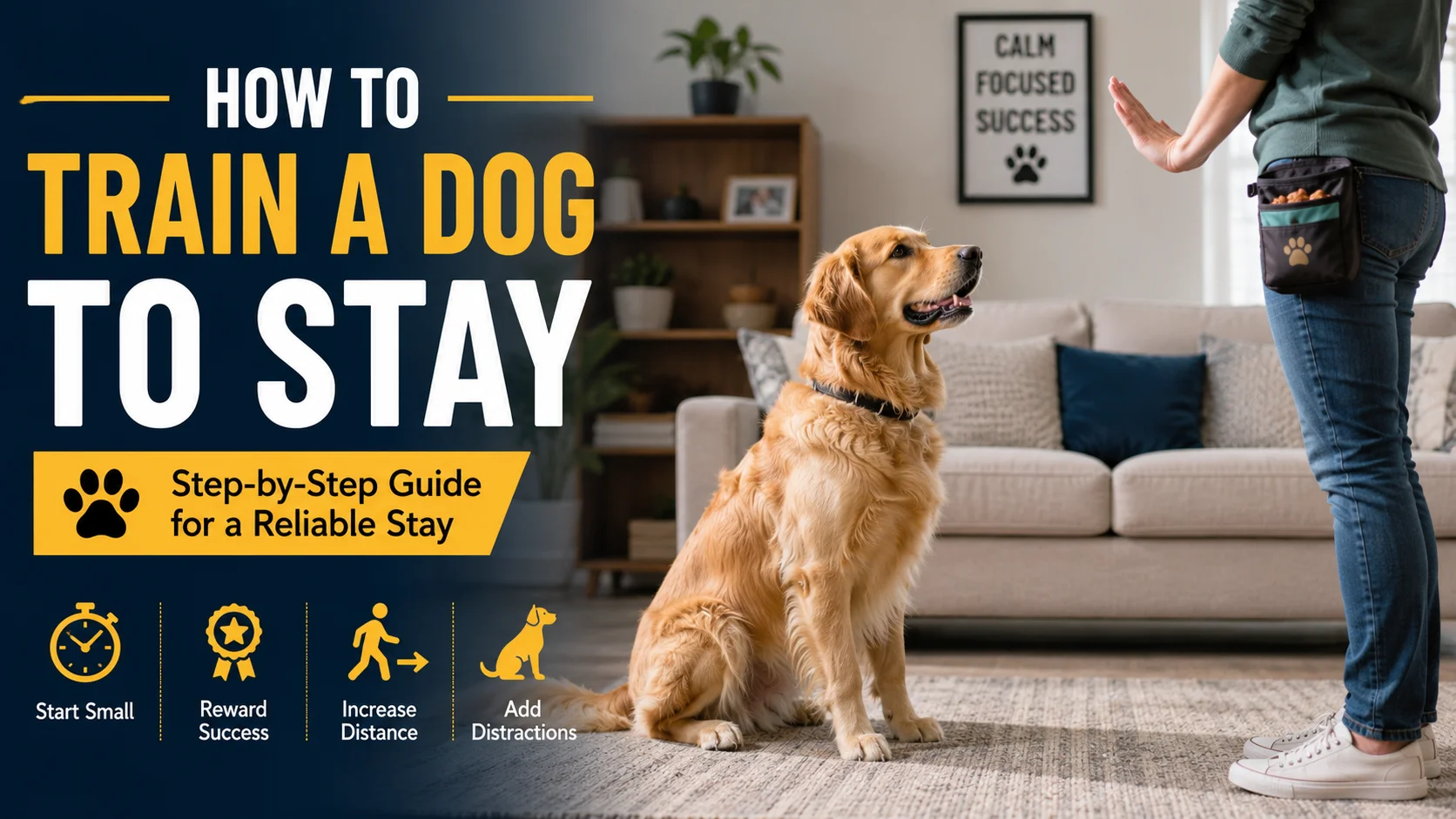
Learning how to train a dog to stay starts with teaching your dog to remain in one position until released. Begin with short distances and durations, reward success with treats and praise, and slowly increase the challenge. Short, consistent training sessions using positive reinforcement help most dogs build a reliable stay command over time.
Introduction
Teaching a reliable stay is one of the most valuable obedience skills your dog can learn. Whether you’re waiting at a busy crosswalk, greeting visitors at the front door, or simply preventing your dog from rushing toward distractions, a strong stay command improves both safety and everyday life.
If you’re wondering how to train a dog to stay, the good news is that almost any healthy dog can learn with patience, consistency, and reward-based training. Puppies can begin practicing basic stay exercises once they understand simple commands like “sit” or “down,” while older dogs can learn the skill at any age.
The goal isn’t to keep your dog perfectly still for long periods overnight. Instead, you’ll gradually build confidence, self-control, and focus through short, successful practice sessions. With the right approach, your dog will learn that staying calmly in place always leads to something rewarding.
What Does the Stay Command Mean?
The stay command tells your dog to hold its current position until you give a release cue.
Depending on your training, your dog may stay while:
- Sitting
- Lying down
- Standing
The important part is that your dog remains in position until released rather than deciding when training is finished.
Many owners accidentally teach their dogs to break the stay because they call the dog every time after saying “stay.” Instead, your dog should learn that the release word ends the exercise.
Popular release cues include:
- OK
- Free
- Break
- Release
Choose one word and use it consistently.
Why Teaching Stay Is Important
A dependable stay is about much more than obedience.
It helps your dog:
- Develop impulse control
- Improve focus around distractions
- Stay safe near roads and parking lots
- Wait calmly while guests enter your home
- Prevent door dashing
- Build better manners during daily routines
- Make grooming and veterinary visits easier
The stay command also becomes the foundation for many advanced obedience exercises and canine sports.
Before You Start Training
Successful stay training begins with the right environment.
Choose a quiet location where your dog can focus without too many distractions.
Have these supplies ready:
- Small, high-value treats
- A clicker if you use clicker training
- A regular leash
- A comfortable harness if needed
- Plenty of patience
Keep sessions short. Five to ten minutes is usually enough, especially for puppies or easily distracted dogs.
Always train before your dog becomes tired or frustrated.
Step-by-Step: How to Train a Dog to Stay
Step 1: Teach Sit or Down First
Your dog should already understand either “sit” or “down.”
Ask for the position your dog knows best before introducing stay.
Reward immediately for responding.
Step 2: Introduce the Stay Cue
Ask your dog to sit.
Hold your hand up like a stop signal.
Calmly say:
“Stay.”
Wait only one or two seconds.
If your dog remains still, immediately reward and praise.
Release your dog using your chosen release cue.
Repeat several times.
Step 3: Slowly Increase Duration
Once your dog succeeds for two seconds, gradually increase the waiting time.
For example:
- 3 seconds
- 5 seconds
- 8 seconds
- 10 seconds
- 15 seconds
Avoid increasing difficulty too quickly.
Many small successes produce better long-term results than one difficult session.
Step 4: Add Distance
When your dog can stay for several seconds, begin taking one step backward.
If your dog stays:
- Return to your dog.
- Reward generously.
- Give the release cue.
Always return to your dog before rewarding during early training.
This helps prevent your dog from assuming that “stay” always ends with running toward you.
Step 5: Practice with Mild Distractions
Once your dog succeeds indoors, begin adding small distractions.
Examples include:
- Someone walking through the room
- A toy placed nearby
- Light household noises
- Opening a door
- Another family member moving around
If your dog breaks the stay, reduce the difficulty and try again.
Training should challenge your dog without overwhelming them.
Step 6: Practice in Different Locations
Dogs do not automatically understand that commands apply everywhere.
Practice in:
- Your backyard
- Quiet parks
- Sidewalks
- Pet-friendly stores where permitted
- Friends’ homes
Each new environment requires patience because distractions are different.
How Long Does It Take to Train a Reliable Stay?
Every dog learns at a different pace.
Many dogs understand the basic idea within one to two weeks of daily practice.
A dependable stay around distractions often takes several weeks or even months of consistent training.
Factors that affect progress include:
- Age
- Breed
- Previous training
- Motivation
- Consistency
- Practice environment
Focus on steady improvement instead of rushing the process.
When to Seek Professional Help
Most dogs can learn a dependable stay with consistent practice, but some situations call for additional support.
Consider working with a qualified, reward-based professional dog trainer if:
- Your dog repeatedly ignores basic cues despite consistent training.
- Your dog becomes overly anxious during training sessions.
- Fear, aggression, or reactivity makes practicing stay unsafe.
- Your dog cannot focus even in a quiet environment.
- You want to prepare your dog for advanced obedience, therapy work, or canine sports.
If your dog suddenly loses previously learned skills or shows changes in behavior, schedule a veterinary examination. Pain, illness, hearing loss, vision changes, or age-related conditions can affect training performance.
Conclusion
Learning how to train a dog to stay takes patience, repetition, and realistic expectations, but the results are well worth the effort. A dependable stay improves your dog’s self-control, strengthens communication, and helps keep them safe in everyday situations.
Start in a quiet environment, reward every success, and increase difficulty one small step at a time. Keep training sessions short, end on a positive note, and remember that consistency matters more than speed. With regular practice and reward-based training, most dogs can develop a reliable stay that lasts a lifetime.
FAQs
Q1. How long does it take to train a dog to stay?
Most dogs understand the basics within one to two weeks of daily practice. A reliable stay around distractions usually takes several weeks or months, depending on your dog’s age, temperament, previous training, and the consistency of your practice.
Q2. At what age can you teach a puppy to stay?
Many puppies can begin learning a simple stay around 8 to 10 weeks of age after they start responding to basic cues like sit. Keep sessions short, fun, and realistic for their attention span.
Q3. Should I reward my dog every time they stay?
During the early stages, yes. Frequent rewards help your dog understand the behavior you want. As your dog’s stay becomes reliable, gradually switch to variable rewards while continuing to offer praise.
Q4. What release word should I use?
Choose a simple word such as “OK,” “Free,” or “Break.” Use the same release cue every time so your dog clearly understands when the stay has ended.
Q5. Why does my dog break the stay as soon as I walk away?
This usually means the training progressed too quickly. Reduce the distance or duration, reward successful repetitions, and increase the difficulty more gradually.
Q6. Can older dogs still learn the stay command?
Absolutely. Adult and senior dogs can learn new behaviors using positive reinforcement. They may simply need a pace that matches their physical ability and learning history.
Q7. Should I use a leash while teaching stay?
A leash can help manage the training environment outdoors, but it should not be used to force your dog to remain in position. The goal is for your dog to choose to stay because they understand and expect a reward.
Q8. Is the stay command different from “wait”?
Many trainers use these cues differently. “Stay” generally means your dog remains in position until released, while “wait” often means pause briefly before moving. Either system works as long as you’re consistent.