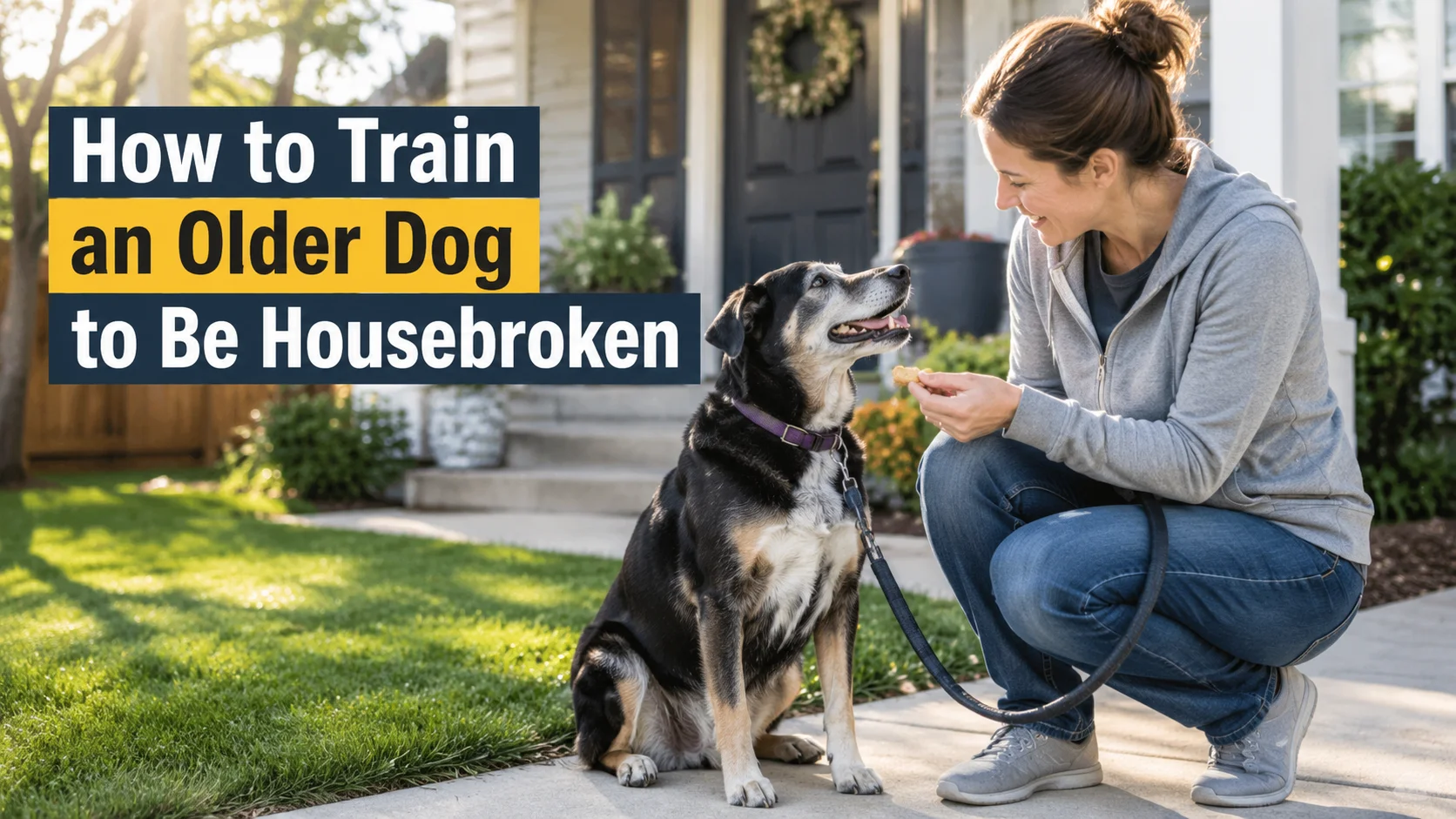
Quick Answer
If you’re wondering how to train an older dog to be housebroken, the good news is that adult dogs can absolutely learn new bathroom habits. Success depends on consistency, supervision, a predictable routine, and rewarding your dog immediately for eliminating in the correct location. While older dogs may take longer than puppies if they have established habits, most can become reliably house-trained with patience and positive reinforcement.
Introduction
Many dog owners assume house training is only something you teach puppies. In reality, adult dogs can learn new habits at any age. Whether you’ve recently adopted a rescue dog, taken in a senior dog, or are dealing with a dog that has never fully learned proper bathroom manners, successful housebreaking is still possible.
Learning how to train an older dog to be housebroken requires a slightly different approach than puppy potty training. Adult dogs often arrive with existing habits, previous experiences, and sometimes anxiety related to moving into a new environment. Some may have spent years following routines that no longer fit their current home.
The encouraging news is that dogs continue learning throughout their lives. With a structured schedule, close supervision, and reward-based training, most older dogs can develop reliable bathroom habits. The key is understanding why accidents happen, creating consistency, and helping your dog build confidence while learning new routines.
Why Older Dogs Need a Different Housebreaking Approach
Unlike puppies, older dogs may have practiced unwanted bathroom habits for months or even years. Some rescue dogs have never lived inside a home, while others may have experienced inconsistent routines or limited supervision.
Common reasons older dogs struggle with house training include:
- Previous neglect
- Multiple home changes
- Stress and anxiety
- Fearful behavior
- Inconsistent schedules
- Lack of supervision
- Medical conditions
- Confusion about bathroom locations
Because of these factors, training an older dog requires patience and realistic expectations.
Can Older Dogs Be Trained?
Absolutely.
One of the most common myths in dog ownership is that older dogs cannot learn new behaviors. In reality, adult dogs are often excellent learners. They typically have longer attention spans and better impulse control than young puppies.
Whether you’re trying to:
- Train an older rescue dog
- Improve house manners
- Reduce indoor accidents
- Build confidence in a fearful dog
Positive reinforcement remains one of the most effective training methods available.
Understanding Why Accidents Happen
Before starting a training plan, it is important to understand why your dog is having accidents indoors.
Environmental Causes
Changes in the environment can disrupt established routines.
Examples include:
- Moving to a new home
- New family members
- Different feeding schedules
- Changes in work routines
- Travel or relocation
Training Causes
Many housebreaking problems are related to management issues rather than stubborn behavior.
Common training-related causes include:
- Inconsistent potty schedules
- Too much freedom indoors
- Lack of supervision
- Infrequent potty breaks
- Confusing routines
Medical Causes
If a previously house-trained dog suddenly begins having accidents, schedule a veterinary visit.
Possible medical causes include the following:
- Urinary tract infections
- Kidney disease
- Diabetes
- Digestive problems
- Medication side effects
- Age-related health issues
Never assume a sudden change in bathroom habits is purely a training problem.
First Week Adjustment Plan
Many owners rush training immediately after bringing home a rescue dog. However, the first week should focus on helping the dog feel safe and secure.
Days 1-3: Decompression Period
Give your dog time to adjust.
Avoid overwhelming situations such as the following:
- Large gatherings
- Dog parks
- Constant visitors
- Busy public environments
Instead, focus on:
- Calm walks
- Consistent feeding times
- Frequent potty breaks
- Quiet rest periods
Many rescue dogs are stressed during the first few days and may not show their true personality right away.
Days 4-7: Begin Structured Training
Once your dog starts settling in, begin introducing structure.
Focus on:
- A consistent potty schedule
- Regular feeding times
- Basic obedience commands
- Crate training if appropriate
- Positive reinforcement
Keep expectations realistic. Some dogs adjust within days, while others require several weeks.
Step-by-Step Training Method
Step 1: Create a Consistent Potty Schedule
Consistency is one of the most important parts of adult dog training.
Take your dog outside:
- Immediately after waking up
- After meals
- After naps
- After play sessions
- Before bedtime
- Every few hours during the day
Dogs learn fastest when bathroom opportunities occur at predictable times.
Sample Daily Schedule
Morning
6:30 AM – Outdoor potty break
7:00 AM – Breakfast
7:20 AM – Outdoor potty break
Midday
12:00 PM – Potty break
Short walk and supervised indoor time
Evening
5:30 PM – Dinner
6:00 PM – Potty break
Night
9:30 PM – Final potty break before bed
Adjust the schedule based on your dog’s age, health, and activity level.
Step 2: Choose One Bathroom Area
Take your dog to the same location each time.
This helps create a strong association between that area and bathroom behavior.
Benefits include:
- Faster learning
- Less confusion
- Greater consistency
- Stronger scent recognition
Remain calm and allow your dog to focus on the task rather than turning the trip into playtime.
Step 3: Reward Immediately
Timing matters.
As soon as your dog finishes eliminating outdoors:
- Offer praise
- Give a small treat
- Use a consistent marker word
Examples include:
- Good potty
- Yes
- Good job
The reward should happen within a few seconds to help your dog connect the behavior with the reward.
Step 4: Supervise Indoors
Most accidents occur when owners are distracted.
Until your dog becomes reliable:
- Keep them in the same room
- Use baby gates
- Supervise closely
- Watch for potty signals
Common potty signals include:
- Sniffing
- Circling
- Restlessness
- Heading toward the door
- Wandering away suddenly
Immediate supervision prevents mistakes from becoming habits.
How to Train an Older Dog to Be Left Alone Without Accidents
Some dogs only have accidents when their owners leave the house. This can happen because of stress, separation-related behaviors, boredom, or a lack of routine.
Before leaving your dog alone:
- Provide exercise and mental stimulation.
- Take your dog outside for a potty break.
- Keep departures calm and low-key.
- Leave your dog in a safe, comfortable area.
Start with short absences of a few minutes and gradually increase the duration. Avoid making a big event out of leaving or returning home, as this can increase anxiety.
If your dog continues having accidents only when left alone, consider consulting a professional trainer or behavior consultant.
Fear and Confidence Building for Rescue Dogs
Fearful dogs often struggle with house training because stress can interfere with normal bathroom habits.
Common signs of fear include:
- Trembling
- Hiding
- Excessive panting
- Avoiding people
- Refusing food
- Startling easily
Building confidence can improve house-training success.
Helpful activities include:
- Short reward-based training sessions
- Food puzzles and enrichment toys
- Gentle handling
- Sniff walks
- Consistent routines
- Calm praise
A confident dog is generally more relaxed and better able to learn new habits.
Training Older Dogs With Established Habits
One of the biggest challenges in adult dog training is replacing behaviors that have been practiced for a long time.
If your dog has been eliminating indoors for months or years, focus on preventing opportunities to repeat the behavior.
Successful strategies include the following:
- Increasing supervision
- Limiting access to the house
- Following a strict schedule
- Rewarding outdoor success every time
- Cleaning accident areas thoroughly
Remember that punishment does not teach a dog where to go. It only teaches them to avoid going in front of you.
Consistency is what changes habits over time.
Crate Training an Older Dog for Housebreaking
A crate can be a valuable tool when used correctly.
Most dogs naturally prefer to keep their sleeping area clean, which can support the house-training process.
Benefits of Crate Training
Crate training can:
- Reduce indoor accidents
- Create a safe resting place
- Help establish routines
- Support overnight training
- Improve supervision
How to Introduce a Crate
Introduce the crate gradually.
- Leave the door open.
- Toss treats inside.
- Feed meals near the crate.
- Allow your dog to enter voluntarily.
- Slowly increase crate time.
The crate should never be used as punishment.
A properly sized crate should allow your dog to stand, turn around, and lie down comfortably.
Using Positive Reinforcement for Faster Results
Positive reinforcement means rewarding behaviors you want to see again.
For house training, rewards may include:
- Treats
- Praise
- Play
- Affection
The most effective reward is one your dog truly enjoys.
Practical Example
Imagine your dog urinates outside after a potty trip.
Immediately:
- Say “Good potty!”
- Give a small treat
- Offer calm praise
This helps your dog understand exactly which behavior earned the reward.
Over time, your dog begins choosing that behavior more consistently.
Training an Older Rescue Dog
Rescue dogs often need extra patience because they may have experienced instability in previous homes.
Many rescue dogs have lived through the following:
- Shelter environments
- Multiple owners
- Inconsistent schedules
- Stressful situations
Rather than expecting immediate results, focus on:
- Building trust
- Creating predictable routines
- Preventing accidents
- Rewarding success
Many rescue dogs show major improvements after several weeks of consistent structure.
Deaf Dog Training Adaptations
A deaf dog can absolutely learn proper house-training habits.
Instead of verbal praise, use visual communication.
Helpful tools include:
- Hand signals
- Thumbs-up gestures
- Gentle touch rewards
- Food rewards
- Consistent body language
Choose one signal and use it every time your dog successfully eliminates outside.
Consistency is especially important for deaf dogs.
Blind Dog Training Adaptations
Blind dogs can become reliably house-trained through routine and predictability.
Helpful strategies include:
- Using the same potty location
- Walking the same route
- Keeping furniture placement consistent
- Using scent markers if needed
Many blind dogs learn bathroom routines extremely well because they rely heavily on environmental consistency.
Small Dog Behavior Considerations
Small dogs often face unique house-training challenges.
Common reasons include:
- Smaller bladders
- Owners missing accidents
- Indoor potty pad dependence
- Inconsistent schedules
Some owners unintentionally tolerate behaviors in small dogs that they would not allow in larger breeds.
The solution remains the same:
- Consistent routines
- Frequent potty trips
- Supervision
- Positive reinforcement
Small size does not make a dog harder to train.
Indoor Practice Tips
Indoor management plays a major role in house-training success.
Helpful strategies include:
- Watching for potty signals
- Using baby gates
- Supervising closely
- Keeping cleaning supplies available
- Following a feeding schedule
Good indoor management prevents accidents and helps your dog develop better habits.
Outdoor Practice Tips
Simply opening the door is often not enough.
During potty trips:
- Go to the same location
- Minimize distractions
- Wait patiently
- Keep your dog focused
- Reward success immediately
A predictable outdoor routine helps dogs learn faster and become more reliable.
Common Housebreaking Mistakes
Many house-training setbacks happen because owners unknowingly make mistakes that confuse their dogs. Avoiding these common problems can significantly improve your results.
Giving Too Much Freedom Too Soon
One of the biggest mistakes is allowing an older dog unrestricted access to the house before they have earned that freedom.
A few accident-free days do not mean your dog fully understands the rules. Continue supervising closely and gradually increase access to additional rooms as your dog proves reliable.
Punishing Accidents
Punishing a dog for accidents can create fear and anxiety. Many dogs learn to hide when they need to eliminate rather than learning the correct bathroom location.
Instead of punishment:
- Interrupt gently if you catch the behavior.
- Take the dog outside immediately.
- Reward success outdoors.
- Clean accidents thoroughly.
Missing Potty Opportunities
Waiting too long between bathroom breaks often leads to accidents.
Remember that many adult dogs, especially rescue dogs, need frequent opportunities to succeed during the early stages of training.
Inconsistent Schedules
Dogs thrive on routine.
Changing feeding times, potty breaks, and daily activities can make learning more difficult. Try to follow the same schedule every day whenever possible.
Not Cleaning Accident Areas Properly
Dogs are attracted to locations where they have previously eliminated.
Use an enzymatic pet cleaner designed to remove odor completely. Standard household cleaners often fail to eliminate scent markers that dogs can still detect.
Expecting Immediate Results
Housebreaking an older dog takes time. Some dogs improve quickly, while others need several months of consistent training.
Focus on progress rather than perfection.
Sample Daily Training Routine
A predictable schedule helps dogs understand when and where bathroom breaks occur.
Morning Routine
- Wake up and immediately go outside.
- Reward successful elimination.
- Feed breakfast.
- Take another potty break 15 to 20 minutes after eating.
- Enjoy a short walk or play session.
Midday Routine
- Potty break.
- Supervised indoor time.
- Short training session.
- Mental enrichment activity.
Afternoon Routine
- Outdoor potty break.
- Exercise session.
- Calm rest period.
Evening Routine
- Dinner.
- Potty break shortly after eating.
- Family time and supervised freedom.
Before Bed
- Final potty trip.
- Calm bedtime routine.
- Overnight rest.
Following a similar schedule every day helps create predictable habits.
Realistic Housebreaking Timeline
Every dog learns at a different pace, but most owners see gradual improvement when they remain consistent.
Week One
During the first week, your dog is learning the routine.
Common results include:
- Fewer accidents
- Better understanding of potty locations
- Improved comfort in the home
Weeks Two to Three
By this stage, many dogs begin showing noticeable progress.
You may see:
- More reliable outdoor elimination
- Potty signals before accidents
- Improved response to schedules
Weeks Four to Eight
Most dogs continue improving during this period.
Common signs include:
- Longer periods without accidents
- Increased reliability
- More freedom indoors
- Stronger bathroom habits
Some rescue dogs or dogs with long-standing habits may require several additional months before becoming completely dependable.
Signs Your Dog Is Making Progress
House-training success often happens gradually.
Watch for these positive signs:
- Fewer accidents indoors
- Going to the door when they need to go out
- Eliminating quickly in the designated area
- Responding well to routines
- Better confidence around the home
- Increased reliability during supervised freedom
Even small improvements are worth celebrating.
Safety Note
Always use reward-based training methods when housebreaking an older dog.
Avoid:
- Harsh corrections
- Physical punishment
- Fear-based training techniques
- Yelling after accidents
If your dog displays:
- Aggression
- Severe fear
- Extreme anxiety
- Resource guarding
- Biting behavior
Seek guidance from a qualified dog trainer, certified behavior consultant, veterinary behaviorist, or veterinarian.
Additionally, sudden changes in bathroom habits should always be discussed with a veterinarian to rule out medical causes.
When to Get Professional Help
Most older dogs can be housebroken successfully at home, but some situations require professional support.
Consider seeking help if:
- Accidents continue after several weeks of consistent training.
- Your dog shows severe anxiety.
- House soiling occurs alongside aggression.
- Your dog suddenly regresses after being house-trained.
- Medical issues may be involved.
- Separation-related behaviors contribute to accidents.
A professional can identify issues that may not be obvious and help create a customized training plan.
Conclusion
Learning how to train an older dog to be housebroken requires patience, consistency, and realistic expectations. Adult dogs, rescue dogs, and even senior dogs can learn new bathroom habits when given clear guidance and plenty of opportunities to succeed.
Focus on creating a predictable routine, supervising carefully, rewarding outdoor elimination, and preventing accidents whenever possible. Avoid punishment and remember that progress often happens gradually.
With positive reinforcement, structure, and patience, most older dogs can become reliable, confident, and well-adjusted members of the household.
FAQs
Q1. Can an older dog really be housebroken?
Yes, older dogs can absolutely be housebroken. Dogs continue learning throughout their lives, and many adult dogs learn faster than puppies because they have better focus and impulse control. With consistent routines, supervision, and positive reinforcement, most older dogs can develop reliable bathroom habits.
Q2. How long does it take to train an older dog to be housebroken?
The timeline varies depending on the dog’s history, age, health, and previous training. Some older dogs show significant improvement within a few weeks, while others may require several months of consistent training. Patience and routine are key to long-term success.
Q3. Why is my older rescue dog having accidents indoors?
Rescue dogs often need time to adjust to a new environment. Stress, anxiety, unfamiliar surroundings, and previous living conditions can contribute to indoor accidents. Establishing a predictable schedule and rewarding outdoor elimination can help your dog adapt more quickly.
Q4. Should I punish my dog for having accidents in the house?
No. Punishment can create fear, anxiety, and confusion. Instead of correcting the dog after an accident, focus on preventing future accidents through supervision, management, and positive reinforcement. Always reward successful bathroom trips outdoors.
Q5. Can crate training help housebreak an older dog?
Yes, crate training can be very effective when used properly. A crate provides a safe space, helps prevent unsupervised accidents, and supports a consistent routine. The crate should never be used as punishment and should be introduced gradually.
Q6. What should I do if my dog only has accidents when left alone?
Accidents that occur only when you’re away may be related to stress, separation-related behaviors, or a lack of potty opportunities before departure. Ensure your dog gets exercise and a bathroom break before you leave, and gradually build their comfort with being alone.
Q7. How do you train an older dog that has never lived indoors?
Dogs that have never lived inside a home may need extra patience and structure. Start with frequent potty breaks, close supervision, a consistent feeding schedule, and immediate rewards for outdoor elimination. Focus on helping the dog feel safe while learning new routines.
Q8. Can deaf or blind dogs be housebroken?
Yes. Deaf dogs can learn through hand signals, visual markers, and food rewards, while blind dogs benefit from consistent routines and predictable bathroom locations. With patience and clear communication, both deaf and blind dogs can become reliably house-trained.