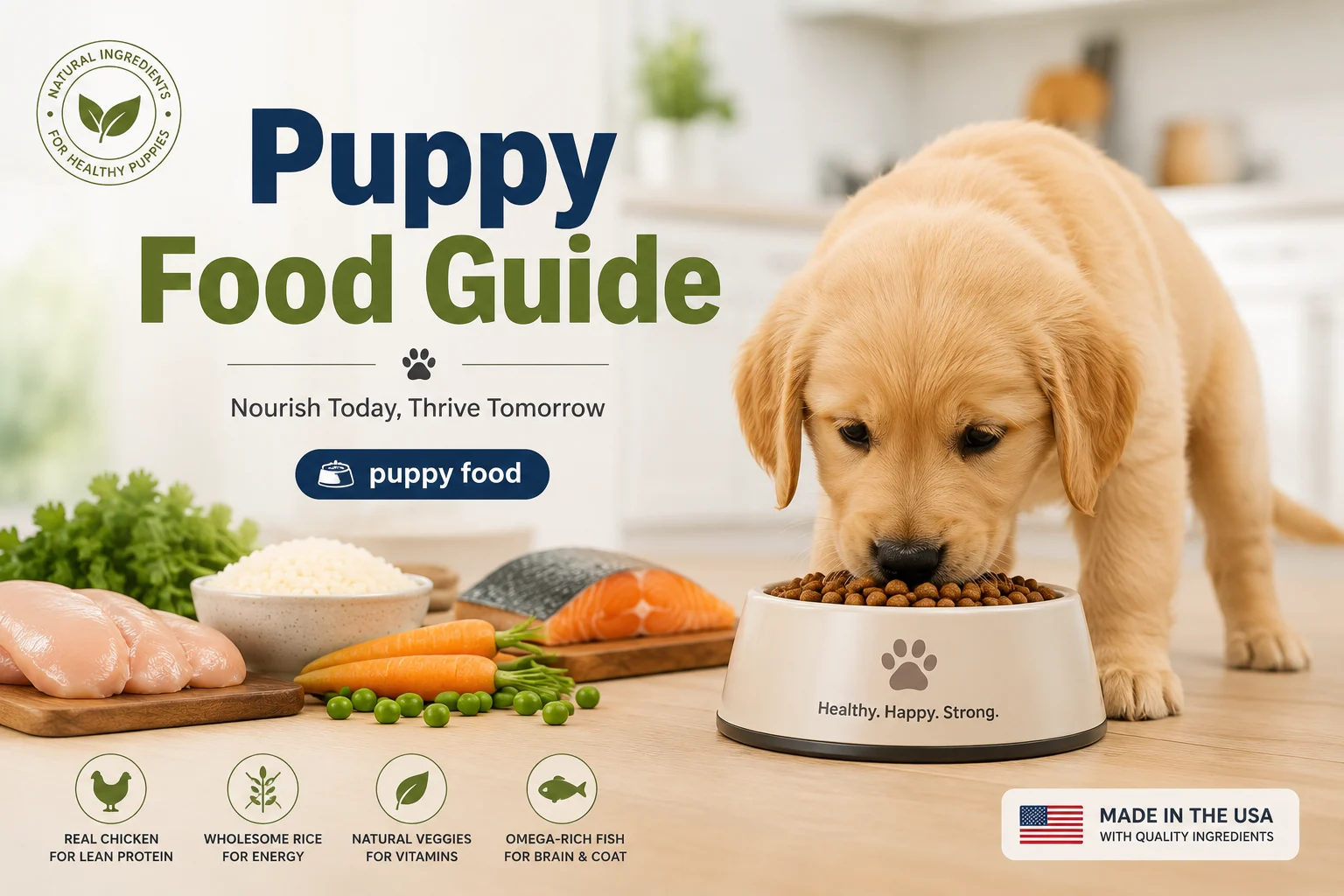
Getting a new puppy is exciting for every family. Puppies bring happiness, love, and energy into the home. Just like small children, puppies need proper care and healthy food to grow strong. One of the biggest responsibilities of a dog owner is choosing the right puppy food.
This guide will help you understand puppy food in simple English. You will learn what puppies need, how often to feed them, and how to choose the best food for your furry friend.
Why Puppies Need Special Food
Puppies grow very quickly during their first year. Their bodies need more energy and nutrients compared to adult dogs. Puppy food is specially made to support this important growth stage.
Healthy puppy food helps with:
- Brain development
- Strong bones and teeth
- Healthy muscles
- Better digestion
- Shiny skin and coat
- Strong immune system
Adult dog food does not always contain the right balance of nutrients for puppies. That is why experts recommend feeding puppy-specific food during the early months.
Important Nutrients in Puppy Food
Every puppy needs balanced nutrition to stay healthy. Here are the key nutrients found in quality puppy food.
Protein for Growth
Protein is one of the most important parts of puppy nutrition. It helps build muscles and supports healthy body development.
Good protein sources include:
- Chicken
- Turkey
- Beef
- Fish
- Eggs
- Lamb
Always check food labels and choose products with real meat listed first.
Healthy Fats
Fats give puppies energy and support brain health. Healthy fats also help keep skin soft and coats shiny.
Common healthy fat sources are:
- Fish oil
- Salmon oil
- Chicken fat
- Flaxseed
Carbohydrates for Energy
Puppies are active and playful. Carbohydrates provide energy for daily activities.
Healthy carbohydrate ingredients include:
- Brown rice
- Sweet potatoes
- Oatmeal
- Peas
- Barley
Vitamins and Minerals
Puppies also need vitamins and minerals to support healthy bones, teeth, and immune systems. Calcium and phosphorus are especially important for growing puppies.
Dry Puppy Food or Wet Puppy Food
Many dog owners ask which option is better. Both dry and wet puppy food have benefits.
Dry Puppy Food
Dry food, also called kibble, is one of the most common choices.
Benefits include:
- Easy storage
- Lower cost
- Supports dental health
- Longer shelf life
Wet Puppy Food
Wet food contains more moisture and stronger flavors.
Benefits include:
- Easier chewing
- Better hydration
- Good for picky puppies
Some owners mix dry and wet food together for better taste and balanced nutrition.
How to Choose the Best Puppy Food
Choosing puppy food can feel confusing because stores have many brands and options. Here are simple tips to help.
Read the Ingredients
Look for foods with real meat as the first ingredient. Avoid products filled with artificial colors and unnecessary fillers.
Choose Food Based on Puppy Size
Different puppies have different nutritional needs.
- Small breeds need more calories for energy.
- Large breeds need balanced calcium for healthy bone growth.
Check for Balanced Nutrition
Choose puppy food that provides complete and balanced nutrition. This helps support healthy development.
Avoid Artificial Additives
Natural ingredients are usually a better choice for puppies. Try to avoid foods with too many chemicals and preservatives.
Healthy Ingredients to Look For
Good puppy food should contain nutritious ingredients that support overall health.
| Ingredient | Benefit |
|---|---|
| Chicken | Lean protein |
| Salmon | Omega-3 fatty acids |
| Pumpkin | Healthy digestion |
| Carrots | Vitamins and fiber |
| Brown Rice | Gentle on the stomach |
| Blueberries | Antioxidants |
| Eggs | Protein and healthy fats |
Foods Puppies Should Never Eat
Some human foods can be dangerous for puppies. Keep these foods away from your dog.
Unsafe Foods for Puppies
- Chocolate
- Grapes
- Raisins
- Garlic
- Onion
- Alcohol
- Avocado
- Caffeine
- Candy with xylitol
These foods may cause serious illness and should never be given to puppies.
Puppy Feeding Schedule
Puppies need smaller meals several times a day because their bodies are growing fast.
| Puppy Age | Meals Per Day |
|---|---|
| 6–12 weeks | 4 meals |
| 3–6 months | 3 meals |
| 6–12 months | 2 meals |
Always provide clean drinking water throughout the day.
Homemade Puppy Food
Some dog owners prefer homemade puppy food because they want fresh ingredients. Homemade meals can be healthy when prepared properly.
A simple homemade puppy meal may include the following:
- Cooked chicken
- Rice
- Carrots
- Pumpkin
- Peas
However, puppies need balanced nutrition. Homemade food should include the right vitamins and minerals. It is a good idea to speak with a veterinarian before fully switching to homemade meals.
Signs Your Puppy Likes the Food
Healthy puppies usually show clear signs when they are eating good-quality food.
Healthy Signs Include
- Bright eyes
- Healthy skin
- Shiny coat
- Normal digestion
- Healthy weight gain
- Good energy levels
If your puppy often refuses food or has stomach problems, the food may not be suitable.
Common Puppy Feeding Mistakes
Many new dog owners make small mistakes when feeding puppies. Avoiding these problems can help your puppy stay healthy.
Feeding Too Much
Overfeeding may lead to unhealthy weight gain and joint stress.
Too Many Treats
Treats should only be a small part of the puppy’s diet.
Changing Food Too Quickly
Sudden food changes may upset your puppy’s stomach. Slowly mix new food with old food over several days.
Giving Unsafe Human Food
Not all human food is safe for puppies. Always check before sharing food with your pet.
Grain-Free Puppy Food
Grain-free puppy food has become popular in recent years. Some puppies with allergies may benefit from grain-free diets.
However, many puppies digest healthy grains without problems. Ingredients like brown rice and oatmeal can provide fiber and energy.
It is best to ask your veterinarian before changing to grain-free puppy food.
How Much Puppy Food Should You Give?
The amount of food depends on the following:
- Puppy age
- Breed size
- Activity level
- Weight
Always follow the feeding guide on the food package. Every puppy is different, so watch their weight and energy levels carefully.
When to Switch to Adult Dog Food
Most puppies can switch to adult dog food around one year old. Large breed dogs may need puppy food for a longer period.
Your veterinarian can help you decide the right time.
Tips for Raising a Healthy Puppy
Good nutrition works best when combined with healthy daily habits.
Helpful Puppy Care Tips
- Visit the veterinarian regularly
- Keep vaccinations updated
- Give daily exercise
- Maintain feeding routines
- Provide fresh water
- Use positive training methods
Healthy routines help puppies grow into happy adult dogs.
Final Thoughts
Choosing the right puppy food is one of the best ways to care for your new pet. Puppies need healthy nutrition to support strong growth, active bodies, and healthy minds.
Look for puppy food with real meat, healthy fats, vitamins, and natural ingredients. Avoid harmful foods and follow a proper feeding schedule. Whether you choose dry food, wet food, or homemade meals, balanced nutrition is the key to keeping your puppy healthy.
A healthy puppy will enjoy more energy, better growth, and a happier life with your family.
FAQs
What is the best puppy food?
The best puppy food contains real meat, healthy fats, vitamins, and balanced nutrients for growth.
Can puppies eat adult dog food?
Adult dog food does not provide the right nutrition for growing puppies.
How often should puppies eat?
Young puppies usually eat three to four times daily.
Is wet puppy food healthy?
Yes, wet puppy food can support hydration and may help picky eaters.
Can puppies eat homemade food?
Yes, but homemade food should contain balanced nutrients recommended by a veterinarian.
What foods are toxic to puppies?
Chocolate, grapes, onions, garlic, and xylitol are dangerous for puppies.
How do I know if puppy food is healthy?
Healthy puppy food supports good energy, shiny coats, healthy digestion, and proper growth.
Should puppies always have water?
Yes, puppies should always have access to fresh and clean water.
Is grain-free puppy food better?
Not always. Many puppies do well with healthy grains in their diet.
When should puppies switch to adult food?
Most puppies switch around 12 months old, depending on breed size