Quick Note
Choosing the right types of dog training collars starts with your dog’s size, behavior, age, and training goals. Begin with reward-based training, short daily sessions, and clear commands before using any training collar. A well-fitted collar should feel secure but never painful. Avoid harsh punishment, especially with puppies or fearful dogs. If your dog shows stress, fear, or aggression, stop and ask a professional trainer or vet for guidance.
Introduction
Many dog owners struggle with pulling on walks, barking, ignoring commands, jumping on guests, or refusing to listen outdoors. These problems can feel frustrating, especially when regular collars do not give enough control or communication during training. Some dogs become overstimulated outside, while others feel nervous, stubborn, or too excited to focus.
That is why many owners start researching different types of dog training collars. The problem is that the market feels confusing. You may see martingale collars, head collars, slip collars, vibration collars, bark collars, and many other options without understanding which one actually helps your dog safely.
The wrong collar can create discomfort, fear, poor leash manners, or even injuries. The right collar can improve communication, increase safety, and make training sessions easier when paired with patience and rewards.
This guide explains the most common types of dog training collars, how they work, which dogs they suit best, and what mistakes owners should avoid. You will also learn how to fit a training collar safely, when not to use certain collars, and how to combine collars with reward-based dog training for better long-term results.
Why Dog Training Collars Matter
A training collar does not magically train a dog on its own. It acts as a communication tool during walks, obedience work, behavior correction, or leash training.
Good training collars can help
- Improve leash control
- Reduce pulling
- Guide dogs safely during walks
- Support obedience training
- Help owners manage large or energetic dogs
- Improve focus during distractions
- Create clearer communication
A collar should never replace training, exercise, mental stimulation, or consistency. Dogs still need daily practice, rewards, routines, and patience.
What You Need Before Using a Training Collar
Before choosing among different types of dog training collars, prepare a few basic training supplies first.
| Supply | Why it helps |
|---|---|
| Soft training treats | Rewards good behavior quickly |
| Standard leash | Gives safe control during walks |
| Clicker | Helps mark correct behavior |
| Dog ID tags | Improves safety outdoors |
| Harness or backup collar | Adds extra security |
| Treat pouch | Keeps rewards easy to reach |
| Water bowl | Keeps dogs comfortable during training |
Types of Dog Training Collars
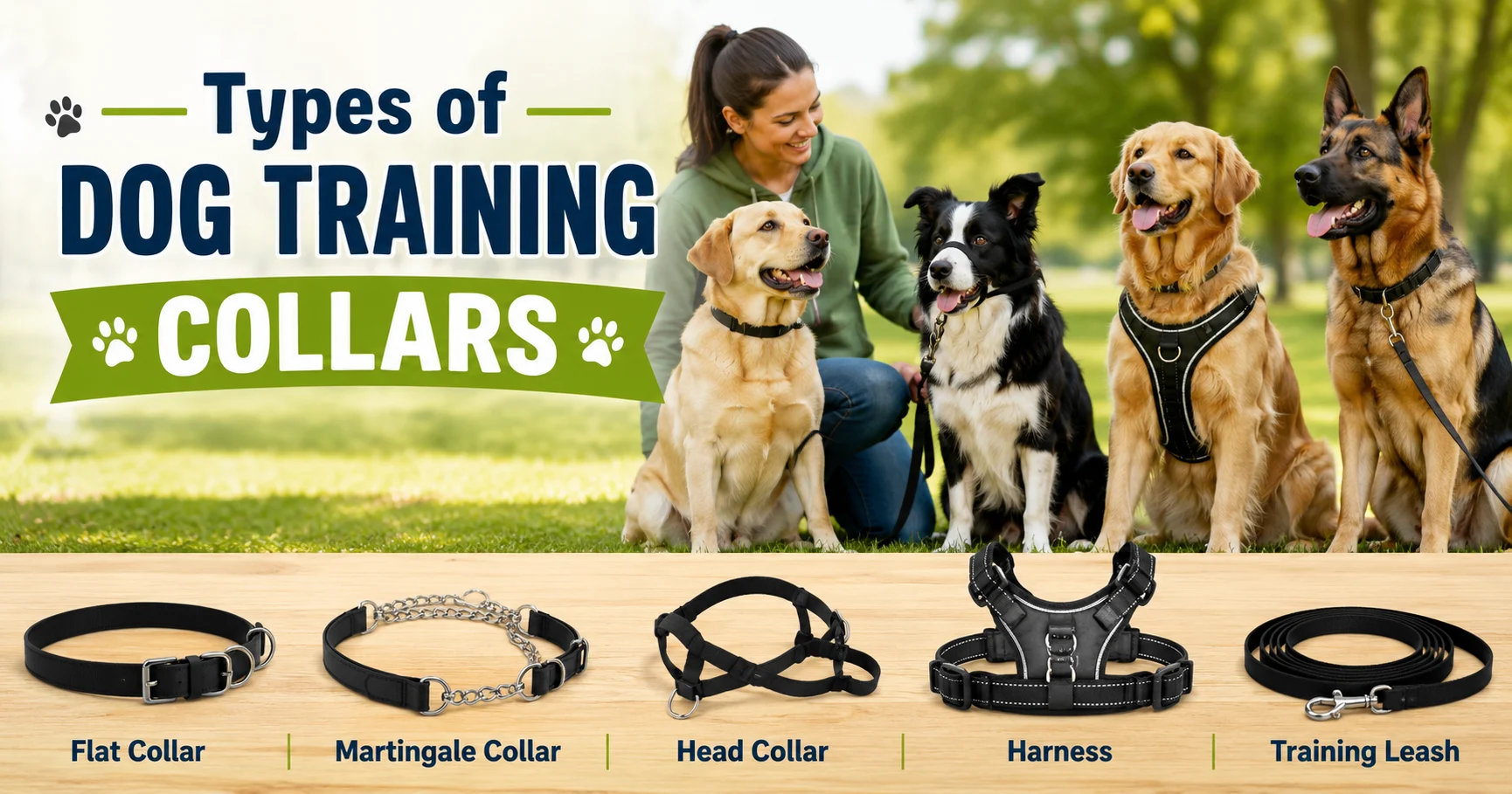
Flat Collar
The flat collar remains the most common everyday dog collar. Most dogs wear one for identification and casual walks.
Best For
- Everyday wear
- Basic obedience
- Calm dogs
- Adult dogs with good leash manners
Pros
- Comfortable for daily use
- Simple and affordable
- Easy to fit
- Works well with ID tags
Cons
- Offers little control for strong pullers
- Dogs may slip out if fitted poorly
Safety Tips
Use the two-finger rule when fitting a flat collar. The collar and your dog’s neck should be able to accommodate two fingers.
Do not leave collars too loose because dogs can escape during walks.
Martingale Collar
A martingale collar tightens slightly when a dog pulls but stops before becoming overly tight. Many trainers recommend it for dogs that slip out of regular collars.
Best For
- Dogs with narrow heads
- Sighthounds
- Dogs that back out of collars
- Mild pullers
Pros
- Prevents escape
- Gentle correction
- Better control than flat collars
- Safer than choke chains
Cons
- Needs proper fitting
- Not ideal for unsupervised wear
How to Use It Correctly
The collar should tighten only enough to prevent escape. It should never choke or restrict breathing.
Use calm leash guidance and reward your dog for walking politely beside you.
Head Collar
A head collar fits around the dog’s muzzle and head, similar to a horse halter. It helps redirect the dog’s head during walks.
Best For
- Strong pullers
- Large dogs
- Reactive dogs under professional guidance
Pros
- Gives excellent control
- Reduces pulling quickly
- Helpful for owners with less physical strength
Cons
- Some dogs dislike the feeling at first
- Requires slow introduction
- Improper jerking can hurt the neck
Training Tips
Introduce a head collar slowly with treats and praise. Let your dog wear it indoors for short sessions before outdoor walks.
Never yank the leash sharply while using a head collar.
Slip Collar
A slip collar tightens continuously when tension increases. Some trainers use it for advanced obedience work, but beginners often misuse it.
Best For
- Experienced handlers
- Structured training environments
Pros
- Quick leash communication
- Simple design
Cons
- Can choke dogs
- Easy to misuse
- May increase fear or anxiety
Important Safety Note
Avoid using slip collars on puppies, small dogs, fearful dogs, or dogs with breathing problems.
Many owners achieve better results with martingale collars or front clip harnesses instead.
Prong Collar
A prong collar uses metal links that tighten around the neck when the dog pulls.
Best For
- Professional training situations only
- Large powerful dogs under expert supervision
Pros
- Gives strong physical control
- Can reduce pulling quickly in some cases
Cons
- Risk of injury
- Can increase fear or aggression
- Often misused by beginners
- Not suitable for puppies
When Not to Use It
Do not use prong collars on anxious, fearful, reactive, or aggressive dogs without professional guidance.
Reward-based training usually creates safer and more lasting results.
Electronic Training Collar
Electronic collars use remote signals such as vibration, sound, or stimulation.
Types of Electronic Collars
- Vibration collars
- Sound collars
- Remote training collars
- GPS training collars
Best For
- Advanced off-leash training with professional support
- Long-distance recall training
Pros
- Allows remote communication
- Some vibration modes help hearing-impaired dogs
Cons
- Easy to misuse
- Can create fear or stress
- Poor timing confuses dogs
- Not beginner-friendly
Safety Advice
Avoid high stimulation settings. Never use electronic collars as punishment for fear-based behavior.
If your dog suddenly becomes aggressive, fearful, or shuts down emotionally, stop using the collar immediately.
Bark Collar
Bark collars respond to barking through vibration, sound, spray, or stimulation.
Best For
- Excessive nuisance barking after medical issues get ruled out
Pros
- May interrupt repetitive barking
- Some spray collars feel less harsh
Cons
- Does not fix the root cause
- May increase anxiety
- Can confuse sensitive dogs
Before Using a Bark Collar
Dogs bark for many reasons:
- Fear
- Boredom
- Separation stress
- Noise sensitivity
- Lack of exercise
- Territorial behavior
Fix the cause first before relying on bark collars.
GPS Dog Collars
GPS collars track a dog’s location through mobile or satellite systems.
Best For
- Hiking
- Rural areas
- Escape artists
- Outdoor adventures
Pros
- Improves safety
- Helps track lost dogs
- Useful for off-leash activities
Cons
- Requires charging
- Subscription fees may apply
- Not designed mainly for behavior training
Harness vs Training Collar
Many owners wonder whether a harness works better than training collars.
Front Clip Harness
A front clip harness redirects pulling safely without neck pressure.
Back Clip Harness
Back clip harnesses work well for calm dogs but may encourage pulling in strong dogs.
| Option | Best For | Main Benefit |
|---|---|---|
| Flat collar | Everyday wear | Comfort |
| Martingale collar | Escape artists | Prevents slipping |
| Head collar | Strong pullers | Better control |
| Front clip harness | Leash training | Reduces neck strain |
| GPS collar | Outdoor safety | Tracking location |
How to Choose the Right Training Collar
Different dogs need different solutions. Choose based on your dog’s personality, size, behavior, and training goals.
Consider Your Dog’s Age
Puppies need gentle guidance. Avoid harsh correction collars for young dogs.
Focus on:
- Positive reinforcement
- Short training sessions
- Reward timing
- Basic leash manners
Consider Breed Size and Strength
Large powerful dogs may need more control during walks, while small dogs often need lightweight options.
Heavy collars may feel uncomfortable for toy breeds.
Consider Behavior Problems
Ask yourself:
- Does your dog pull?
- Escape from collars?
- Bark excessively?
- Ignore recall?
- React to dogs or strangers?
The behavior problem helps determine the safest tool.
Consider Your Experience Level
Some collars require expert timing and handling skills.
Beginner owners usually do best with:
- Flat collars
- Martingale collars
- Front clip harnesses
- Reward-based training methods
How to Fit Dog Training Collars Safely
Poor fit creates many collar-related problems.
Signs a Collar Is Too Tight
- Coughing
- Gagging
- Hair loss
- Red skin
- Trouble breathing
Signs a Collar Is Too Loose
- Dog slips out
- Collar rotates excessively
- Poor leash control
Basic Fit Rule
You should fit two fingers between the collar and your dog’s neck comfortably.
Step-by-Step Collar Training Guide
Step 1: Introduce the Collar Calmly
Let your dog sniff the collar first. Reward curiosity with treats.
Step 2: Use Short Sessions
Start with 5- to 10-minute training sessions indoors.
Step 3: Reward Good Behavior
Reward calm walking, eye contact, and focus immediately.
Step 4: Practice in Low Distraction Areas
Train inside the home or yard before busy parks or streets.
Step 5: Stay Consistent
Use the same commands every day.
Examples:
- Sit
- Stay
- Come
- Heel
- Leave it
Common Mistakes Dog Owners Make
Many training problems come from owner mistakes rather than the collar itself.
Using Harsh Corrections
Fear-based training often damages trust and increases anxiety.
Choosing the Wrong Size
A poor fit reduces safety and effectiveness.
Training Too Long
Dogs lose focus during long sessions.
Keep sessions short and positive.
Inconsistent Commands
Changing words confuses dogs.
Stick to one cue per behavior.
Ignoring Exercise Needs
A bored dog often behaves badly regardless of the collar type.
Daily exercise matters.
Do’s and Don’ts of Dog Training Collars
| Do | Don’t |
|---|---|
| Reward good behavior quickly | Shout at your dog |
| Check collar fit daily | Leave tight collars on constantly |
| Use short sessions | Train for too long |
| Introduce collars slowly | Force fearful dogs |
| Use calm leash guidance | Yank the leash harshly |
| Ask a trainer for help | Ignore signs of fear or pain |
Troubleshooting Guide for Dog Training Collars
| Problem | Likely Reason | What to Do |
|---|---|---|
| The dog keeps pulling | Training inconsistency | Reward loose-leash walking |
| The dog fears the collar | Negative association | Reintroduce slowly with treats |
| The collar rubs the skin. | Poor fit | Adjust size immediately |
| The dog ignores commands | Too many distractions | Practice indoors first |
| Bark collar not helping | Anxiety or boredom | Address root cause |
| Dog slips out | Collar too loose | Tighten safely |
Puppy vs Adult Dog Collar Training
Puppies
Puppies need:
- Lightweight collars
- Gentle leash exposure
- Positive experiences
- Short 2- to 5-minute sessions
Avoid harsh corrections during early development.
Adult Dogs
Adult dogs may already have learned habits. Training can still work well with patience and consistency.
Older rescue dogs often need slower introductions to training equipment.
Safety Tips Every Owner Should Know
Never Leave Certain Collars On Unsupervised
Remove slip collars, prong collars, and head collars during crate time or rough play.
Watch for Stress Signals
Stop training if your dog shows:
- Tail tucked tightly
- Excessive panting
- Hiding
- Growling
- Shaking
- Refusing treats
Avoid Punishment-Based Training
Fear often worsens behavior problems instead of solving them.
Check for Medical Issues
Pain can affect training behavior. Dogs with ear pain, neck injuries, arthritis, or anxiety may react poorly to collars.
Ask a vet if behavior changes suddenly.
When to Ask a Professional Trainer
Some problems need expert help.
Contact a professional trainer if your dog:
- Shows aggression
- Bites people or dogs
- Lunges aggressively
- Panics during walks
- Guards food or toys
- Becomes impossible to control outdoors
Look for trainers who use reward-based methods and calm handling.
Are Training Collars Enough on Their Own?
No collar replaces real training.
Dogs still need:
- Daily exercise
- Mental stimulation
- Clear routines
- Consistency
- Socialization
- Patience
A calm, structured daily routine often improves behavior more than equipment alone.
Daily Training Routine Example
| Time | Activity |
|---|---|
| Morning | Short walk and obedience practice |
| Afternoon | Mental games or chew toys |
| Evening | Loose-leash walking session |
| Night | Calm routine and quiet rest |
Conclusion
The best types of dog training collars depend on your dog’s needs, personality, size, and behavior challenges. Some dogs do well with simple flat collars, while others benefit from martingale collars, head collars, or front clip harnesses. The safest results come from reward-based training, patience, consistency, and proper collar fitting.
Avoid harsh punishment, rushed training, or poorly fitted equipment. If your dog shows fear, stress, or aggression, ask a professional trainer or vet for help. With the right approach, training collars can support better communication and safer, happier walks.
FAQs
What are the safest types of dog training collars?
Flat collars, martingale collars, and front clip harnesses usually offer the safest options for most dogs when fitted correctly.
Which dog training collar works best for pulling?
Many owners see good results with head collars or front clip harnesses combined with loose leash training.
Are prong collars bad for dogs?
Prong collars can cause stress, fear, or injury if used incorrectly. Beginners should avoid them without professional guidance.
Can puppies wear training collars?
Yes, puppies can wear lightweight flat collars and gentle training equipment. Avoid harsh correction collars for puppies.
How tight should a dog training collar be?
You should fit two fingers comfortably between the collar and your dog’s neck.
What should I do if my dog hates the collar?
Introduce the collar slowly with treats, praise, and short positive sessions indoors.
Are bark collars safe for dogs?
Some bark collars may help temporarily, but they do not solve the root cause of barking. Anxiety, boredom, or fear often need separate training.
How long does collar training take?
Some dogs improve within days, while others need several weeks of consistent practice and rewards.
Can training collars stop aggressive behavior?
Training collars alone rarely fix aggression. Aggressive behavior often needs professional training and veterinary evaluation.
What is the best type of dog training collar for beginners?
Most beginner owners do best with flat collars, martingale collars, or front-clip harnesses paired with reward-based training.