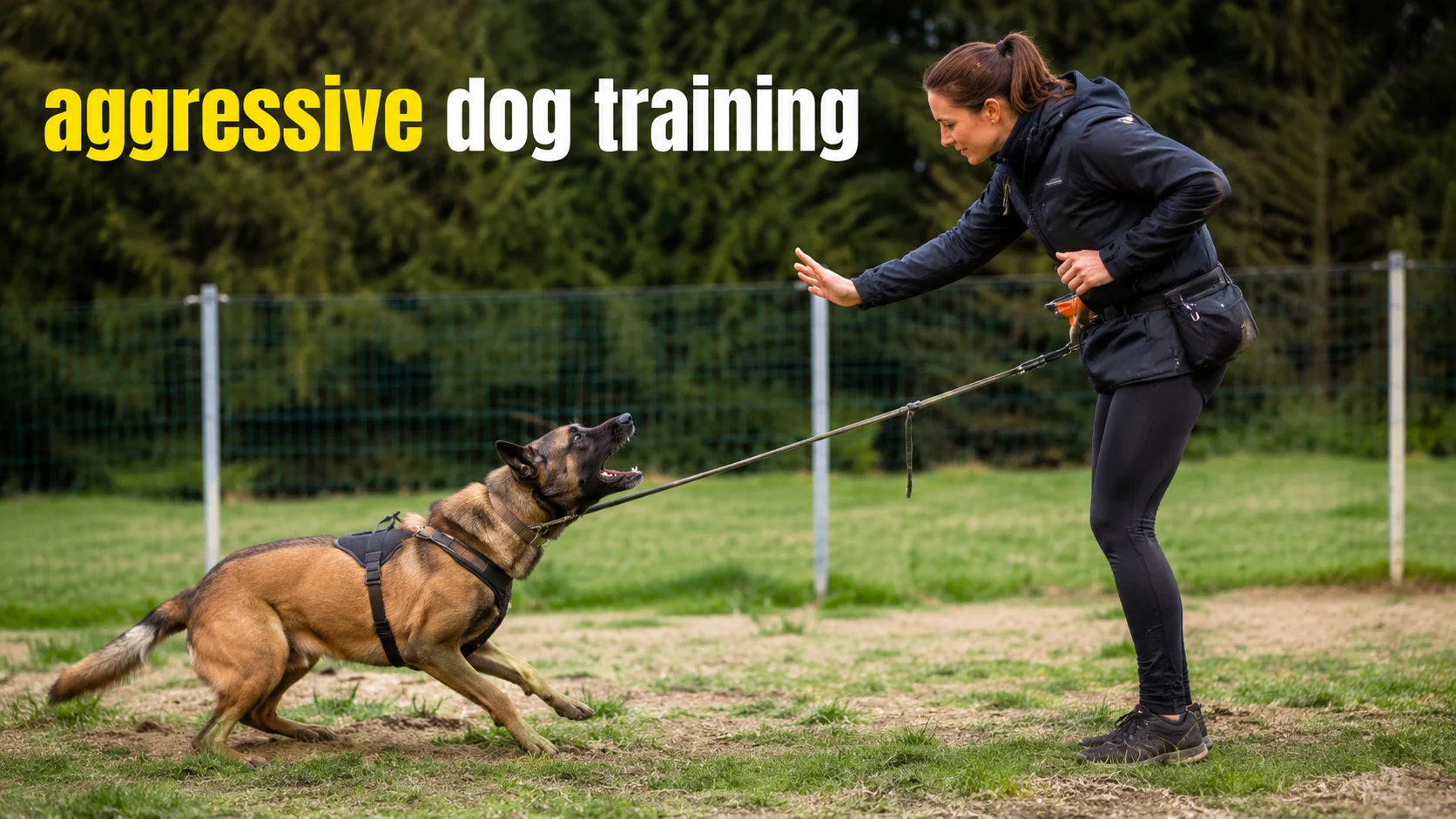
Quick Answer
Aggressive dog training focuses on reducing aggressive behavior through management, positive reinforcement, behavior modification, and safety measures. The goal is not to punish a dog for growling, barking, lunging, or snapping, but to identify the cause, prevent dangerous situations, and teach alternative behaviors. Serious aggression cases should be evaluated by a qualified trainer, certified behavior consultant, veterinary behaviorist, or veterinarian.
Aggressive Dog Training
Aggression is one of the most stressful behavioral challenges a dog owner can face. Whether your dog growls at visitors, lunges at other dogs during walks, guards food, or reacts aggressively when frightened, the behavior can affect daily life and create safety concerns.
Many owners assume aggression means a dog is dominant, stubborn, or intentionally misbehaving. In reality, aggressive behavior is often connected to fear, anxiety, frustration, resource guarding, pain, lack of socialization, territorial instincts, or learned experiences. Understanding the reason behind the behavior is the first step toward meaningful improvement.
Effective aggressive dog training focuses on changing emotional responses, building trust, managing triggers, and teaching alternative behaviors. While progress can take time, many dogs can learn safer and more appropriate ways to respond to stressful situations through consistent reward-based training.
Understanding Dog Aggression
Aggression is a behavior, not a personality trait. A dog may show aggressive behavior in specific situations while being friendly and relaxed in others.
Common aggressive behaviors include:
- Growling
- Snarling
- Showing teeth
- Lunging
- Barking aggressively
- Air snapping
- Biting
- Chasing people or animals
These behaviors usually communicate discomfort, fear, stress, frustration, or a desire to increase distance from a trigger.
Understanding the underlying cause helps create an appropriate training plan.
Common Causes of Aggressive Behavior
Different forms of aggression require different approaches.
Fear-Based Aggression
Fear is one of the most common causes of aggression. Dogs may react aggressively when they feel trapped, threatened, or overwhelmed.
Possible triggers include the following:
- Strangers
- Loud noises
- Unfamiliar environments
- Sudden movements
- Past negative experiences
Territorial Aggression
Some dogs become protective of their home, yard, vehicle, or family members.
Common signs include:
- Barking at visitors
- Charging fences
- Guarding entryways
- Lunging at people approaching the property
Resource Guarding
Dogs may guard valuable items such as
- Food bowls
- Treats
- Toys
- Sleeping areas
- Household objects
Resource guarding can escalate if warning signs are ignored.
Frustration-Based Aggression
A dog that cannot reach something it wants may become frustrated.
Examples include:
- Leash reactivity
- Barrier frustration behind fences
- Reacting through windows
Pain or Medical Issues
Pain can dramatically change behavior.
A dog that suddenly becomes aggressive should be examined by a veterinarian to rule out the following:
- Injury
- Arthritis
- Dental pain
- Neurological conditions
- Illness
Safety Comes First
Before beginning aggressive dog training, safety must be the priority.
Important safety measures include:
- Avoid situations that trigger aggression whenever possible.
- Use secure leashes and equipment.
- Prevent unsupervised interactions with children.
- Create distance from triggers.
- Manage the environment to prevent rehearsing aggressive behavior.
- Consider basket muzzle training when recommended by a professional.
Safety management does not solve aggression, but it prevents incidents while training is underway.
Important Safety Note
If your dog has bitten a person, injured another animal, or displays severe aggression, seek help from a qualified professional immediately. Aggression can pose serious risks to people and animals. Laws regarding dangerous dogs may vary by country, state, province, or local area.
Why Punishment Often Makes Aggression Worse
Many owners attempt to stop aggression through punishment, yelling, leash corrections, intimidation, or physical force.
These methods may suppress warning signals temporarily but often increase stress and fear.
Potential risks include the following:
- Increased anxiety
- Escalated aggression
- Loss of trust
- Reduced warning behaviors before a bite
- Greater unpredictability
A dog that learns punishment is associated with triggers may become even more reactive.
Reward-based training is generally safer and more effective for long-term behavior change.
Step-by-Step Aggressive Dog Training Plan
Step 1: Identify Triggers
Start by documenting situations that cause aggressive reactions.
Keep notes about:
- Location
- Distance from trigger
- Time of day
- Type of trigger
- Intensity of reaction
Patterns often emerge quickly.
Step 2: Create Distance
Dogs learn better when they are below their reaction threshold.
If your dog reacts to strangers at ten feet, training may need to start at fifty feet.
Creating distance reduces stress and improves learning.
Step 3: Reward Calm Behavior
Whenever the trigger appears at a safe distance:
- Mark calm behavior
- Offer high-value treats
- Reward focus on you
- Reinforce relaxed body language
The goal is to create positive associations.
Step 4: Teach Alternative Behaviors
Useful replacement behaviors include:
- Look at me
- Sit
- Touch
- Heel
- Go to mat
- Leave it
Alternative behaviors provide clear guidance during challenging situations.
Step 5: Gradually Increase Difficulty
As success improves:
- Reduce distance slowly
- Increase distractions gradually
- Practice in different environments
- Continue rewarding calm responses
Progress should be steady, not rushed.
Training Tools That Can Help
The right tools can improve safety and communication.
Helpful options include:
- Front-clip harnesses
- Standard flat collars
- Long training leads
- Treat pouches
- Clickers
- Basket muzzles when professionally recommended
Tools should support training rather than force compliance.
Common Mistakes Owners Make
Moving Too Fast
Many owners expose dogs to triggers before they are ready.
Progress occurs through gradual exposure, not overwhelming experiences.
Ignoring Early Warning Signs
Dogs often communicate discomfort before aggression escalates.
Watch for:
- Lip licking
- Yawning
- Freezing
- Whale eye
- Stiff posture
- Avoidance
Inconsistent Rules
Mixed messages create confusion.
Everyone in the household should follow the same training plan.
Punishing Growling
Growling is communication.
Punishing growling may remove the warning without addressing the underlying problem.
Expecting Immediate Results
Behavior modification takes time.
Realistic expectations help prevent frustration.
Practical Example: Reactive Dog on Walks
Imagine a dog that barks and lunges at other dogs.
A reward-based training routine may look like this:
- Begin at a distance where the dog notices another dog but remains calm.
- Make calm observations.
- Deliver high-value treats.
- Encourage eye contact.
- Increase distance if the dog becomes stressed.
- Repeat consistently across multiple sessions.
Over time, the dog may begin associating other dogs with rewards instead of anxiety or frustration.
Sample Weekly Training Routine
Daily
- Five to ten minutes of obedience practice
- Controlled exposure to triggers
- Enrichment activities
- Calm relaxation exercises
Three to Five Times Per Week
- Structured behavior modification sessions
- Controlled social exposure when appropriate
- Confidence-building exercises
Weekly Review
Track:
- Trigger distance
- Reaction intensity
- Recovery time
- Overall progress
Small improvements often add up over weeks and months.
Signs That Training Is Working
Positive signs include the following:
- Faster recovery after seeing triggers
- Reduced barking and lunging
- Better focus on the handler
- Increased responsiveness to commands
- Improved relaxation in challenging situations
Progress is rarely perfectly linear. Some setbacks are normal.
Breed, Age, and Temperament Considerations
Different dogs may display aggression for different reasons.
Factors that influence behavior include:
- Genetics
- Early socialization
- Breed tendencies
- Learning history
- Health status
- Environment
A training plan should be tailored to the individual dog rather than relying solely on breed stereotypes.
When to Seek Professional Help
Professional support is strongly recommended if:
- The dog has bitten someone.
- Aggression is escalating.
- Children are involved.
- Multiple triggers exist.
- You feel unsafe.
- Progress has stalled.
- The dog shows unpredictable behavior.
Qualified professionals may include:
- Professional dog trainer experienced with aggression cases
- Certified behavior consultant
- Veterinary behaviorist
- Veterinarian
Medical evaluation is especially important if aggression appears suddenly.
Internal Link Opportunities
Related content that can support readers includes:
- Aggression, Reactivity & Safety
- Leash Reactivity Training
- Positive Reinforcement Dog Training
- Dog Socialization Guide
- Resource Guarding in Dogs
- Dog Obedience Training Basics
- Impulse Control Exercises for Dogs
Conclusion
Aggressive dog training is not about forcing a dog to stop reacting. It is about understanding why the behavior occurs, keeping everyone safe, and teaching healthier responses through positive reinforcement and behavior modification. Consistency, patience, management, and realistic expectations are essential. While some dogs improve quickly, others require long-term support. When safety concerns exist, working with a qualified professional can make a significant difference for both the dog and the owner.
FAQs
Q1. What is the best method for aggressive dog training?
Reward-based training combined with behavior modification, management, and gradual exposure is generally considered the safest and most effective approach.
Q2. Can aggressive dogs be trained successfully?
Many aggressive dogs can improve significantly with consistent training, proper management, and professional guidance when needed.
Q3. Should I punish my dog for growling?
No. Growling is a warning signal. Punishing it may suppress communication without resolving the underlying issue.
Q4. How long does aggressive dog training take?
The timeline varies depending on the dog’s history, triggers, severity of aggression, consistency of training, and environmental factors. Some cases improve within weeks, while others require months or longer.
Q5. Can fear cause aggression in dogs?
Yes. Fear is one of the most common causes of aggressive behavior. Dogs may react aggressively to increase distance from something they perceive as threatening.
Q6. When should I contact a professional trainer?
You should seek professional help if your dog has bitten someone, displays severe aggression, or if you feel unable to manage the behavior safely.
Q7. Are aggressive dogs always dangerous?
Not necessarily. Aggression exists on a spectrum. However, any aggressive behavior should be taken seriously and addressed appropriately.
Q8. Can medical problems cause aggression?
Yes. Pain, injury, illness, and neurological conditions can contribute to aggressive behavior. Sudden changes should always be discussed with a veterinarian.