Quick Answer
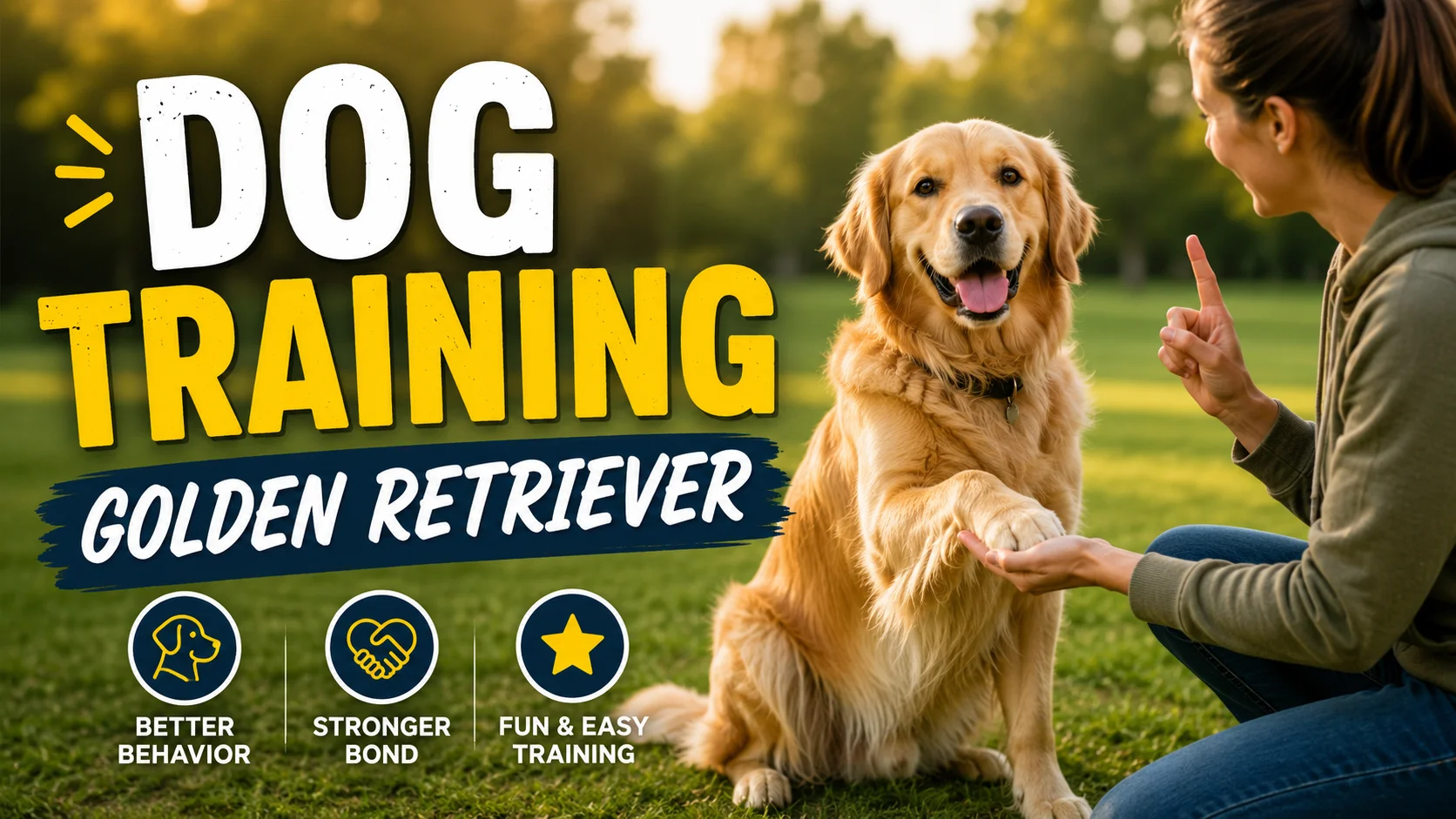
Training Golden Retriever dogs is usually easier than training many breeds because they are intelligent, people-oriented, and eager to learn. Success comes from combining positive reinforcement, daily exercise, consistent rules, mental stimulation, and short training sessions. Start with basic obedience, socialization, leash manners, and impulse control, then gradually build more advanced skills as your dog matures.
Introduction
Golden Retrievers are among the most popular family dogs in the United States, and for good reason. They are friendly, intelligent, affectionate, and highly trainable. However, many owners quickly discover that a young Golden Retriever can be energetic, excitable, and sometimes difficult to manage without proper guidance.
Dog training Golden Retriever puppies and adults requires more than teaching a few commands. These dogs were originally developed as sporting and retrieving dogs, which means they have a strong desire to work with people, carry objects, explore their environment, and stay mentally engaged.
Without enough structure, exercise, and training, even a well-meaning Golden Retriever can develop unwanted habits such as jumping, pulling on the leash, excessive excitement, stealing household items, or poor recall.
The good news is that Golden Retrievers generally respond exceptionally well to reward-based training. With patience, consistency, and a clear plan, most owners can build excellent obedience while strengthening the bond with their dog.
Why Dog Training Golden Retriever Is Different
Many breeds can learn commands, but Golden Retrievers have several traits that make their training needs unique.
Strong Desire to Work With People
Golden Retrievers were bred to work closely alongside hunters. Unlike some independent breeds, they naturally look to humans for guidance and direction.
This tendency often makes training easier because the dog wants to participate rather than avoid the training session.
High Energy Levels
Many first-time owners underestimate how much exercise a Golden Retriever needs.
A bored Golden Retriever may
- Chew furniture
- Dig in the yard
- Steal socks and shoes
- Jump on guests
- Pull excessively during walks
- Bark from frustration
Training works best when physical exercise needs are met first.
Natural Retrieving Instincts
Retrieving behavior is deeply ingrained in the breed.
Many Golden Retrievers naturally:
- Carry toys around the house
- Pick up random objects
- Love fetch games
- Enjoy scent-based activities
- Carry sticks during walks
Owners can use these natural instincts as training rewards and enrichment opportunities.
Highly Sensitive Personality
Golden Retrievers typically respond better to encouragement than harsh corrections.
Reward-based training often produces faster and more reliable results because these dogs enjoy praise, treats, toys, and interaction with their owners.
Breed Temperament and Energy Needs
Understanding the breed’s temperament helps create realistic training expectations.
Typical Golden Retriever Personality
Most Golden Retrievers are:
- Friendly
- Social
- Intelligent
- Eager to please
- Patient with families
- Food motivated
- Trainable
While individual dogs vary, these traits make them excellent candidates for obedience training, therapy work, sports, and family companionship.
Mental Stimulation Is Essential
Physical exercise alone is not enough.
A mentally bored Golden Retriever can become just as challenging as an under-exercised one.
Good mental stimulation includes:
- Training sessions
- Food puzzles
- Scent games
- Hide-and-seek
- Retrieval games
- Trick training
- Structured play
Ten minutes of focused brain work can tire some dogs more effectively than a long walk.
Age Matters
Training expectations should match the dog’s developmental stage.
Young Puppies
Focus on:
- Socialization
- House training
- Name recognition
- Crate training
- Basic manners
Adolescents
Focus on:
- Impulse control
- Recall
- Leash manners
- Consistency around distractions
Adult Dogs
Focus on:
- Reliability
- Advanced obedience
- Mental challenges
- Real-world behavior skills
Core Commands to Teach First
Every Golden Retriever should learn a foundation of essential obedience skills.
Name Recognition
Before teaching commands, your dog should reliably respond to their name.
Practice by:
- Saying the dog’s name once.
- Rewarding eye contact immediately.
- Repeating in different locations.
- Gradually adding distractions.
A strong name response becomes the foundation for all future training.
Sit
Sit is often the easiest starting command.
Steps:
- Hold a treat near the dog’s nose.
- Slowly move it upward.
- As the head follows the treat, the rear naturally lowers.
- Mark and reward the sit position.
Keep sessions short and positive.
Down
The down command helps develop calm behavior and impulse control.
Practice in quiet environments before increasing distractions.
Stay
A reliable stay teaches patience and self-control.
Begin with:
- One-second stays
- Short distances
- Minimal distractions
Gradually increase duration before increasing difficulty.
Come
Recall may be the most important command for safety.
Always make coming to you rewarding.
Use:
- High-value treats
- Praise
- Games
- Play opportunities
Never punish a dog after they come when called.
Leave It
Golden Retrievers often pick up interesting objects.
Teaching leave it can help prevent the following:
- Dangerous ingestion
- Resource grabbing
- Household item theft
Loose-Leash Walking
Many Golden Retrievers become strong pullers if leash manners are ignored.
Start teaching polite walking early to prevent future problems.
Building a Strong Obedience Foundation
Keep Training Sessions Short
Most dogs learn better through multiple short sessions than one long lesson.
A practical schedule is
- 5 to 10 minutes
- Two to four times daily
Short sessions maintain enthusiasm and reduce frustration.
Reward Good Choices
Training is not only about commands.
Reward your dog whenever they naturally:
- Sit politely
- Stay calm
- Check in with you
- Walk beside you
- Ignore distractions
This approach teaches the dog what behaviors earn rewards in everyday life.
Use Consistent Rules
Consistency helps dogs learn faster.
For example:
If jumping is not allowed, it should never be rewarded with attention from family members or visitors.
Mixed messages slow progress considerably.
Puppy Training Priorities
Golden Retriever puppies have unique training needs.
Socialization
Safe exposure to different experiences helps build confidence.
Introduce your puppy to:
- Different people
- Friendly vaccinated dogs
- Sounds
- Surfaces
- Vehicles
- Public environments
The goal is positive experiences, not overwhelming exposure.
House Training
Successful potty training relies on consistency.
Take puppies out:
- After waking
- After meals
- After play sessions
- Before bedtime
Reward elimination outdoors immediately.
Crate Training
A properly introduced crate can help
- House training
- Travel preparation
- Safety management
- Relaxation skills
The crate should never be used as punishment.
Bite Inhibition
Puppies naturally explore with their mouths.
Redirect biting toward:
- Appropriate chew toys
- Interactive toys
- Structured play
Consistent redirection helps puppies learn acceptable behavior.
Exercise and Mental Stimulation
A tired Golden Retriever is often easier to train than one with excess energy.
Daily Exercise Needs
Most healthy adult golden retrievers benefit from:
- Daily walks
- Structured play
- Fetch sessions
- Hiking opportunities
- Swimming where safe
Exercise requirements vary by age, health, and individual temperament.
Activities Golden Retrievers Love
Popular enrichment activities include:
- Fetch
- Scent work
- Dock diving
- Obedience training
- Rally
- Agility
- Retrieval games
- Hiking adventures
These activities satisfy natural instincts while improving behavior.
Training Through Play
Play can become a powerful training tool.
For example:
- Ask for a sit.
- Throw a ball as a reward.
- Call the dog back.
- Reward the recall.
- Repeat.
This turns exercise into a learning opportunity.
Step-by-Step Dog Training Golden Retriever Method
Many owners struggle because they try to teach too many skills at once. Golden Retrievers learn best when training follows a structured progression.
Step 1: Build Engagement
Before asking for obedience, teach your dog that paying attention to you is rewarding.
Practice:
- Say your dog’s name.
- Reward eye contact immediately.
- Repeat throughout the day.
- Train in different environments.
A dog that voluntarily checks in with you is much easier to train.
Step 2: Master Basic Commands Indoors
Start in a quiet environment with minimal distractions.
Focus on:
- Sit
- Down
- Stay
- Come
- Leave it
- Place
Do not rush to public areas until your dog can perform these commands reliably at home.
Step 3: Add Mild Distractions
Once commands are consistent indoors, practice in:
- The backyard
- Quiet parks
- Empty parking lots
- Calm neighborhood streets
Gradually increasing distractions helps create reliable obedience.
Step 4: Increase Difficulty
Challenge your dog with:
- Longer stays
- Greater distances
- New locations
- More distractions
Avoid making all aspects harder at the same time.
Step 5: Practice Real-Life Skills
Training should become part of daily life.
Ask for obedience before:
- Meals
- Walks
- Fetch games
- Greeting visitors
- Getting into the car
This reinforces manners in practical situations.
Leash Training for Golden Retrievers
Loose-leash walking is one of the most requested training goals.
Because Golden Retrievers are friendly and energetic, many pull toward people, dogs, smells, and interesting objects.
Start in a Low-Distraction Area
Begin leash training indoors or in your yard.
Reward your dog whenever they walk beside you.
The goal is a teaching position before dealing with distractions.
Reward the Correct Position
Keep treats handy and reward frequently when your dog walks near your side.
At first, reward every few steps.
As the behavior improves, gradually reduce reward frequency.
Stop Rewarding Pulling
When the leash becomes tight:
- Stop moving.
- Wait for the dog to return attention to you.
- Reward.
- Continue walking.
Forward movement should not be the reward for pulling.
Be Patient
Leash manners often take weeks or months of consistent practice.
Young Golden Retrievers especially may struggle during adolescence when excitement levels increase.
Recall Training: Teaching a Reliable Come Command
Recall can literally save a dog’s life.
A golden retriever that comes when called is safer around:
- Roads
- Wildlife
- Crowded parks
- Outdoor adventures
Start Small
Practice indoors first.
Call your dog using a cheerful voice.
Reward immediately when they reach you.
Make Recall Worthwhile
Use rewards your dog truly values.
Examples include:
- Chicken
- Cheese
- Favorite toys
- Tug games
- Praise
Your dog should believe coming to you is always a good decision.
Use a Long Line
Before allowing off-leash freedom, practice with a long training line.
This provides safety while building reliability.
Avoid Common Recall Mistakes
Never call your dog for the following:
- Punishment
- Nail trimming
- Bath time only
- The end of all fun
Otherwise, your dog may learn that coming when called predicts unpleasant experiences.
Common Behavior Problems in Golden Retrievers
Even well-loved Golden Retrievers can develop behavior challenges.
Fortunately, most respond well to consistent training.
Jumping on People
Jumping is extremely common because Golden Retrievers love social interaction.
Why It Happens
Dogs often jump because:
- They are excited
- They want attention
- People accidentally reward the behavior
How to Fix It
Ask visitors to:
- Ignore jumping
- Reward four paws on the floor
- Offer attention only when calm
Consistency from everyone is essential.
Pulling on the Leash
Pulling usually develops because dogs learn that pulling gets them where they want to go.
Solution:
- Reward loose-leash walking
- Stop when pulling occurs
- Practice in lower-distraction environments
Excessive Excitement
Many adolescent Golden Retrievers struggle with impulse control.
Helpful exercises include:
- Sit before greetings
- Place command training
- Stay exercises
- Structured waiting routines
These activities teach patience.
Chewing Household Items
Chewing is normal, especially for puppies.
Management is critical.
Provide:
- Appropriate chew toys
- Supervision
- Puppy-proofed environments
Preventing mistakes is easier than correcting them later.
Counter Surfing
Golden Retrievers are often highly food motivated.
Prevent reinforcement by:
- Keeping counters clear
- Managing access
- Rewarding alternative behaviors
Every successful food theft strengthens the habit.
Demand Barking
Some dogs bark for:
- Attention
- Play
- Food
- Frustration
Avoid rewarding barking by immediately giving the dog what they want.
Instead:
- Wait for quiet behavior.
- Reward calmness.
- Teach an alternative behavior, such as sit.
Exercise and Mental Stimulation Solutions for Behavior Problems
Many behavior issues stem from unmet needs rather than stubbornness.
Ask yourself:
- Is my dog getting enough exercise?
- Is my dog mentally challenged?
- Is training consistent?
- Does my dog have a predictable routine?
Meeting these needs often improves behavior dramatically.
Sample Golden Retriever Training Schedule
A structured routine helps many dogs succeed.
Morning
- Potty break
- 20 to 30-minute walk
- Five-minute obedience session
- Breakfast through a food puzzle
Midday
- Short potty break
- Retrieval game
- Basic command review
Afternoon
- Training session
- Mental enrichment activity
- Controlled socialization
Evening
- Walk or play session
- Recall practice
- Calm settling exercises
Before Bed
- Potty break
- Quiet relaxation time
This routine can be adjusted based on age, health, and household schedule.
Puppy vs Adult Golden Retriever Training
Puppy Training Focus
Prioritize:
- Socialization
- Potty training
- Crate training
- Name recognition
- Bite inhibition
Keep expectations realistic.
Young puppies have limited attention spans.
Adult Dog Training Focus
Adults can often handle the following:
- Longer sessions
- Advanced obedience
- Complex problem-solving
- Greater distractions
Older dogs can absolutely learn new skills.
The idea that you cannot teach an adult dog is simply untrue.
Training Considerations for Different Retriever Types
Owners sometimes search for related terms, such as:
- dog retriever training
- labrador retriever dog training
- labrador retriever gun dog training
- sporting dog and retriever training the wildrose way
While retriever breeds share similarities, individual traits matter.
Golden Retriever
Generally:
- Sensitive
- People-focused
- Highly trainable
- Social
Labrador Retriever
Often:
- Extremely food motivated
- Energetic
- Outgoing
- Driven to retrieve
Working and Gun Dog Lines
Working retrievers may require the following:
- Additional exercise
- Structured training
- Advanced retrieval tasks
- More mental engagement
Training should match the dog’s breeding, temperament, and activity level.
Comparing Golden Retrievers to Other Popular Breeds
Many owners researching dog training Golden Retrievers also compare training needs with other breeds.
Dog Training Border Collie
Border Collies generally require the following:
- Exceptional mental stimulation
- Advanced tasks
- Daily problem-solving activities
They often learn quickly but can become frustrated without enough work.
Dog Training for Belgian Malinois
Belgian Malinois typically have:
- Intense working drive
- High energy
- Strong training needs
Most require significantly more structure than the average Golden Retriever.
Alsatian Dog Training
German Shepherds, often called Alsatians in some countries, tend to be
- Loyal
- Protective
- Intelligent
Training usually includes socialization and confidence building.
Dog Training for Blue Heelers
Australian Cattle Dogs often possess the following:
- Strong herding instincts
- High endurance
- Independent thinking
They generally require substantial mental and physical exercise.
Dog Training for Cane Corso
Cane Corsos need:
- Early socialization
- Clear boundaries
- Consistent handling
Because of their size and guarding tendencies, responsible training is especially important.
Dog Training for Golden Doodles
Golden Doodles often inherit traits from both parent breeds.
Training needs vary depending on the following:
- Energy level
- Temperament
- Intelligence
- Sensitivity
Consistent positive reinforcement remains effective for most individuals.
Safety Note for Behavior Concerns
If your Golden Retriever shows the following:
- Aggression
- Resource guarding
- Severe anxiety
- Fear-based reactivity
- Biting behavior
Seek help from a qualified professional dog trainer, certified behavior consultant, or veterinary behaviorist.
Sudden behavior changes may indicate pain or an underlying medical issue and should be discussed with a veterinarian.
Biggest Training Mistakes Owners Make
Even with a highly trainable breed like the Golden Retriever, small mistakes can slow progress or create long-term behavior problems.
1. Inconsistent Rules at Home
Golden Retrievers quickly learn patterns. If one family member allows jumping, barking, or begging while another corrects it, the dog becomes confused and inconsistent in behavior.
2. Lack of Daily Structure
Without a clear routine, golden retrievers often develop the following:
- Overexcitement
- Attention-seeking behavior
- Poor impulse control
A predictable schedule helps stabilize behavior.
3. Not Meeting Energy Needs
This breed needs both physical exercise and mental stimulation. If only one is provided, problems still appear. A tired mind is just as important as a tired body.
4. Overusing Verbal Commands
Repeating commands multiple times teaches the dog to ignore the first cue. Instead, say the command once and guide the dog to success.
5. Skipping Real-Life Training
Training only in quiet rooms does not prepare dogs for real-world distractions like visitors, parks, or other dogs.
6. Rewarding Bad Behavior Accidentally
Even attention (talking, pushing away, eye contact) can reinforce unwanted behaviors like jumping or barking.
Signs Your Golden Retriever Is Making Progress
Progress in dog training Golden Retriever behavior is often gradual. Look for these clear improvements:
1. Improved Focus on You
Your dog starts checking in naturally during walks or at home without being called.
2. Faster Response to Commands
Commands like sit, come, and stay are followed more quickly and with less hesitation.
3. Reduced Excitement Levels
Instead of jumping or rushing, your dog begins to pause and think before acting.
4. Better Leash Behavior
Pulling decreases and walks become more relaxed and controlled.
5. Stronger Recall
Your Golden Retriever returns even when distractions are present, showing improved reliability.
When to Hire a Professional Trainer
While many Golden Retrievers do well with home training, some situations require expert help.
Consider a professional trainer if:
- Training progress has stopped for weeks
- Basic commands are not improving
- Walks feel stressful or unmanageable
Seek Immediate Help If You Notice the Following:
- Aggression toward people or other dogs
- Resource guarding (food, toys, space)
- Fear-based reactions or panic
- Sudden behavior changes without explanation
A certified dog trainer or veterinary behaviorist can help identify root causes and create a safe training plan.
Conclusion
Dog training Golden Retriever success depends on consistency, patience, and understanding the breed’s natural energy and temperament. These dogs are intelligent and eager to learn, but they still need structure, daily exercise, and clear communication.
When training is based on reward, routine, and real-life practice, Golden Retrievers develop into calm, well-mannered, and reliable companions. Small daily improvements matter more than perfect sessions, and progress builds steadily over time.
FAQs
1. How long does dog training a Golden Retriever take?
Basic obedience can take a few weeks, but reliable behavior in real-world situations usually takes several months of consistent training.
2. Are Golden Retrievers easy to train?
Yes, they are considered one of the easiest breeds to train due to their intelligence and eagerness to please.
3. What is the best age to start training a Golden Retriever?
Training should start as early as 8 weeks old with simple commands, socialization, and house training.
4. Why does my Golden Retriever pull on the leash?
Leash pulling usually happens because the dog learns that pulling gets them where they want to go faster.
5. How much exercise does a Golden Retriever need?
Most Golden Retrievers need daily walks, playtime, and mental stimulation to stay balanced and calm.
6. Can older Golden Retrievers still learn training?
Yes, adult and senior dogs can still learn new commands and behaviors with consistent training.
7. How do I stop my Golden Retriever from jumping on people?
Ignore jumping behavior and reward calm behavior when all four paws are on the ground.
8. Should I use punishment in Golden Retriever training?
No, reward-based training is more effective and helps build trust without fear or confusion.