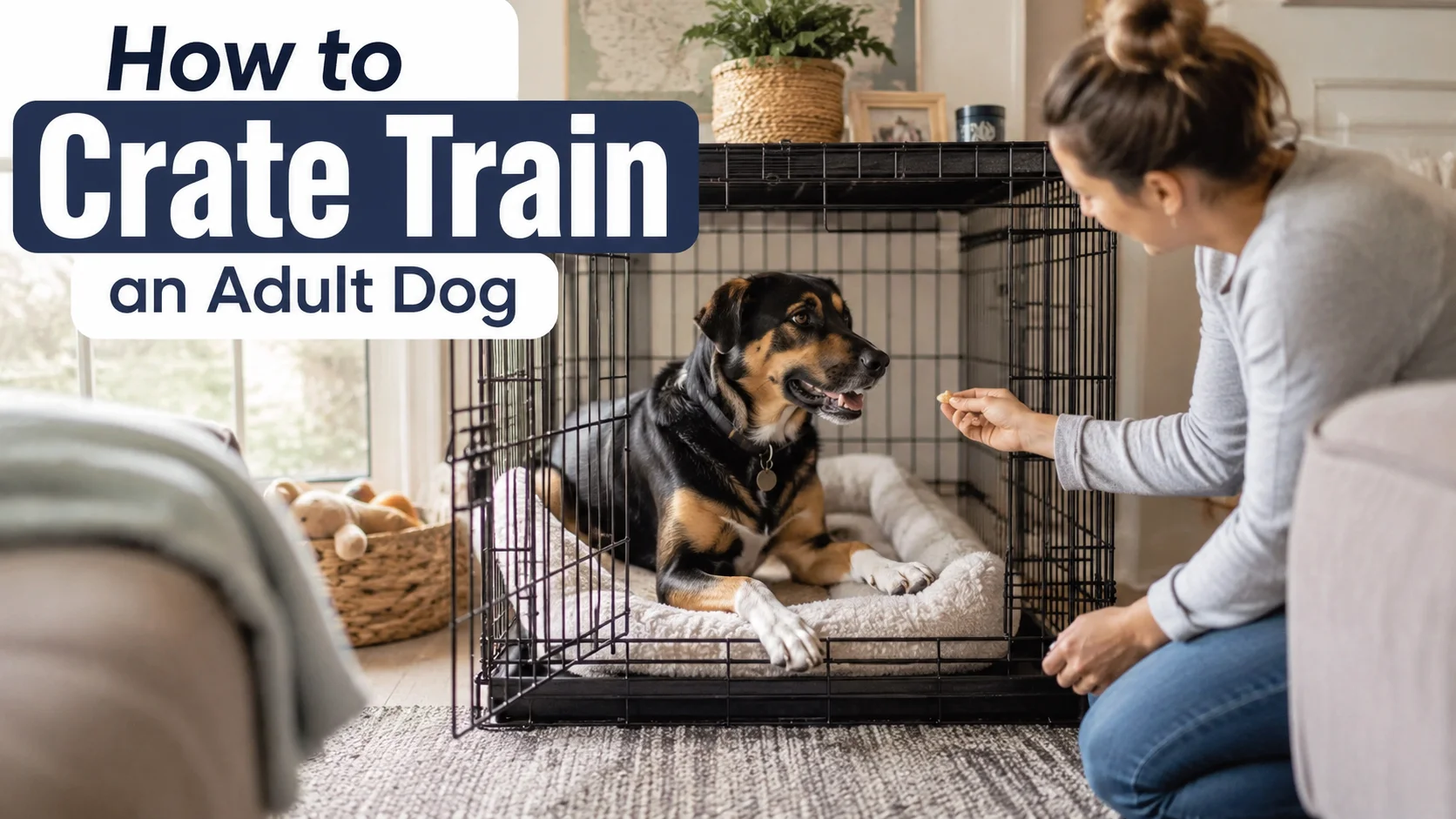
Quick Answer
Yes, you can crate train an adult dog successfully. The key is to introduce the crate gradually, create positive associations, use rewards, and increase crate time slowly. Most adult dogs learn to relax in a crate when it becomes a comfortable safe space rather than a place of punishment. Consistency, patience, and a structured crate schedule are essential for success.
Introduction
Many dog owners assume crate training is only for puppies, but adult dogs can learn to love a crate too. Whether you’ve adopted a rescue dog, brought home an older dog, or simply never crate trained your pet before, learning how to crate train an adult dog can make daily life easier and less stressful.
A properly introduced crate provides a secure place where your dog can rest, relax, and feel safe. It can help with house training, prevent destructive behavior when you’re away, support recovery after illness or surgery, and create a predictable routine.
The challenge is that adult dogs often arrive with previous experiences, habits, or fears that may affect how they react to confinement. Some dogs take to a crate immediately, while others need more time and encouragement.
The good news is that with positive reinforcement, gradual progress, and realistic expectations, most adult dogs can learn to settle comfortably in a crate.
What How to Crate Training an Adult Dog Means
Crate training an adult dog means teaching your dog to view a crate as a comfortable and secure resting area rather than a place of isolation or punishment.
The goal is not simply getting your dog inside the crate. The goal is helping them feel calm, relaxed, and confident when spending time there.
includes the following:Successful crate training includes:
- Voluntarily entering the crate
- Resting quietly inside
- Remaining calm when the door closes
- Staying comfortable while you leave the room
- Sleeping peacefully in the crate overnight
A well-trained dog should see the crate as their own private space where they can relax without stress.
Why Crate Training Can Benefit Adult Dogs
Many owners are surprised by how useful crate training can be.
Benefits may include:
- Better household management
- Improved potty training
- Reduced destructive chewing
- Easier travel and transportation
- Safer recovery after medical procedures
- A quiet place during visitors or busy events
- Improved independence and separation practice
For rescue dogs especially, a crate can provide stability during a major life transition.
Can You Crate Train an Adult Dog?
Absolutely.
Adult dogs often learn crate training successfully, even if they have never used a crate before.
In fact, adult dogs sometimes learn faster than puppies because they have better impulse control and longer attention spans.
However, the process may take longer if:
- The dog has a history of confinement fear
- Previous crate experiences were negative
- Separation anxiety is present
- The dog was punished using a crate in the past
Every dog learns at a different pace. Some adjust within days, while others may require several weeks.
Best Crate Setup for Adult Dogs
Creating the right environment helps your dog feel comfortable from the beginning.
Choose the Correct Crate Size
The crate should be large enough for your dog to:
- Stand comfortably
- Turn around easily
- Lie down fully stretched
- Sit without touching the ceiling
A crate that is too small can feel restrictive.
A crate that is too large may reduce its den-like appeal and can complicate potty training.
Add Comfortable Bedding
appreciate the following:Most dogs appreciate:
- Soft crate mats
- Washable dog beds
- Blankets suitable for the season
Observe your dog’s preferences. Some dogs prefer cooler surfaces.
Place the Crate in a Good Location
For new crate trainees:
- Choose a quiet area
- Keep the crate near family activity
- Avoid isolated rooms initially
- Avoid direct sunlight and drafts
Many owners place the crate in the living room during the day and near the bedroom at night.
Add Positive Items
Helpful additions include:
- Safe chew toys
- Food puzzle toys
- Stuffed enrichment toys
- Long-lasting treats
These help create positive associations with the crate.
Step-by-Step Crate Training Routine
Step 1: Let Your Dog Explore the Crate
Leave the crate door open.
Allow your dog to investigate naturally.
Do not push, drag, or force them inside.
Instead:
- Toss treats near the crate
- Toss treats just inside
- Praise curiosity
- Let your dog move freely
The goal is making the crate feel safe and inviting.
Step 2: Feed Meals Near the Crate
Place food bowls close to the crate.
As your dog becomes comfortable:
- Move the bowl closer
- Place the bowl at the entrance
- Eventually place meals inside
Food helps build strong positive associations.
Step 3: Reward Voluntary Entry
Whenever your dog enters the crate:
- Mark the behavior with praise
- Offer treats
- Stay calm and relaxed
Repeat frequently.
Many short sessions work better than one long session.
Step 4: Introduce a Crate Cue
as the following:Choose a cue such as:
- “Crate”
- “Kennel”
- “Bed”
Say the cue as your dog enters.
Reward immediately.
Over time your dog learns the cue predicts rewards.
Step 5: Begin Short Door Closures
Once your dog enters comfortably:
- Close the door for 1 to 3 seconds
- Open it before your dog becomes worried
- Reward calm behavior
Gradually increase duration.
This stage should move slowly.
Step 6: Increase Duration Gradually
Increase crate time in small increments:
- 10 seconds
- 30 seconds
- 1 minute
- 3 minutes
- 5 minutes
Always return while your dog remains calm.
Avoid jumping from a few minutes to an hour too quickly.
Step 7: Practice Leaving the Room
Once your dog is relaxed with the closed door:
- Step away briefly
- Return calmly
- Reward quiet behavior
Gradually increase distance and time.
This teaches independence and separation practice.
Sample Adult Dog Crate Schedule
A structured routine helps many dogs adjust faster.
Morning
- Potty break
- Breakfast
- Short walk
- 15 to 30 minutes in crate with enrichment toy
Midday
- Potty break
- Exercise session
- Short crate practice session
Afternoon
- Training session
- Quiet crate rest period
Evening
- Dinner
- Walk and playtime
- Relaxation period
Night
- Final potty break
- Bedtime in crate
Consistency helps your dog predict what happens next.
Crate Games That Build Confidence
Crate games make training more enjoyable.
Treat Toss Game
Throw treats into the crate.
Allow your dog to enter and exit freely.
Repeat several times.
Find It Game
Hide treats inside the crate.
Let your dog discover them independently.
Surprise Rewards
Randomly reward calm crate behavior.
This helps maintain positive feelings about the crate.
Enrichment Sessions
Use:
- Stuffed KONG toys
- Lick mats
- Puzzle feeders
These activities encourage relaxation and mental stimulation.
How Long Does Crate Training Take?
There is no universal timeline.
Many dogs show progress within:
- A few days for crate entry
- One to two weeks for short stays
- Several weeks for extended comfort
Factors that affect progress include:
- Age
- Temperament
- Previous experiences
- Consistency
- Training frequency
The goal is steady improvement, not speed.
Crate Training an Adult Rescue Dog
Rescue dogs often require extra patience.
to the following:A newly adopted dog may be adjusting to:
- New people
- New routines
- New environments
- New expectations
Avoid rushing the process.
Focus on:
- Trust building
- Predictable schedules
- Positive reinforcement
- Short successful sessions
Many rescue dogs become excellent crate users once they understand the crate is safe.
NighttimeNight Time Crate Problems
One of the most common concerns is whining at night.
Why Dogs Whine in the Crate
include the following:Possible reasons include:
- Need for a bathroom break
- Stress or uncertainty
- Excess energy
- Lack of crate conditioning
- Environmental noises
How to Reduce Nighttime Whining
- Provide exercise before bedtime
- Offer a potty break immediately before bed
- Keep the crate near you initially
- Use a comfortable sleeping surface
- Avoid exciting play right before bedtime
If your dog suddenly begins whining after previously settling well, consider discussing potential health concerns with your veterinarian.
Quick Answer
Yes, you can crate train an adult dog successfully. The key is to introduce the crate gradually, create positive associations, use rewards, and increase crate time slowly. Most adult dogs learn to relax in a crate when it becomes a comfortable safe space rather than a place of punishment. Consistency, patience, and a structured crate schedule are essential for success.
Introduction
Many dog owners assume crate training is only for puppies, but adult dogs can learn to love a crate too. Whether you’ve adopted a rescue dog, brought home an older dog, or simply never crate trained your pet before, learning how to crate train an adult dog can make daily life easier and less stressful.
A properly introduced crate provides a secure place where your dog can rest, relax, and feel safe. It can help with house training, prevent destructive behavior when you’re away, support recovery after illness or surgery, and create a predictable routine.
The challenge is that adult dogs often arrive with previous experiences, habits, or fears that may affect how they react to confinement. Some dogs take to a crate immediately, while others need more time and encouragement.
The good news is that with positive reinforcement, gradual progress, and realistic expectations, most adult dogs can learn to settle comfortably in a crate.
What How to Crate Training an Adult Dog Means
Crate training an adult dog means teaching your dog to view a crate as a comfortable and secure resting area rather than a place of isolation or punishment.
The goal is not simply getting your dog inside the crate. The goal is helping them feel calm, relaxed, and confident when spending time there.
includes the following:Successful crate training includes:
- Voluntarily entering the crate
- Resting quietly inside
- Remaining calm when the door closes
- Staying comfortable while you leave the room
- Sleeping peacefully in the crate overnight
A well-trained dog should see the crate as their own private space where they can relax without stress.
Why Crate Training Can Benefit Adult Dogs
Many owners are surprised by how useful crate training can be.
Benefits may include:
- Better household management
- Improved potty training
- Reduced destructive chewing
- Easier travel and transportation
- Safer recovery after medical procedures
- A quiet place during visitors or busy events
- Improved independence and separation practice
For rescue dogs especially, a crate can provide stability during a major life transition.
Can You Crate Train an Adult Dog?
Absolutely.
Adult dogs often learn crate training successfully, even if they have never used a crate before.
In fact, adult dogs sometimes learn faster than puppies because they have better impulse control and longer attention spans.
However, the process may take longer if:
- The dog has a history of confinement fear
- Previous crate experiences were negative
- Separation anxiety is present
- The dog was punished using a crate in the past
Every dog learns at a different pace. Some adjust within days, while others may require several weeks.
Best Crate Setup for Adult Dogs
Creating the right environment helps your dog feel comfortable from the beginning.
Choose the Correct Crate Size
The crate should be large enough for your dog to:
- Stand comfortably
- Turn around easily
- Lie down fully stretched
- Sit without touching the ceiling
A crate that is too small can feel restrictive.
A crate that is too large may reduce its den-like appeal and can complicate potty training.
Add Comfortable Bedding
appreciate the following:Most dogs appreciate:
- Soft crate mats
- Washable dog beds
- Blankets suitable for the season
Observe your dog’s preferences. Some dogs prefer cooler surfaces.
Place the Crate in a Good Location
For new crate trainees:
- Choose a quiet area
- Keep the crate near family activity
- Avoid isolated rooms initially
- Avoid direct sunlight and drafts
Many owners place the crate in the living room during the day and near the bedroom at night.
Add Positive Items
Helpful additions include:
- Safe chew toys
- Food puzzle toys
- Stuffed enrichment toys
- Long-lasting treats
These help create positive associations with the crate.
Step-by-Step Crate Training Routine
Step 1: Let Your Dog Explore the Crate
Leave the crate door open.
Allow your dog to investigate naturally.
Do not push, drag, or force them inside.
Instead:
- Toss treats near the crate
- Toss treats just inside
- Praise curiosity
- Let your dog move freely
The goal is making the crate feel safe and inviting.
Step 2: Feed Meals Near the Crate
Place food bowls close to the crate.
As your dog becomes comfortable:
- Move the bowl closer
- Place the bowl at the entrance
- Eventually place meals inside
Food helps build strong positive associations.
Step 3: Reward Voluntary Entry
Whenever your dog enters the crate:
- Mark the behavior with praise
- Offer treats
- Stay calm and relaxed
Repeat frequently.
Many short sessions work better than one long session.
Step 4: Introduce a Crate Cue
as the following:Choose a cue such as:
- “Crate”
- “Kennel”
- “Bed”
Say the cue as your dog enters.
Reward immediately.
Over time your dog learns the cue predicts rewards.
Step 5: Begin Short Door Closures
Once your dog enters comfortably:
- Close the door for 1 to 3 seconds
- Open it before your dog becomes worried
- Reward calm behavior
Gradually increase duration.
This stage should move slowly.
Step 6: Increase Duration Gradually
Increase crate time in small increments:
- 10 seconds
- 30 seconds
- 1 minute
- 3 minutes
- 5 minutes
Always return while your dog remains calm.
Avoid jumping from a few minutes to an hour too quickly.
Step 7: Practice Leaving the Room
Once your dog is relaxed with the closed door:
- Step away briefly
- Return calmly
- Reward quiet behavior
Gradually increase distance and time.
This teaches independence and separation practice.
Sample Adult Dog Crate Schedule
A structured routine helps many dogs adjust faster.
Morning
- Potty break
- Breakfast
- Short walk
- 15 to 30 minutes in crate with enrichment toy
Midday
- Potty break
- Exercise session
- Short crate practice session
Afternoon
- Training session
- Quiet crate rest period
Evening
- Dinner
- Walk and playtime
- Relaxation period
Night
- Final potty break
- Bedtime in crate
Consistency helps your dog predict what happens next.
Crate Games That Build Confidence
Crate games make training more enjoyable.
Treat Toss Game
Throw treats into the crate.
Allow your dog to enter and exit freely.
Repeat several times.
Find It Game
Hide treats inside the crate.
Let your dog discover them independently.
Surprise Rewards
Randomly reward calm crate behavior.
This helps maintain positive feelings about the crate.
Enrichment Sessions
Use:
- Stuffed KONG toys
- Lick mats
- Puzzle feeders
These activities encourage relaxation and mental stimulation.
How Long Does Crate Training Take?
There is no universal timeline.
Many dogs show progress within:
- A few days for crate entry
- One to two weeks for short stays
- Several weeks for extended comfort
Factors that affect progress include:
- Age
- Temperament
- Previous experiences
- Consistency
- Training frequency
The goal is steady improvement, not speed.
Crate Training an Adult Rescue Dog
Rescue dogs often require extra patience.
following: to the following:A newly adopted dog may be adjusting to the following:
- New people
- New routines
- New environments
- New expectations
Avoid rushing the process.
Focus on:
- Trust building
- Predictable schedules
- Positive reinforcement
- Short successful sessions
Many rescue dogs become excellent crate users once they understand the crate is safe.
Nighttime NighttimeNight Time Crate Problems
One of the most common concerns is whining at night.
Why Dogs Whine in the Crate
include the following: include the following:Possible reasons include:
- Need for a bathroom break
- Stress or uncertainty
- Excess energy
- Lack of crate conditioning
- Environmental noises
How to Reduce Nighttime Whining
- Provide exercise before bedtime
- Offer a potty break immediately before bed
- Keep the crate near you initially
- Use a comfortable sleeping surface
- Avoid exciting play right before bedtime
If your dog suddenly begins whining after previously settling well, consider discussing potential health concerns with your veterinarian.
Common Crate Training Mistakes to Avoid
Even well-meaning dog owners can accidentally make crate training more difficult. Avoiding these common mistakes can help your dog develop a positive relationship with the crate.
Using the Crate as Punishment
One of the biggest mistakes is sending a dog to the crate after misbehavior.
For example:
- Barking excessively
- Chewing furniture
- Having an accident indoors
If the crate becomes associated with punishment, your dog may begin avoiding it altogether.
Instead, the crate should always be connected to positive experiences, rest, and rewards.
Moving Too Fast
Many owners successfully get their dog into the crate but then rush the next steps.
A common progression mistake looks like this:
- Dog enters crate willingly
- Door closes for 30 seconds
- nextThe nextNext session lasts 2 hours
This can overwhelm the dog and create setbacks.
Increase crate duration gradually and focus on small successes.
Letting the Dog Out During Panic
If your dog becomes highly distressed and immediately gets released every time, they may learn that panic behaviors open the door.
However, this does not mean you should ignore serious distress.
Instead:
- Work below your dog’s stress threshold
- Shorten training sessions
- Return to easier steps
- Build confidence gradually
Insufficient Exercise
A dog with excess physical or mental energy may struggle to relax in a crate.
following: provide the following:Before longer crate periods, provide the following:
- Walks
- Training sessions
- Sniffing opportunities
- Puzzle toys
- Interactive play
A tired dog is generally more prepared to settle calmly.
Choosing the Wrong Crate Size
A crate that is too small can be uncomfortable.
A crate that is excessively large may feel less secure and may encourage some dogs to eliminate in one area and sleep in another.
Selecting an appropriately sized crate helps support successful kennel training.
Expecting Immediate Results
Some dogs adjust within days.
Others need several weeks.
Patience and consistency are often more important than speed.
Signs Your Adult Dog Is Making Progress
Many owners focus only on the final goal and miss smaller signs of improvement.
following: as the following:Look for positive indicators such as the following:
- Walking into the crate voluntarily
- Relaxing inside with the door open
- Accepting meals in the crate
- Settling more quickly after entering
- Sleeping inside comfortably
- Reduced whining
- Choosing the crate independently for naps
These signs show your dog is beginning to view the crate as a safe space.
When to Stop or Slow Down
Progress should be steady, but not rushed.
You may need to slow down if your dog shows signs of significant stress.
Watch for:
- Continuous barking
- Heavy panting unrelated to temperature
- Drooling caused by anxiety
- Scratching frantically at the crate
- Attempting to escape
- Refusing treats
- Trembling
These behaviors suggest the training plan may be advancing too quickly.
What to Do Instead
If stress appears:
- Return to an easier step.
- Reduce crate duration.
- Increase rewards.
- Add more crate games.
- End sessions on a positive note.
Moving backward temporarily is often part of successful training.
Separation Anxiety vs Normal Crate Adjustment
Many dogs whine initially during crate training.
This does not automatically mean they have separation anxiety.
Normal Adjustment
Typical adjustment behaviors may include:
- Mild whining for a few minutes
- Restlessness initially
- Looking for owners
- Settling after a short period
These behaviors often improve as training progresses.
Possible Separation Anxiety
Signs may include:
- Extreme panic when left alone
- Self-injury attempts
- Excessive drooling
- Destructive escape efforts
- Persistent distress regardless of crate training
If separation anxiety is suspected, a standard crate training approach may not be sufficient.
Safety Note
Dogs with severe separation anxiety should not be forced into prolonged crate confinement. Work with a qualified professional dog trainer, certified behavior consultant, veterinary behaviorist, or veterinarian to create a safe behavior modification plan.
Puppy vs Adult Dog Crate Training
Although the principles are similar, adult dogs and puppies often require different approaches.
Adult Dogs
Advantages:
- Better bladder control
- Longer attention span
- Improved impulse control
Challenges:
- Established habits
- Previous negative experiences
- Rescue-related adjustment issues
Puppies
Advantages:
- Fewer established habits
- Easier routine development
Challenges:
- Frequent potty breaks
- Short attention spans
- Teething and chewing behaviors
Adult dogs often learn quickly once they understand the purpose of the crate.
Indoor and Outdoor Practice Tips
Indoor Training
Practice in multiple situations:
- During meal preparation
- While watching television
- During quiet work sessions
- During short absences
The crate should become part of normal daily life.
Outdoor Preparation
If you travel regularly:
- Practice crate use before trips
- Introduce travel crates gradually
- Reward calm behavior in new environments
This can reduce stress during vacations, boarding stays, and veterinary visits.
Sample Weekly Crate Training Plan
Days 1-2
Goals:
- Explore crate voluntarily
- Eat treats near crate
- Enter crate freely
Sessions:
- 5 to 10 minutes
- Multiple times daily
Days 3-4
Goals:
- Stay inside briefly
- Introduce door closure
Sessions:
- 1 to 3 minutes
Days 5-6
Goals:
- Relax with owner nearby
- Practice calm behavior
Sessions:
- 5 to 15 minutes
Day 7
Goals:
- Short independent crate periods
- Begin leaving room briefly
Sessions:
- 10 to 20 minutes depending on comfort level
Remember that this timeline is flexible. Some dogs need longer at each stage.
Sample Daily Crate Training Routine
Here is a simple beginner-friendly routine for an adult dog.
Morning
- Potty break
- Breakfast
- 20-minute walk
- 15-minute crate session with stuffed toy
Midday
- Potty break
- Training session
- 20-minute crate rest period
Afternoon
- Mental enrichment activity
- Crate game session
Evening
- Dinner
- Walk
- Family time
- Short crate practice
Bedtime
- Final bathroom break
- Overnight crate session
Consistency helps build confidence and predictability.
Tools That Can Help With Crate Training
Useful supplies include:
- Properly sized crate
- Comfortable crate bed
- Treat pouch
- High-value treats
- Stuffed enrichment toys
- Food puzzle toys
- Durable chew toys
- Crate cover if your dog finds it calming
Not every dog enjoys the same setup. Observe your dog’s preferences and adjust accordingly.
When to Seek Professional Help
Many crate training challenges can be resolved with patience and positive reinforcement.
However, professional support may be appropriate if your dog:
- Shows intense fear of the crate
- Injures themselves trying to escape
- Has severe separation anxiety
- Displays aggression around confinement
- Experiences sudden behavior changes
- Refuses food during training
A veterinarian should evaluate any sudden behavioral change, especially if pain, illness, injury, or age-related issues could be contributing factors.
A qualified trainer or behavior professional can help develop an individualized plan for more complex cases.
Conclusion
Learning how to crate train an adult dog takes patience, consistency, and realistic expectations. The goal is not simply teaching your dog to stay inside a crate. It is helping them view the crate as a safe, comfortable place where they can relax and feel secure.
By introducing the crate gradually, using reward-based training, following a structured crate schedule, and avoiding common mistakes, most adult dogs can learn to settle calmly in their crate. Focus on steady progress rather than quick results, and don’t hesitate to seek professional guidance if your dog shows significant fear, anxiety, or distress.
FAQs
1. Can you crate train an adult dog that has never used a crate?
Yes. Most adult dogs can learn crate training successfully with gradual introduction, positive reinforcement, and consistent practice. Some dogs adapt within days, while others may need several weeks.
2. How long does it take to crate train an adult dog?
The timeline varies by dog. Some dogs become comfortable within a few days, while others require several weeks. Previous experiences, temperament, and training consistency all affect progress.
3. Is it cruel to crate train an adult dog?
No. When used properly, a crate provides a safe space for rest and relaxation. Crates should never be used as punishment or for excessive confinement.
4. What should I put inside my dog’s crate?
Most dogs benefit from comfortable bedding, safe chew toys, food puzzles, and enrichment items. Always choose items appropriate for your dog’s chewing habits.
5. Why does my adult dog cry in the crate at night?
Common reasons include adjustment stress, needing a bathroom break, insufficient exercise, or lack of crate conditioning. Gradual training and a consistent bedtime routine often help.
6. Can crate training help with house training?
Yes. Because dogs naturally avoid soiling their sleeping area, crate training can support potty training when combined with a consistent bathroom schedule.
7. Should I cover my dog’s crate?
Some dogs relax more with a crate cover, while others prefer an open view. Monitor your dog’s comfort level and use whichever setup helps them settle best.
8. What if my adult rescue dog is afraid of the crate?
Move slowly and focus on positive associations. Use treats, meals, toys, and crate games to build confidence. Avoid forcing the dog inside. Severe fear may require assistance from a qualified behavior professional.