Quick Answer
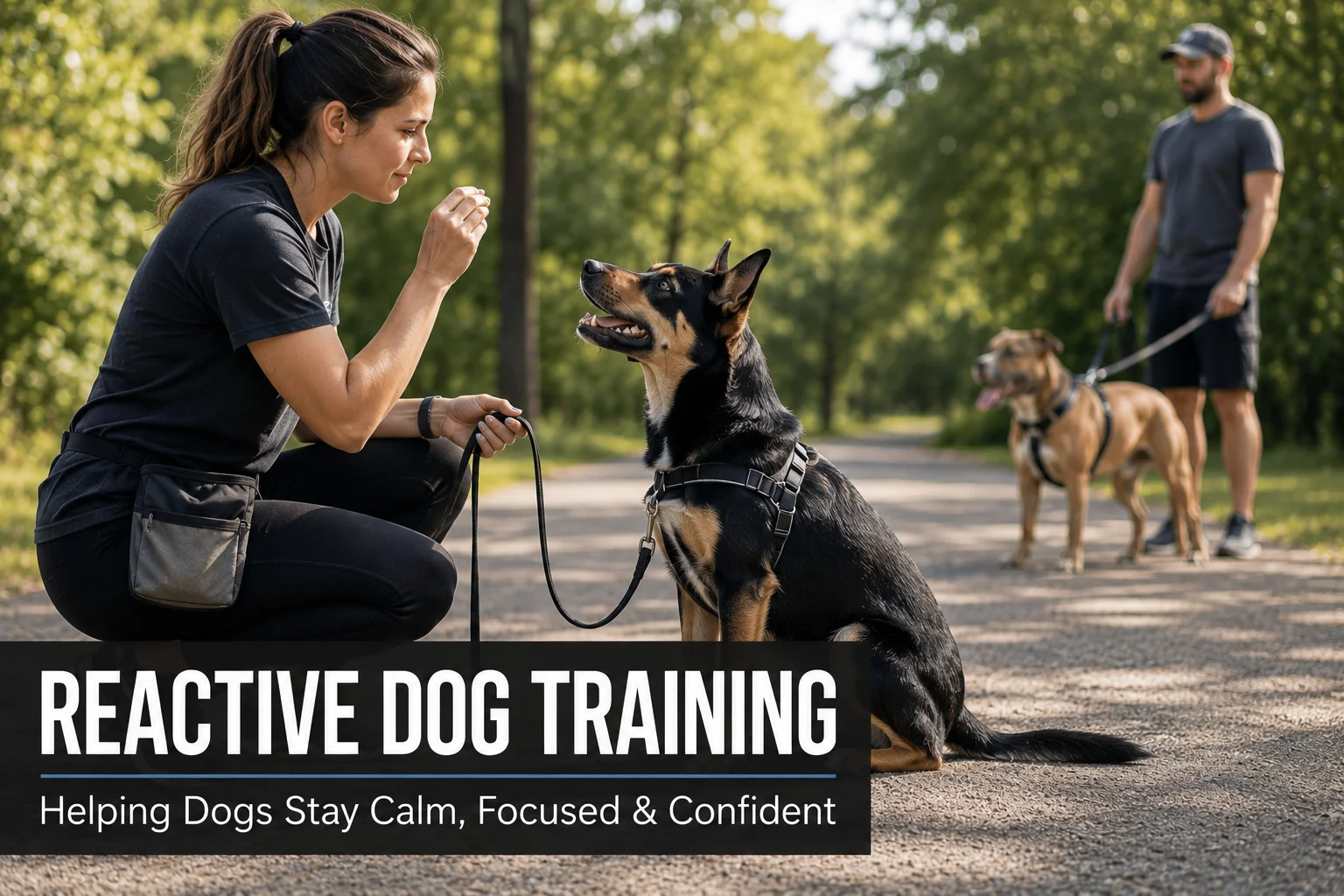
Reactive dog training focuses on helping dogs remain calm around triggers such as other dogs, people, bicycles, vehicles, or unfamiliar situations. The most effective approach combines positive reinforcement, trigger distance management, desensitization, and counter conditioning. Progress takes time, consistency, and patience, but many reactive dogs can learn better coping skills and improved leash manners with the right training plan.
Introduction
Living with a reactive dog can be stressful. Walks that should be enjoyable often become challenging when your dog barks, lunges, growls, or becomes overly excited around certain triggers. Many owners feel embarrassed, frustrated, or unsure about what to do next.
The good news is that reactivity is not uncommon, and it can often be improved through thoughtful, reward-based training. Whether you are researching how to train a reactive dog, looking for training for reactive dogs, or trying to understand leash reactivity, the key is to focus on changing your dog’s emotional response rather than simply stopping the behavior.
Reactive dog training is not about forcing a dog to tolerate situations that make them uncomfortable. Instead, it helps dogs develop confidence, self-control, and positive associations with the things that trigger them. With realistic expectations and a structured approach, many reactive dogs can become easier to handle and more comfortable in everyday situations.
What Is a Reactive Dog?
A reactive dog responds excessively to specific triggers. These responses may include:
- Barking
- Lunging
- Growling
- Whining
- Pulling on the leash
- Spinning or jumping
- Intense staring
- Attempting to escape
Reactivity is not always aggression.
Some dogs react because they are fearful. Others become frustrated because they want to greet another dog but cannot. Some dogs feel overwhelmed in busy environments.
Common triggers include:
- Other dogs
- Strangers
- Children
- Joggers
- Cyclists
- Cars
- Wildlife
- Loud noises
Understanding why your dog reacts is one of the most important parts of dog reactive training.
Why Dogs Become Reactive
There is no single cause of reactivity. Several factors may contribute.
Fear and Anxiety
Many reactive dogs are attempting to create distance from something they perceive as threatening. Barking and lunging often work because the trigger moves away, reinforcing the behavior.
Lack of Socialization
Dogs that were not exposed to a variety of people, dogs, sounds, and environments during early development may struggle with unfamiliar situations later in life.
Negative Experiences
A frightening encounter with another dog or person can contribute to future reactivity.
Frustration
Some dogs become reactive because they are excited and want interaction. The leash prevents access, creating frustration that appears similar to aggression.
Genetics and Temperament
Certain dogs naturally have stronger guarding instincts, higher sensitivity, or lower tolerance for stress.
Medical Issues
Pain, discomfort, vision problems, hearing loss, and other health conditions can influence behavior.
If your dog’s behavior changes suddenly or worsens unexpectedly, schedule a veterinary examination.
Understanding Trigger Distance and Threshold
Two important concepts in reactive dog training are trigger distance and threshold.
What Is Trigger Distance?
Trigger distance refers to how close a trigger can be before your dog reacts.
For example:
- Dog remains calm at 100 feet.
- Dog becomes tense at 60 feet.
- Dog barks and lunges at 30 feet.
In this case, training should begin at a distance where the dog can still think and respond to you.
What Is Threshold?
Threshold is the point where a dog becomes too emotionally aroused to learn effectively.
Signs your dog may be approaching the threshold include the following:
- Stiff body posture
- Hard staring
- Closed mouth
- Raised hackles
- Ignoring treats
- Increased panting
- Vocalizing
Training works best below the threshold.
Once a dog is over threshold, learning becomes difficult and emotional reactions take over.
How to Train a Reactive Dog Step by Step
Many owners searching for how to train their reactive dogs are looking for a clear process. The following approach is widely used in reward-based behavior modification programs.
Step 1: Identify Triggers
Spend several days observing your dog’s behavior.
Record:
- What triggers reactions
- Distance from trigger
- Intensity of reaction
- Environment
- Time of day
Patterns often emerge quickly.
Step 2: Create Distance
Distance is one of the most powerful tools available.
If your dog reacts to other dogs at 30 feet, begin training at 80 to 100 feet or farther if necessary.
Distance reduces stress and increases learning opportunities.
Step 3: Use High-Value Rewards
Choose rewards your dog truly loves.
Examples include:
- Chicken
- Turkey
- Cheese
- Freeze-dried treats
- Favorite toys
High-value rewards help create positive emotional associations.
Step 4: Start Counter-Conditioning
Counter conditioning changes how a dog feels about a trigger.
Example:
- Dog notices another dog.
- You immediately provide a treat.
- Trigger disappears.
- Treats stop.
Over time, the dog begins associating the trigger with good things.
Instead of thinking, “That dog is scary,” the dog learns, “When dogs appear, great things happen.”
Step 5: Practice Desensitization
Desensitization involves exposing the dog to a trigger at a low intensity that does not cause a reaction.
Examples include:
- Greater distances
- Shorter exposure times
- Less busy environments
Gradually increase difficulty as your dog succeeds.
Step 6: Reinforce Calm Behavior
Reward:
- Looking at you
- Loose leash walking
- Calm observation
- Sitting quietly
- Checking in voluntarily
These behaviors become stronger through repetition.
Step 7: End on Success
Keep sessions short.
Five successful minutes is often better than thirty stressful minutes.
Training a Leash Reactive Dog
Training a leash reactive dog requires special attention because the leash can contribute to frustration and tension.
Why Leash Reactivity Happens
Dogs often feel trapped when restrained.
The leash prevents natural movement and can increase stress around triggers.
How to Train a Leash Reactive Dog
Start in a quiet area.
When your dog sees a trigger:
- Mark calm behavior with praise.
- Deliver a reward.
- Increase distance if necessary.
- Continue rewarding calm engagement.
Avoid allowing repeated barking and lunging episodes whenever possible.
Every successful calm experience helps build new habits.
Teach an Emergency U-Turn
An emergency turn can help avoid unexpected triggers.
Practice:
- Say “This way!”
- Turn around.
- Move quickly in the opposite direction.
- Reward your dog for following.
This skill can be invaluable during walks.
Best Training Exercises for Reactive Dogs
Look at That Game
When the dog notices a trigger:
- Mark the observation.
- Give a reward.
- Allow the dog to look again.
The goal is calm observation rather than fixation.
Find It Game
Scatter treats on the ground.
Sniffing naturally reduces tension and redirects attention.
Name Response
Practice your dog’s name in low-distraction environments.
Reward immediate attention.
A strong name response becomes useful when triggers appear.
Hand Targeting
Teach your dog to touch your hand with its nose.
This provides a simple alternative behavior during walks.
Pattern Games
Predictable training games help nervous dogs feel more secure.
Examples include:
- One-two-three treat
- Side-to-side movement games
- Reward checkpoints during walks
Equipment That Can Help
The right equipment supports safer training.
Front-Clip Harness
A well-fitted front-clip harness can improve control without causing pain.
Standard Leash
A leash between 4 and 6 feet typically works well for training.
Treat Pouch
Quick access to rewards improves timing.
Long Line
Useful for training in open spaces when appropriate.
Basket Muzzle
Muzzle training can be an important safety tool for dogs with bite risk.
A properly conditioned basket muzzle allows the following:
- Panting
- Drinking
- Treat consumption
A muzzle is not a substitute for training, but it can add an extra layer of safety.
Muzzle Safety for Reactive Dogs
Some reactive dogs may benefit from muzzle conditioning.
A basket muzzle should always be introduced gradually.
Never force a muzzle onto a frightened dog.
Training process:
- Show the muzzle.
- Reward interest.
- Reward nose placement.
- Gradually increase duration.
- Add straps slowly.
- Practice in positive settings.
A muzzle should be associated with rewards and comfort.
Common Mistakes in Reactive Dog Training
Moving Too Close Too Soon
Owners often progress faster than their dog is ready for.
Distance is your friend.
Punishing Reactions
Yelling, leash jerks, and harsh corrections may suppress behavior temporarily but often increase fear and stress.
Ignoring Body Language
Subtle stress signals often appear before barking or lunging.
Learn to recognize early warning signs.
Training Over Threshold
A dog that is already reacting is not in the best state for learning.
Inconsistent Practice
Progress requires repetition and consistency.
Expecting Instant Results
Behavior change takes time.
Most reactive dogs improve gradually rather than suddenly.
A Sample Training Routine
Here is a practical routine for owners wondering how to train reactive dogs consistently.
Morning
- Five minutes of engagement exercises
- Name response practice
- Hand targeting
Walk
- Maintain safe trigger distance
- Reward calm observations
- Use emergency turns when needed
Afternoon
- Mental enrichment activities
- Puzzle feeders
- Sniffing games
Evening
- Five to ten minutes of structured training
- Relaxation exercises
- Calm leash practice
Short daily sessions often outperform occasional long sessions.
Signs Your Reactive Dog Is Improving
Progress may be subtle at first.
Look for signs such as:
- Faster recovery after seeing triggers
- Reduced barking intensity
- Increased focus on the handler
- Better response to cues
- Ability to remain calm at shorter distances
- Improved leash manners
- More relaxed body language
Celebrate small wins.
These milestones indicate real behavioral progress.
Reactivity, Fear Aggression, and Resource Guarding
Not all reactive behavior has the same cause.
Fear Aggression
Fearful dogs often react to increase distance from perceived threats.
These cases benefit from careful desensitization and counterconditioning.
Resource Guarding
Dogs may guard:
- Food
- Toys
- Beds
- Spaces
- People
Resource guarding requires specialized behavior modification strategies.
Avoid taking items by force or using punishment.
Because bite risk can be involved, professional guidance is strongly recommended.
When to Seek Professional Help
Some situations require expert support.
Contact a qualified trainer or behavior professional if:
- Your dog has bitten someone.
- Bite attempts are increasing.
- Reactions are severe.
- Progress has stalled.
- Children are involved.
- Resource guarding is escalating.
- Fear aggression is present.
- You feel unsafe handling the dog.
Look for professionals who use humane, reward-based methods.
In more complex cases, a veterinary behaviorist may be appropriate.
Safety Disclaimer
Reactive behavior can sometimes involve a risk of injury to people or other animals. If your dog has a history of biting, attempted biting, severe aggression, intense fear aggression, or escalating resource guarding, consult a certified professional dog trainer, certified behavior consultant, or veterinary behaviorist before attempting behavior modification on your own.
Training advice found online cannot replace individualized assessment for dogs with significant safety concerns. Management tools such as leashes, barriers, and properly conditioned basket muzzles may be necessary while a training plan is being implemented.
Internal Link Opportunities
You can strengthen your site’s topical authority by linking naturally to related content such as the following:
- Positive reinforcement dog training
- Leash training for dogs
- Dog socialization guide
- Recall training tips
- Crate training basics
- Dog body language explained
- Resource guarding in dogs
- Puppy obedience training
- Impulse control exercises for dogs
- Choosing a professional dog trainer
Conclusion
Reactive dog training is about helping your dog feel safer, more confident, and better able to cope with triggers. Whether you are learning how to train a reactive dog on leash or looking for the best training for reactive dogs, success comes from consistency, patience, distance management, desensitization, and counter conditioning. Focus on small improvements, reward calm behavior, and seek professional support when safety concerns are present. With time and structured practice, many reactive dogs can learn healthier responses and enjoy more successful daily experiences.
FAQs
How do I train a reactive dog that barks at other dogs?
Start at a distance where your dog can notice other dogs without reacting. Reward calm behavior and use counterconditioning to build positive associations with the trigger.
How long does reactive dog training take?
The timeline varies depending on the dog’s history, temperament, trigger intensity, and consistency of training. Some dogs improve within weeks, while others require several months or longer.
Can reactive dogs ever become completely normal?
Many reactive dogs improve significantly, but some may always need management around certain triggers. The goal is progress and better coping skills rather than perfection.
What is the best training for reactive dogs?
Reward-based training that uses desensitization, counter conditioning, trigger distance management, and consistent practice is generally considered the safest and most effective approach.
How do I train a leash reactive dog safely?
Use a secure harness, maintain adequate distance from triggers, reward calm behavior, and avoid harsh corrections. Gradual exposure and positive experiences are key.
Should I use a muzzle on my reactive dog?
A properly fitted basket muzzle can provide additional safety when there is bite risk. Muzzle training should be gradual, positive, and combined with behavior modification.
Is reactivity the same as aggression?
No. Reactivity refers to an excessive response to triggers, while aggression involves behavior intended to threaten or cause harm. Some reactive dogs are not aggressive.
When should I hire a professional trainer for my reactive dog?
Seek professional help if your dog has bitten someone, attempts to bite, displays severe fear aggression, shows escalating resource guarding, or if you are not making progress with your training plan.