Quick Answer
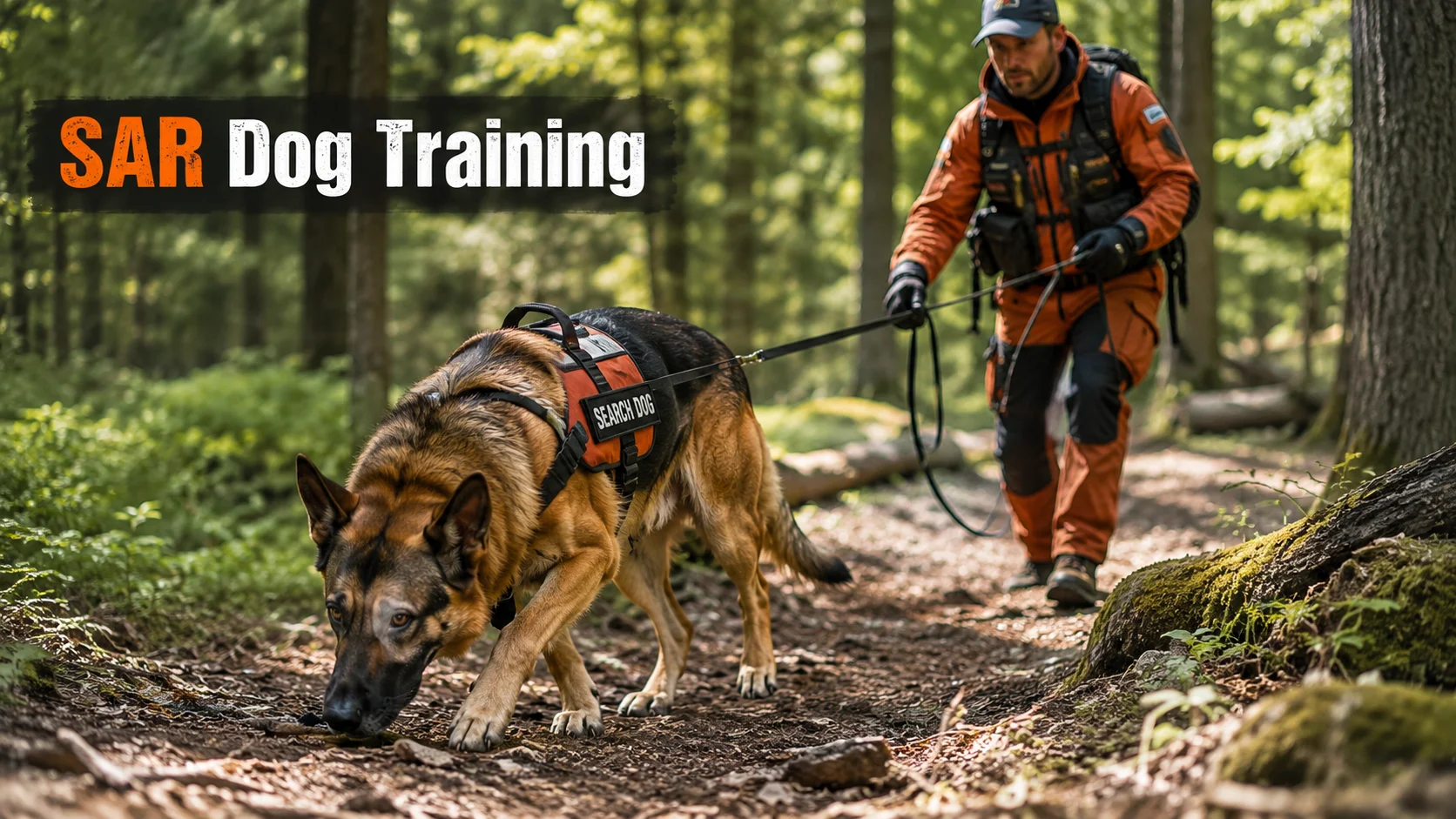
SAR dog training teaches dogs to locate missing people using scent, obedience, focus, and problem-solving skills. Successful search and rescue dogs are trained through positive reinforcement, reward-based training, consistency, and gradual exposure to real-world search environments. Most dogs require months or even years of structured practice to become reliable in search work.
Introduction
SAR dog training is one of the most challenging and rewarding forms of canine training. Search and rescue dogs help locate missing people in wilderness areas, disaster zones, urban environments, and other difficult situations where human search efforts may be limited.
Unlike basic obedience training, SAR work requires a dog to combine scent detection, confidence, recall, problem-solving abilities, physical endurance, and the ability to work around distractions. Not every dog will become a certified search and rescue dog, but many dogs can learn the foundational skills involved in search work.
Whether you are exploring search and rescue as a serious goal or simply want advanced scent training activities for your dog, understanding the proper training process is essential. This guide explains what SAR dog training involves, how to get started, common mistakes, realistic expectations, and when professional guidance may be necessary.
What SAR Dog Training Means
SAR stands for Search and Rescue.
SAR dog training focuses on teaching dogs to locate people through scent and indicate their findings to a handler. These dogs may work in various environments, including:
- Forests and wilderness areas
- Parks and hiking trails
- Urban settings
- Disaster sites
- Water search operations
- Avalanche areas
Search and rescue dogs rely heavily on their natural scenting abilities. Training helps develop those instincts into a reliable skill that can be used under challenging conditions.
Key abilities developed through SAR training include:
- Strong recall
- Reliable obedience
- Focus around distractions
- Scent discrimination
- Confidence in unfamiliar environments
- Physical endurance
- Independent problem-solving
- Handler communication
Many breeds excel in SAR work, although success depends more on temperament and drive than breed alone.
Common SAR breeds include:
- German Shepherds
- Labrador Retrievers
- Golden Retrievers
- Belgian Malinois
- Border Collies
- Australian Shepherds
These breeds are often considered among the easiest dogs to train because of their intelligence, motivation, and willingness to work with handlers.
When To Use SAR Dog Training
SAR dog training is appropriate when a dog demonstrates:
- High food motivation
- Strong toy drive
- Curiosity
- Confidence
- Good physical health
- Ability to focus during training sessions
- Interest in using their nose
Many owners begin SAR foundation exercises simply to provide mental stimulation.
SAR-style activities can help:
- Reduce boredom
- Build confidence
- Improve obedience
- Strengthen recall
- Increase handler engagement
- Provide healthy mental exercise
Dogs that enjoy scent games often benefit greatly from SAR-inspired activities even if they never work professionally.
Essential Skills Before Starting SAR Dog Training
Before beginning advanced search work, dogs should have a solid foundation in:
Recall
A reliable “come” command is critical.
If your dog struggles with recall, spend time practicing how to train a dog to come before advancing to SAR exercises.
Basic Obedience
Important commands include:
- Sit
- Down
- Stay
- Come
- Leave it
- Heel
- Place
Socialization
Dogs should be comfortable around:
- People
- Dogs
- New environments
- Vehicles
- Unusual surfaces
- Noises
Impulse Control
A SAR dog must remain focused despite distractions.
Exercises such as waiting for food, remaining in position, and calm leash manners help build impulse control.
Equipment Needed for SAR Dog Training
Basic supplies include:
- Flat collar or harness
- Long training leash
- High-value treats
- Favorite toy rewards
- Clicker or marker word
- Water and portable bowl
- Training vest if desired
- Tracking line
Dog training toys can also be useful for motivating dogs that enjoy play rewards.
Choose rewards your dog finds highly valuable.
Many SAR handlers alternate between the following:
- Food rewards
- Tug toys
- Ball rewards
- Verbal praise
Step-by-Step Training Method
Step 1: Build Reward Value
Your dog must learn that finding a person leads to something wonderful.
Start by having a familiar person hold treats or a favorite toy.
When the dog reaches the helper, immediate rewards follow.
Repeat until the dog eagerly searches for the hidden person.
Step 2: Introduce Simple Hides
Begin in a familiar area.
The helper should hide in an obvious location.
Allow the dog to watch initially.
Then release the dog with a search cue.
Examples:
- “Find them!”
- “Search!”
- “Go find!”
Reward generously upon success.
Step 3: Increase Difficulty Gradually
As skills improve:
- Increase hiding distance
- Use natural obstacles
- Add turns and changes in direction
- Hide behind trees or structures
Avoid making searches too difficult too quickly.
Success builds confidence.
Step 4: Develop Alert Behaviors
The dog must communicate when a person is found.
Common alerts include:
- Barking
- Returning to the handler
- Sitting beside the subject
- Bringing a special toy
Choose one alert method and remain consistent.
Step 5: Practice in New Locations
Dogs do not automatically generalize skills.
Train in:
- Parks
- Fields
- Forest trails
- School grounds
- Open spaces
Different environments help build reliability.
Step 6: Add Realistic Distractions
Gradually introduce:
- Other people
- Wildlife scents
- Moving vehicles
- Different weather conditions
This teaches the dog to remain focused on the search task.
Step 7: Increase Search Duration
Over time:
- Expand search areas
- Increase complexity
- Extend working time
Keep sessions positive and end on success whenever possible.
Using Positive Reinforcement Effectively
Positive reinforcement remains the foundation of modern SAR dog training.
Reward behaviors you want repeated.
Key principles include the following:
Timing
Rewards should occur immediately after the desired behavior.
Delayed rewards reduce learning efficiency.
Marker Word
A marker word such as “Yes” helps tell the dog exactly which behavior earned the reward.
Consistency
Everyone involved in training should use the same cues and reward system.
Inconsistent handling slows progress.
Sample Weekly Training Plan
Monday
- Recall practice
- Basic obedience
- Short scent games
Duration: 20-30 minutes
Tuesday
- Hidden person searches
- Reward-based play
Duration: 30 minutes
Wednesday
- Leash manners
- Calm behavior exercises
- Environmental exposure
Duration: 20 minutes
Thursday
- Search drills in a new location
Duration: 30-40 minutes
Friday
- Obedience review
- Impulse control exercises
Duration: 20 minutes
Saturday
- Longer search session
- Advanced scent work
Duration: 45-60 minutes
Sunday
- Light training
- Enrichment activities
- Recovery day
Duration: Flexible
Common Mistakes To Avoid
Moving Too Fast
One of the biggest beginner mistakes is increasing difficulty before the dog fully understands the task.
Build skills gradually.
Poor Reward Selection
Low-value rewards often reduce enthusiasm.
Use rewards your dog truly loves.
Long Training Sessions
Dogs learn best through short, focused sessions.
Several short sessions are often better than one long session.
Ignoring Recall Training
Even highly motivated SAR dogs need excellent recall.
Never assume search drive replaces obedience.
Repeating Commands
Giving commands repeatedly teaches dogs to ignore the first cue.
Give a cue once and help the dog succeed.
Training Only in One Location
Dogs must learn to work in many environments.
Practice in different settings regularly.
Inconsistent Reward Timing
Late rewards create confusion.
Mark desired behaviors immediately.
Training an Anxious Dog for SAR Foundations
Some dogs show anxiety in new environments.
Training an anxious dog requires patience and gradual exposure.
Focus on:
- Confidence-building games
- Easy success opportunities
- Predictable routines
- Positive experiences
- Low-pressure environments
Avoid forcing fearful dogs into challenging situations.
If anxiety suddenly develops or worsens, consult a veterinarian.
Dog Training Games That Support SAR Skills
Many dog training games help build search and rescue foundations.
Examples include:
Find the Treat
Hide treats around a room and encourage scent searching.
Find the Person
Family members hide while the dog searches.
Box Search Game
Place treats in one of several boxes.
Allow the dog to locate the correct box.
Hidden Toy Search
Hide favorite toys around the yard.
These games strengthen scenting ability while keeping training fun.
Dog Training for Prey Drive Considerations
Some working breeds have strong prey drive.
While prey drive can increase motivation, it can also create distractions.
Focus on:
- Reliable recall
- Impulse control
- Engagement with the handler
- Reward-based redirection
Never allow chasing wildlife during SAR practice.
Strong obedience helps maintain safety.
Signs Your Dog Is Making Progress
Positive indicators include:
- Faster searches
- Increased confidence
- Better focus
- Stronger recall
- Consistent alert behavior
- Reduced distraction sensitivity
- Greater enthusiasm for training
Progress is rarely perfectly linear.
Some days will be better than others.
When To Ask A Professional Trainer
Professional guidance is strongly recommended for serious SAR goals.
Consider working with a qualified trainer if:
- Your dog struggles with recall
- Search motivation remains low
- Anxiety interferes with learning
- Aggression or reactivity is present
- You plan to pursue certification
- You want advanced scent training
A professional trainer can identify weaknesses and help develop a structured training plan.
Safety Note
Search and rescue work can involve physically demanding environments and potentially dangerous situations. Dogs displaying aggression, severe fear, reactivity, or sudden behavior changes should be evaluated by a qualified trainer and, when appropriate, a veterinarian. Always use reward-based training methods and avoid punishment-based approaches that may reduce confidence and working reliability.
Conclusion
SAR dog training combines obedience, scent work, focus, confidence, and teamwork between dog and handler. Building these skills takes time, patience, consistency, and reward-based training. Start with strong foundations, progress gradually, and celebrate small successes along the way. Whether your goal is recreational scent work or professional search and rescue preparation, a structured training plan can help your dog develop reliable search skills while strengthening your partnership.
FAQs
1. How long does SAR dog training take?
Most dogs require many months of consistent practice, and professional search and rescue certification often takes one to three years depending on the program and the dog.
2. What breeds are best for SAR dog training?
German Shepherds, Labrador Retrievers, Golden Retrievers, Belgian Malinois, Border Collies, and Australian Shepherds are commonly used, but many motivated dogs can learn SAR skills.
3. Can older dogs learn SAR training?
Yes. Mature dog training can include scent work and search exercises, although younger dogs may have greater physical endurance for advanced SAR tasks.
4. Is SAR dog training suitable for pet dogs?
Absolutely. Many owners use SAR-style scent games for enrichment, confidence building, and mental stimulation without pursuing certification.
5. What rewards work best in SAR dog training?
High-value treats, favorite toys, tug games, and enthusiastic praise often work well. The best reward depends on the individual dog’s motivation.
6. How often should I practice SAR training?
Most dogs benefit from several short sessions per week combined with regular obedience practice and scent games.
7. Can anxious dogs do SAR work?
Some anxious dogs can improve through gradual confidence-building exercises, but severe fear or stress may limit advanced search work. Professional guidance may help.
8. Do SAR dogs need perfect obedience?
While perfection is unrealistic, strong recall, reliable commands, and good impulse control are essential for safe and effective search work.