Quick Answer
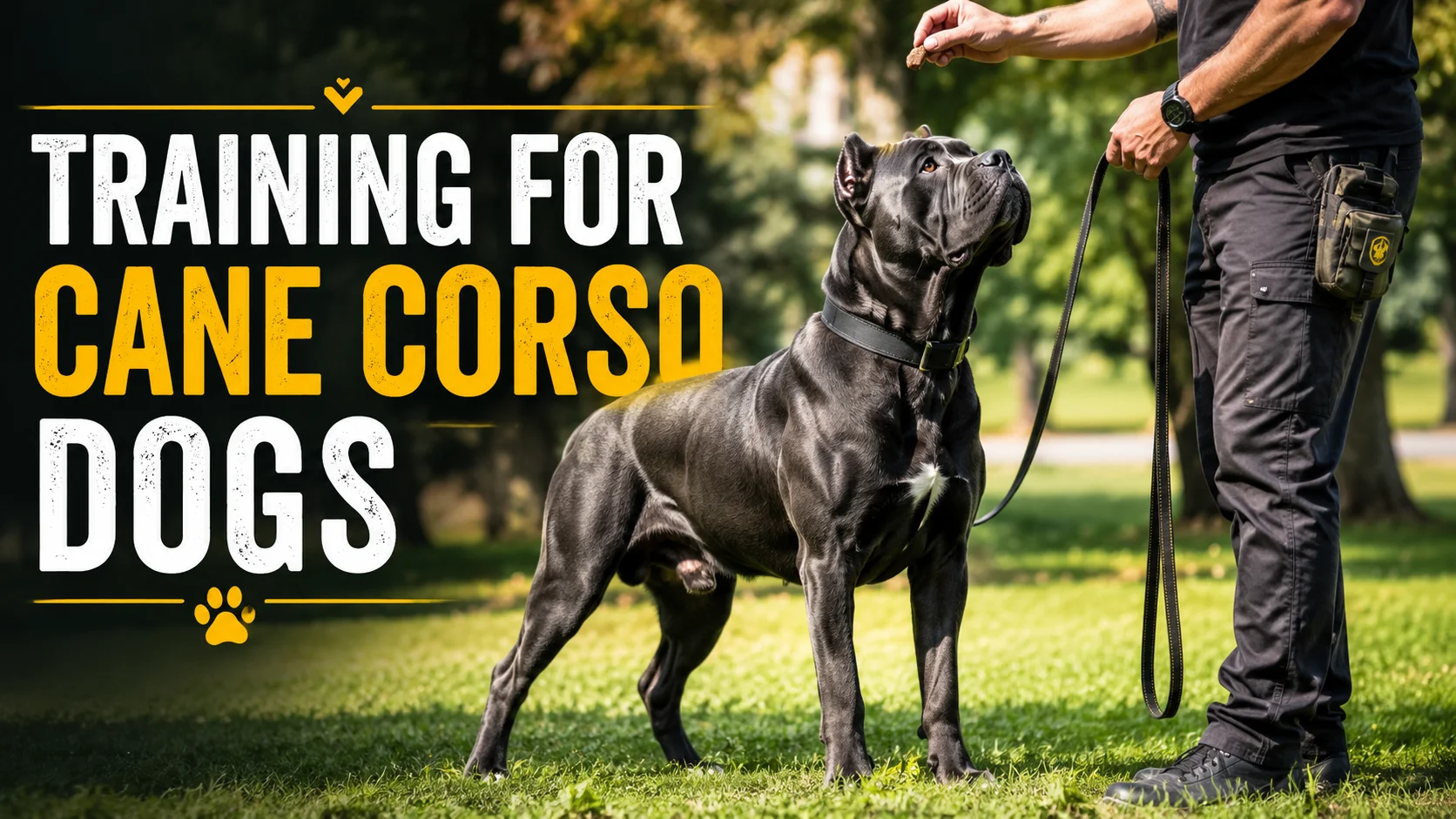
Dog training for Cane Corso requires structure, consistency, and an early obedience foundation due to the breed’s strong guarding instincts, high intelligence, and powerful build. Cane Corso dogs respond best to reward-based training, clear leadership without harsh methods, and daily mental and physical exercise. Early socialization, impulse control, and calm behavior training are essential for a balanced adult dog.
Introduction
Dog training for Cane Corso-based dogs is not the same as training a typical family dog. This breed is intelligent, powerful, and naturally protective, which means training must focus on structure, clarity, and consistency from an early age.
Many owners are drawn to the Cane Corso for its loyalty and guarding ability, but without proper training, those same traits can turn into unwanted behavior problems such as overprotectiveness, leash reactivity, or difficulty around strangers.
-based-basedThis guide explains how to shape a stable, well-behaved Cane Corso using practical, reward-based training methods. You will also learn how temperament, energy level, and working drive affect learning, plus how to build a daily routine that supports calm behavior and obedience.
Whether you are raising a puppy or working with an adult dog, the right approach makes a major difference in long-term behavior and control.
Why Dog Training for Cane Corso Is Different
Dog training for Cane Corso requires a different mindset compared to many companion breeds because this is a working guardian dog with strong instincts.
Key differences include the following:
- Strong territorial behavior
- Natural guarding instincts
- High physical strength
- Fast learning ability
- Independent thinking
- Low tolerance for inconsistent handling
Unlike some breeds that naturally aim to please, Cane Corso dogs often need clear structure and consistent expectations.
This does not mean harsh training. In fact, reward-based training works extremely well when applied correctly. The key is timing, consistency, and leadership through calm behavior.
Why this matters:
If training is unclear or inconsistent, the dog may:
- Take control of situations
- Become overly protective
- Ignore commands in stressful environments
- Develop leash reactivity
Early structure prevents these problems from becoming long-term habits.
Breed Temperament And Energy Needs
Understanding temperament is the foundation of effective training.
The Cane Corso is
- Loyal and protective
- Highly intelligent
- Calm when properly exercised
- Strong-willed
- Naturally alert to strangers
Energy level
Despite their calm indoor behavior, Cane Corsos need the following:
- Daily structured exercise
- Mental stimulation
- Training sessions that challenge thinking
Without this balance, they may develop the following:
- Destructive behavior
- Excessive guarding
- Frustration-based reactivity
Working drive
This breed thrives when given a job such as the following:
- Obedience training
- Scent work
- Controlled guarding tasks
- Structured walks
Dogs like Belgian Malinois, Border Collies, and Australian Cattle Dogs share similar working intensity, although Cane Corsos tend to be more calm but equally strong-minded.
Core Commands To Teach First
In dog training for Cane Corso, early obedience is essential. These commands form the foundation for safety and control.
1. Name recognition
Your dog should respond immediately when called.
2. Sit and Down
These commands build control and calm behavior.
3. Stay
Critical for impulse control and safety.
4. Recall (Come)
One of the most important skills for large guardian breeds.
5. Leave it
Prevents unwanted chasing or guarding behavior.
6. Heel / Loose leash walking
Essential for handling a strong, large dog safely.
Training tip:
Use short sessions with:
- High-value treats
- Calm voice tone
- Marker words like “Yes”
- Immediate rewards
Exercise And Mental Stimulation
Cane Corso dogs require both physical and mental stimulation to stay balanced.
Physical exercise ideas:
- Structured walks (not just free roaming)
- Controlled fetch
- Hill walking
- Leash training sessions
Mental stimulation ideas:
- Obedience drills
- Puzzle feeders
- Scent games
- Problem-solving tasks
Important balance rule:
A tired Cane Corso is not just physically tired but mentally satisfied.
Without mental work, even a long walk may not prevent boredom-related behavior.
Common Behavior Problems
Even well-bred Cane Corsos can develop behavior issues if training is inconsistent.
1. Overprotectiveness
The dog may guard:
- Home
- Family members
- Doors or windows
2. Leash reactivity
Common triggers include:
- Other dogs
- Strangers
- Sudden movement
3. Pulling on leash
Due to strength and excitement.
4. Stubborn behavior
Not ignoring commands, but testing consistency.
5. Lack of social comfort
Poor early socialization can increase fear or suspicion.
Important safety note:
If aggression, biting, or extreme reactivity appears, consult a professional dog trainer or veterinary behaviorist. Early intervention is safer and more effective than waiting.
Core Training Approach for Cane Corso
Step 1: Build structure
Set rules early:
- No uncontrolled jumping
- No pulling on leash
- Calm behavior before rewards
Step 2: Use reward-based training
Reward desired behavior immediately:
- Treats
- Praise
- Toys
Step 3: Keep sessions short
- 5–10 minutes per session
- 2–3 sessions daily
Step 4: Control environment
Start in low-distraction areas before moving outdoors.
Step 5: Increase difficulty gradually
Add:
- Distance
- Distractions
- Duration
Exercise And Mental Stimulation (Advanced)
Stimulation: ForstimulationFor high-drive breeds like Cane Corso, Border Collie, and Belgian Malinois, mental structure matters as much as physical exercise.
Recommended activities:
- Structured obedience drills
- Controlled tug games
- Scent tracking
- “Place” training (stay on bed/mat)
- Focus exercises
These help build calm control rather than excitement-based behavior.
Sample Training Schedule
A consistent routine is key for stable behavior.
Morning session (10–15 min)
- Sit and stay
- Recall practice
- Calm leash walk
Midday session (10 min)
- Puzzle toy or sniffing game
- Name recognition
Evening session (15–20 min)
- Obedience training
- Heel walking
- Controlled play
Weekly structure:
- 3 days obedience focus
- 2 days leash training focus
- 1-day mental games focus
- 1 rest/recovery day
Common Mistakes To Avoid
1. Inconsistent rules
Mixed signals confuse strong-willed breeds.
2. Lack of socialization
Early exposure is essential for balanced behavior.
3. Too much physical exercise without training
Running alone does not build obedience.
4. Delayed correction timing
Dogs learn through immediate consequences, not delayed reactions.
5. Using punishment-based methods
Fear-based training can increase aggression in guardian breeds.
When To Seek Professional Help
You should consult a professional if:
- Your Cane Corso shows aggression toward people or dogs
- Recall is unreliable in public spaces
- Leash reactivity is worsening
- You feel unsafe handling your dog
- Training progress has stalled
A certified trainer or veterinary behaviorist can create a structured behavior plan tailored to your dog.
Conclusion
Dog training for Cane Corsos is most successful when it combines structure, consistency, and reward-based methods. This breed thrives under clear leadership, daily mental stimulation, and early obedience training. With the right routine, a Cane Corso can become a calm, reliable, and well-balanced companion. Patience and consistency matter more than intensity, and small daily improvements build long-term stability.
FAQs
1. Is dog training for Cane Corso difficult?
It can be challenging for beginners, but with consistency and reward-based training, Cane Corsos learn quickly.
2. When should I start training a Cane Corso?
Training should begin as early as 8 weeks old with simple commands and socialization.
3. Are Cane Corsos good for first-time owners?
They are better suited for experienced owners due to their strength and protective nature.
4. How much exercise does a Cane Corso need?
At least 1–2 hours of combined physical and mental stimulation daily.
5. Can Cane Corsos be aggressive?
They can show protective behavior, so proper training and socialization are essential.
6. What is the best training method for Cane Corso?
Reward-based training with structure, consistency, and clear communication works best.
7. Do Cane Corsos need professional training?
Not always, but professional help is recommended for behavior issues or reactivity.
8. Can Cane Corsos live with other pets?
Yes, if socialized early and trained properly, though supervision is important.