Quick Note
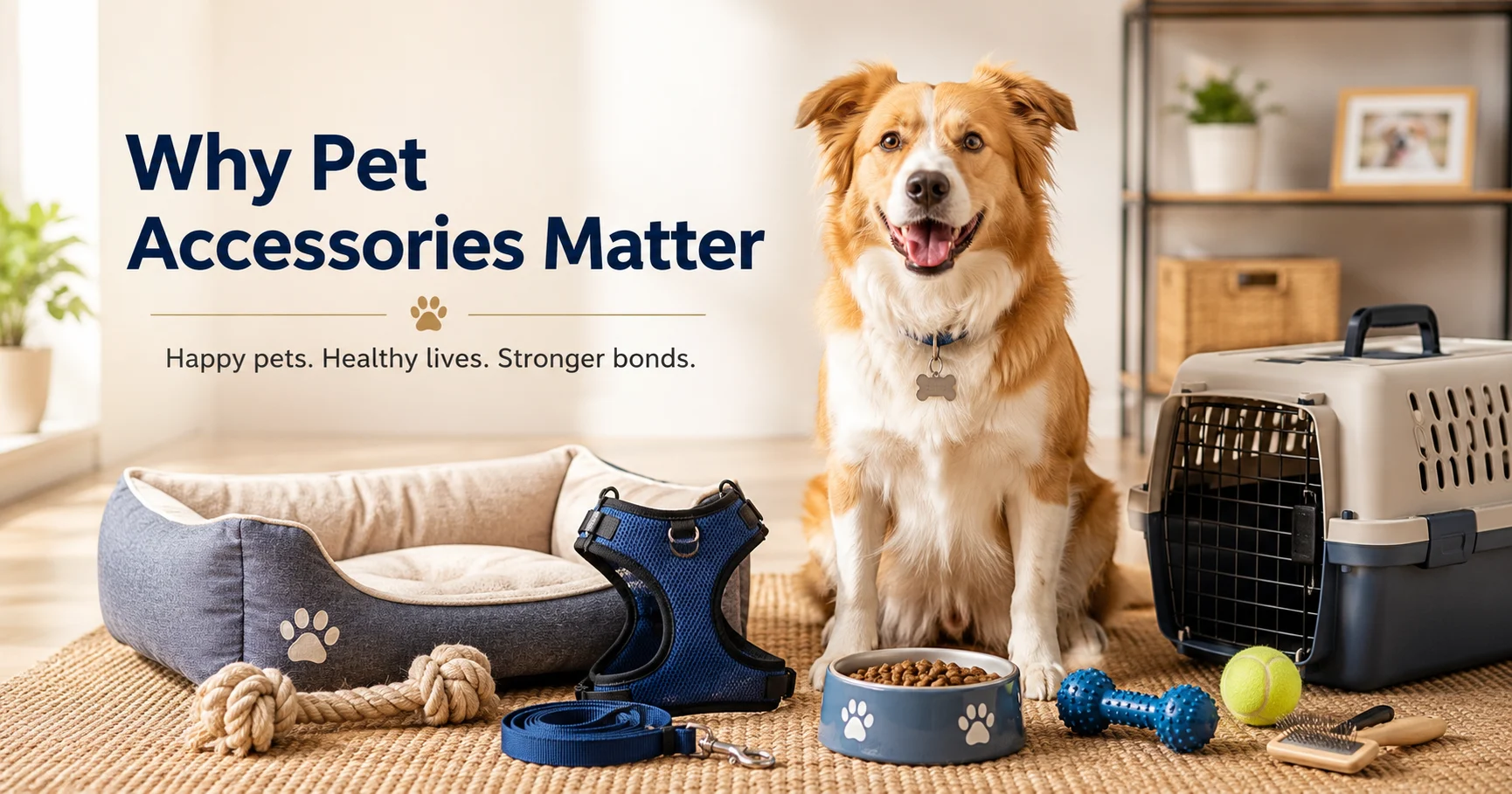
Pet accessories help keep your dog safe, comfortable, clean, and easier to manage every day. Start with the basics first, such as a properly fitted collar, leash, food bowls, bed, grooming tools, and safe chew toys. Choose accessories based on your dog’s size, age, energy level, and daily routine. Always focus on comfort, durability, safety, and easy cleaning instead of buying items only because they look attractive.
Introduction
Many dog owners buy pet accessories without knowing which products truly help their dogs. Some people waste money on items their dog never uses. Others accidentally choose unsafe collars, poor quality toys, uncomfortable beds, or feeding bowls that create daily problems instead of solving them.
The truth is that the right pet accessories can improve your dog’s health, safety, behavior, comfort, and daily routine. A comfortable harness can make walks easier. A durable chew toy can reduce destructive chewing. A good grooming brush can prevent painful mats and skin irritation. Even simple accessories like food storage containers or slow feeder bowls can help with digestion and cleanliness.
Dogs depend on their owners for almost everything. They cannot choose products for themselves. That is why dog owners need to understand why pet accessories matter and how to select safe and practical options.
In this guide, you will learn why pet accessories are important, which accessories every dog owner should consider, how to choose safe products, common buying mistakes, safety tips, and how accessories support training, grooming, feeding, travel, and behavior management.
Why Pet Accessories Matter for Dogs
Pet accessories are not only about style or convenience. Many accessories directly support your dog’s physical and mental well-being.
Here are some important reasons why pet accessories matter:
- Improve safety during walks and travel
- Support healthy eating habits
- Help with grooming and hygiene
- Reduce boredom and destructive behavior
- Create comfort and better sleep
- Make training easier
- Help owners manage daily routines
- Protect dogs from weather conditions
- Support puppies, adult dogs, and senior dogs differently
A dog without the right accessories may feel stressed, uncomfortable, bored, or unsafe. Simple tools can prevent many common problems before they become serious.
Essential Pet Accessories Every Dog Owner Should Have
Different dogs need different products, but some accessories help almost every dog owner.
| Accessory | Why It Helps |
|---|---|
| Collar with ID tag | Helps identify your dog if lost |
| Harness | Reduces neck pressure during walks |
| Leash | Keeps walks safe and controlled |
| Food and water bowls | Supports healthy feeding |
| Dog bed | Gives comfort and proper rest |
| Crate or playpen | Creates a safe resting space |
| Grooming brush | Removes loose fur and dirt |
| Nail clippers | Prevents painful overgrown nails |
| Chew toys | Reduces boredom and chewing problems |
| Poop bags | Keeps public areas clean |
| Slow feeder bowl | Helps dogs that eat too fast |
| Travel carrier | Improves travel safety |
How Pet Accessories Improve Dog Safety
Safety is one of the biggest reasons why you need pet accessories for your pet.
Identification Accessories Help Lost Dogs Return Home
Dogs sometimes escape through open gates, loud noise fear, or accidental leash slips. A collar with an ID tag helps people identify your dog quickly.
Your dog’s ID tag should include:
- Dog’s name
- Your phone number
- Optional secondary contact number
Microchipping also helps, but visible tags allow faster contact.
Harnesses and Leashes Prevent Injuries
Many dogs pull hard during walks. Thin collars can put pressure on the throat and neck. A properly fitted harness spreads pressure across the chest and shoulders.
Good walking accessories help prevent the following:
- Neck strain
- Escape accidents
- Traffic dangers
- Loss of control
- Pulling injuries
Travel Accessories Keep Dogs Secure
Loose dogs inside vehicles can become dangerous during sudden stops. Travel harnesses, carriers, and seat belt attachments help keep dogs secure.
Never allow dogs to ride with their head hanging out of windows. Dirt, debris, and sudden movements can cause injuries.
How Pet Accessories Support Dog Comfort
Dogs need comfort just like humans do. Comfortable accessories improve sleep, relaxation, and daily happiness.
Dog Beds Improve Sleep and Joint Support
Hard floors can create discomfort, especially for puppies, large breeds, and senior dogs.
A quality dog bed helps with:
- Joint support
- Better sleep
- Warmth
- Muscle comfort
- Anxiety reduction
Older dogs often benefit from orthopedic beds with extra cushioning.
Weather Accessories Protect Dogs Outdoors
Some dogs struggle with cold weather, rain, or hot surfaces.
Useful weather accessories include:
- Cooling mats
- Raincoats
- Paw protection boots
- Winter jackets
- Shade covers
Short-haired dogs and small breeds often feel cold faster than larger dogs.
Pet Accessories Help with Training and Behavior
Many behavior problems improve when owners use the right tools consistently.
Training Accessories Make Learning Easier
Training becomes more organized with simple accessories.
| Training Supply | Why It Helps |
|---|---|
| Treat pouch | Gives fast rewards during training |
| Clicker | Marks good behavior clearly |
| Long leash | Helps recall practice safely |
| Crate | Supports house training |
| Puzzle toys | Reduce boredom |
| Chew toys | Redirect chewing behavior |
Reward-based training works best for most dogs. Avoid harsh punishment tools or fear-based methods.
Toys Reduce Destructive Behavior
Dogs often chew furniture, shoes, or household items because they feel bored, stressed, or under-exercised.
Safe toys help dogs:
- Release energy
- Stay mentally active
- Reduce anxiety
- Stay busy during alone time
- Practice natural chewing behavior
Rotate toys regularly so dogs stay interested.
Puzzle Accessories Support Mental Exercise
Mental exercise matters just as much as physical activity.
Puzzle feeders and treat games can help with:
- Fast eating
- Boredom
- Separation stress
- Hyperactivity
- Indoor enrichment
High-energy dogs usually need more mental stimulation.
How Grooming Accessories Help Your Dog
Good grooming products support healthy skin, coat care, and hygiene.
Brushing Tools Prevent Coat Problems
Different coat types need different brushes.
| Coat Type | Helpful Grooming Tool |
|---|---|
| Short coat | Rubber brush |
| Long coat | Slicker brush |
| Thick double coat | Undercoat rake |
| Curly coat | Detangling comb |
Regular brushing helps remove:
- Loose fur
- Dirt
- Mats
- Dead hair
- Allergens
Nail Care Accessories Prevent Pain
Overgrown nails can make walking uncomfortable.
Signs nails need trimming:
- Clicking sounds on hard floors
- Difficulty walking
- Nail curling
- Paw discomfort
Trim nails carefully and slowly. If you feel unsure, ask a groomer or veterinarian for help.
Bathing Accessories Improve Skin Care
Useful bathing accessories include:
- Dog shampoo
- Absorbent towels
- Non-slip bath mat
- Ear cleaning supplies
Never use harsh human shampoos on dogs unless a veterinarian approves them.
Feeding Accessories Support Better Digestion
Many owners overlook how feeding tools affect digestion and eating habits.
Slow Feeders Help Dogs Eat Safely
Some dogs eat too fast and swallow large amounts of air.
Fast eating can cause:
- Vomiting
- Choking risk
- Bloating
- Digestive upset
Slow feeder bowls encourage calmer eating habits.
Food Storage Containers Keep Food Fresh
Good storage protects dog food from the following:
- Moisture
- Pests
- Contamination
- Spoilage
Always seal food properly after opening.
Elevated Bowls May Help Some Dogs
Some large or senior dogs feel more comfortable eating from slightly elevated bowls.
However, bowl height should fit your dog naturally. Extremely high bowls may not suit every dog.
Choosing the Right Pet Accessories
Not every accessory fits every dog.
Choose Accessories Based on Dog Size
A small puppy should not use heavy accessories made for large breeds.
Always check:
- Weight range
- Chest measurements
- Neck size
- Product dimensions
Poor sizing can create discomfort or escape risks.
Focus on Safe Materials
Avoid accessories with:
- Sharp edges
- Weak clips
- Toxic materials
- Loose small parts
- Easily breakable pieces
Choose durable and pet-safe materials whenever possible.
Consider Your Dog’s Personality
Calm dogs and high-energy dogs often need different products.
For example:
- Active dogs may need stronger harnesses
- Heavy chewers need durable toys
- Nervous dogs may prefer calming beds
- Puppies need softer chew toys
Common Mistakes People Make When Buying Pet Accessories
Many owners buy accessories based only on appearance or price.
Buying the Wrong Size
A collar or harness that feels too loose may allow escapes. Tight accessories can cause rubbing or breathing discomfort.
Always measure carefully before buying.
Choosing Cheap Unsafe Toys
Very cheap toys may break easily and create choking hazards.
Watch for:
- Broken pieces
- Loose stuffing
- Sharp plastic
- Damaged squeakers
Replace damaged toys quickly.
Ignoring Cleaning Needs
Dirty accessories can collect bacteria, saliva, dirt, and odor.
Wash regularly:
- Beds
- Bowls
- Harnesses
- Toys
- Blankets
Buying Too Many Accessories at Once
Dogs sometimes feel overwhelmed by too many new products.
Introduce items slowly and observe how your dog reacts.
Pet Accessories for Puppies
Puppies need special accessories because they grow quickly and learn constantly.
Best Accessories for Young Puppies
| Puppy Accessory | Why It Helps |
|---|---|
| Puppy crate | Supports house training |
| Soft chew toys | Helps teething |
| Puppy pads | Assists indoor potty training |
| Adjustable harness | Fits growing puppies |
| Small treats | Helps training |
| Puppy brush | Introduces grooming early |
Puppy Teething and Chewing
Puppies naturally chew during teething.
Safe chew toys help reduce:
- Furniture chewing
- Shoe chewing
- Mouth discomfort
- Biting during play
Avoid giving puppies unsafe household objects to chew.
Safe Socialization Accessories
For puppies, useful accessories may include:
- Lightweight leash
- Secure harness
- Portable water bowl
- Puppy carrier for crowded places
Avoid unsafe public dog areas until a veterinarian confirms safe exposure based on vaccination stage.
Pet Accessories for Senior Dogs
Older dogs often develop different needs over time.
Helpful Accessories for Senior Dogs
Senior dogs may benefit from:
- Orthopedic beds
- Non-slip mats
- Elevated feeding bowls
- Support harnesses
- Soft grooming brushes
- Gentle chew toys
Watch for Comfort Changes
A senior dog that suddenly avoids stairs, beds, or walks may feel pain or discomfort.
Ask a veterinarian if you notice:
- Limping
- Sudden weakness
- Major behavior changes
- Loss of balance
- Trouble standing
Indoor vs Outdoor Accessory Needs
Lifestyle also affects which accessories matter most.
Indoor Dogs
Indoor dogs may benefit more from:
- Puzzle toys
- Beds
- Indoor training tools
- Slow feeders
- Grooming accessories
Outdoor and Active Dogs
Outdoor dogs may need the following:
- Durable harnesses
- Reflective gear
- Travel water bottles
- Paw protection
- Weather-resistant accessories
Safety Tips Every Dog Owner Should Know
Safety matters more than appearance.
Safety Checklist for Dog Accessories
| Safety Check | Why It Matters |
|---|---|
| Proper fit | Prevents injury and escapes |
| Non-toxic materials | Protects health |
| Strong stitching | Improves durability |
| Easy cleaning | Reduces bacteria |
| No sharp parts | Prevents injury |
| Age-appropriate design | Improves safety |
Supervise New Accessories
Always monitor dogs when introducing the following:
- Chew toys
- Puzzle feeders
- New collars
- Crates
- Clothing
Some dogs may chew or destroy accessories unexpectedly.
Remove Damaged Accessories
Throw away damaged items quickly if you notice the following:
- Loose parts
- Tears
- Cracks
- Exposed stuffing
- Broken buckles
Do’s and Don’ts When Buying Pet Accessories
| Do | Don’t |
|---|---|
| Measure your dog carefully | Guess the size |
| Choose durable materials | Buy weak products |
| Check comfort and fit | Prioritize looks only |
| Wash accessories regularly | Ignore hygiene |
| Supervise new toys | Leave unsafe toys unattended |
| Replace damaged items | Keep broken accessories |
Troubleshooting Common Pet Accessory Problems
| Problem | Likely Reason | What To Do |
|---|---|---|
| The dog refuses the harness. | Poor fit or fear | Introduce slowly with treats |
| Dogs destroy toys quickly | Strong chewing habit | Use heavy-duty chew toys |
| The dog avoids the bed. | Wrong size or texture | Try softer or larger bed |
| The collar causes rubbing | Too tight or rough material | Adjust fit or change the material. |
| The dog eats too fast | Excitement or habit | Use slow feeder bowl |
| Dog pulls hard on walks | Lack of leash training | Practice reward-based walking |
What You Should Avoid
Some accessories can create risks if used incorrectly.
Avoid:
- Extremely tight collars
- Unsafe retractable leashes in crowded areas
- Cheap breakable toys
- Small choking hazard accessories
- Poorly fitted harnesses
- Harsh training equipment without professional guidance
Never leave dogs unattended with unsafe chew items.
When to Ask a Veterinarian or Trainer
Sometimes accessories alone cannot solve the problem.
Ask a veterinarian if your dog shows:
- Sudden aggression
- Pain signs
- Sudden fear
- Skin irritation from accessories
- Trouble walking
- Loss of appetite
Ask a professional trainer if:
- Pulling becomes severe
- Fear reactions increase
- Destructive behavior continues
- Aggression appears
- Training progress stops completely
Conclusion
Understanding why you need pet accessories for your pet helps you make smarter choices for your dog’s safety, comfort, health, and happiness. The right accessories support daily care, training, feeding, grooming, travel, and behavior management. Focus on quality, proper fit, safety, and your dog’s specific needs instead of buying products only for appearance. With the right accessories and consistent care, you can create a safer and more comfortable life for your dog every day.
FAQs
Why do you need pet accessories for your pet?
Pet accessories help improve safety, comfort, hygiene, feeding, training, and daily care. The right accessories also reduce stress and behavior problems.
What are the most important pet accessories for dogs?
Essential dog accessories include a collar, ID tag, leash, harness, food bowls, dog bed, grooming tools, and safe chew toys.
How do I choose safe dog accessories?
Choose products with proper sizing, durable materials, strong stitching, and no sharp or loose parts. Always supervise new items.
Are expensive pet accessories always better?
Not always. Some affordable products work well if they are safe, durable, and comfortable for your dog.
Why does my dog destroy toys so quickly?
Many dogs destroy toys because they feel bored, anxious, or have strong chewing habits. Choose toys designed for heavy chewers.
Should puppies use different accessories than adult dogs?
Yes. Puppies need lightweight, adjustable, and softer accessories that match their growing bodies and teething needs.
Can pet accessories improve dog behavior?
Yes. Puzzle toys, chew toys, training tools, and proper walking equipment can reduce boredom, stress, and destructive behavior.
How often should I clean dog accessories?
Wash bowls daily and clean beds, harnesses, toys, and blankets regularly to reduce bacteria, dirt, and odor buildup.
What should I do if my dog hates wearing a harness?
Introduce the harness slowly using treats and praise. Allow your dog to sniff and wear it indoors briefly before walks.
Why do you need pet accessories for your pet during travel?
Travel accessories improve safety and comfort during car rides, walks, and outdoor trips. They help prevent injuries and reduce stress.