Quick Answer
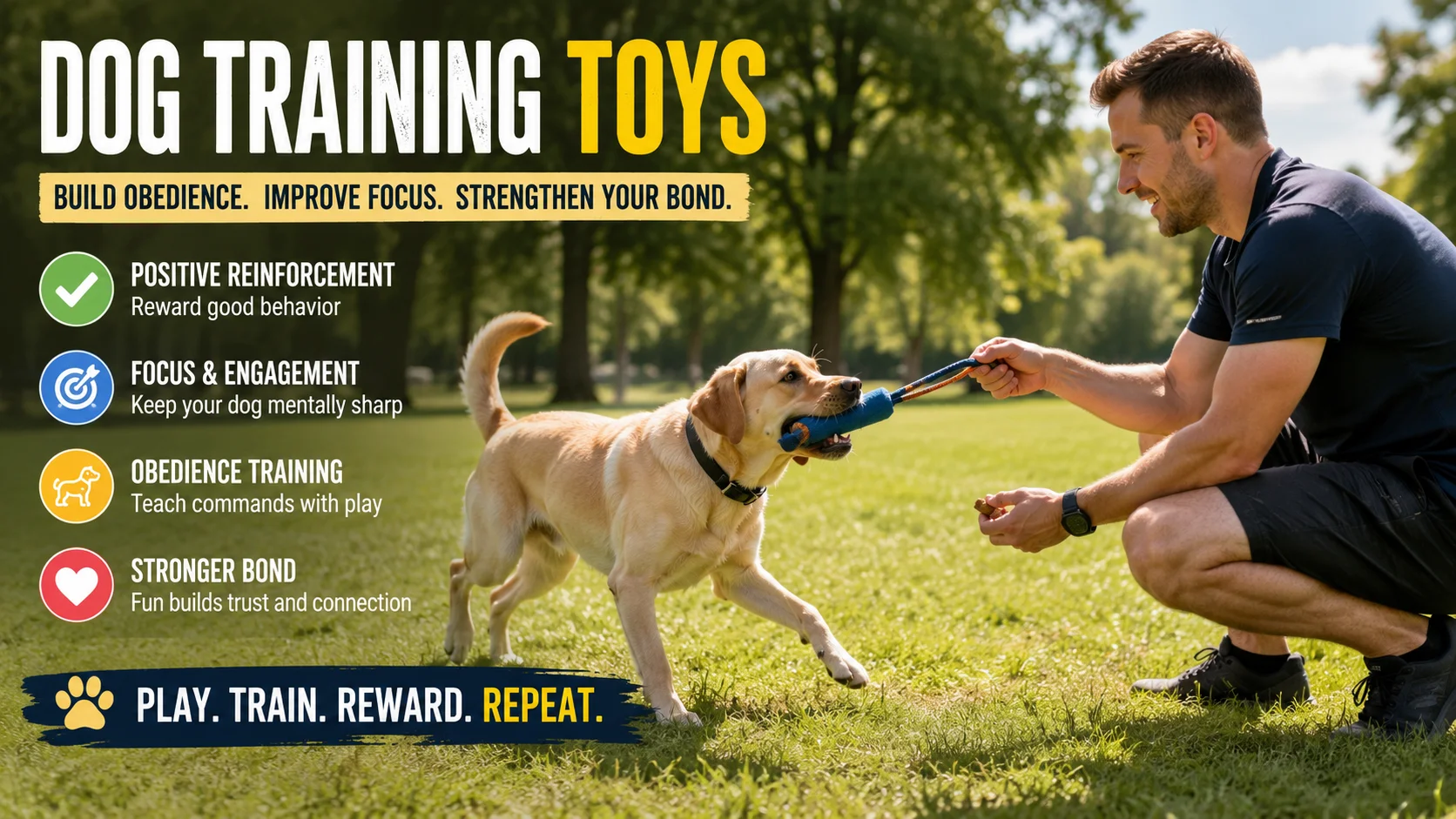
Dog training toys are tools used to motivate, reward, and engage dogs during training sessions. Many dogs find toys as rewarding as treats, making them useful for teaching obedience, recall, leash manners, impulse control, and focus. When used correctly, dog training toys can make learning more enjoyable while strengthening the bond between dog and owner.
Introduction
Many dog owners automatically reach for treats when training their dogs. While food rewards are highly effective, they are not the only option. For many dogs, especially energetic breeds that love to chase, tug, retrieve, or play, toys can be incredibly powerful training tools.
Dog training toys help create enthusiasm during training sessions while providing mental and physical stimulation. They can improve focus, encourage engagement, and make learning feel more like a game than a task. Whether you are teaching a puppy basic obedience, improving recall, working on calm behavior, or introducing impulse control exercises, the right toy can become one of your most valuable training resources.
The key is understanding how and when to use toys effectively. Not every toy works for every dog, and timing matters just as much as the reward itself. This guide explains how dog training toys work, when to use them, and how to build a successful reward-based training plan around them.
What Dog Training Toys Means
Dog training toys are toys intentionally used as rewards, motivators, or learning tools during training sessions.
Unlike ordinary toys that are always available, training toys often have a specific purpose. They help reinforce desired behaviors and keep dogs engaged during learning activities.
Common examples include:
- Tug toys
- Ball toys
- Fetch toys
- Rope toys
- Interactive toys
- Reward dispensing toys
- Soft motivational toys
- Training bumpers for retrieving breeds
A dog that becomes excited about a favorite toy may work just as eagerly for a game of tug or fetch as another dog works for treats.
Training toys are not replacements for positive reinforcement. Instead, they become part of a reward-based training system.
Benefits of Dog Training With Toys
Many dogs naturally enjoy play. When training incorporates play, dogs often become more engaged and motivated.
Increased Motivation
Some dogs value toys more than food.
Breeds with strong prey drive, retrieving instincts, or high energy levels often respond exceptionally well to toy rewards.
Examples include:
- Labrador Retrievers
- Golden Retrievers
- Border Collies
- German Shepherds
- Belgian Malinois
- Australian Shepherds
Better Focus
A favorite toy can capture attention quickly.
When dogs know play is part of training, they are often more willing to stay engaged during practice sessions.
Stronger Relationship
Interactive play builds trust and cooperation.
A dog that enjoys training sessions is often more eager to work with its owner.
Physical and Mental Exercise
Training toys combine learning with activity.
This can be especially helpful for energetic dogs that need both physical movement and mental stimulation.
Useful Around Distractions
Toy rewards can sometimes compete more effectively with environmental distractions than treats alone.
When To Use Dog Training Toys
Training toys are not necessary for every situation, but they can be extremely useful in specific circumstances.
Teaching Recall
Recall training often improves when coming back to the owner leads to a favorite game.
Many dogs find a quick game of tug or fetch highly rewarding.
Building Engagement
Dogs that appear distracted during training may become more attentive when toys are incorporated.
Rewarding Fast Responses
Toy rewards can create excitement and speed.
This is particularly useful when teaching:
- Recall
- Heeling
- Focus exercises
- Agility foundations
- Sport dog skills
Reducing Training Boredom
Repeated obedience drills can become repetitive.
Adding short play sessions keeps training fresh and enjoyable.
Encouraging Confidence
Some shy dogs gain confidence through structured play.
Interactive toy games can help create positive experiences and strengthen communication.
Choosing the Right Dog Toys for Training
Not all training toys are equally effective.
The best choice depends on your dog’s personality, breed, age, and preferences.
Tug Toys
Excellent for:
- Engagement
- Recall rewards
- Obedience training
- Focus exercises
Many trainers prefer tug toys because they create interaction between dog and handler.
Ball Toys
Ideal for:
- Retrievers
- Fetch lovers
- Outdoor training
Ball rewards can motivate dogs that enjoy chasing moving objects.
Soft Plush Toys
Helpful for:
- Gentle dogs
- Puppies
- Dogs that prefer carrying objects
Some dogs become highly attached to specific soft toys.
Reward Dispensing Toys
Useful for:
- Mental stimulation
- Independent enrichment
- Problem solving
These toys can supplement training sessions and reduce boredom.
Rope Toys
Useful for:
- Tug games
- Engagement exercises
- Interactive rewards
Always supervise play to prevent excessive chewing and ingestion of fibers.
Positive Reinforcement and Toy Rewards
Positive reinforcement means rewarding behaviors you want to see again.
Rewards can include:
- Treats
- Praise
- Toys
- Play
- Access to enjoyable activities
The reward must be something the dog genuinely values.
For some dogs:
Sit → Treat
For others:
Sit → Tug Game
Both are forms of positive reinforcement.
The goal is not to force behavior. The goal is to make desired behavior rewarding enough that the dog chooses to repeat it.
Understanding Timing
Timing is one of the most important parts of successful training.
The reward should happen immediately after the desired behavior.
For example:
- Dog sits.
- A marker word (“Yes!”) is given.
- Tug game begins.
This sequence helps the dog understand exactly which behavior earned the reward.
Using a Marker Word
A marker word acts as a bridge between behavior and reward.
Common marker words include:
- Yes
- Good
- Nice
The marker should always predict something positive.
This improves communication and speeds up learning.
Step-by-Step Training Method Using Dog Training Toys
Many owners accidentally create excitement without teaching clear behaviors.
A structured approach produces better results.
Step 1: Discover What Motivates Your Dog
Test different toys.
Observe which toys create the strongest enthusiasm.
Ask yourself:
- Does my dog chase?
- Does my dog tug?
- Does my dog retrieve?
- Does my dog carry toys?
Identify the toy your dog values most.
Step 2: Build Value for the Toy
Keep the toy special.
Avoid leaving training toys available all day.
Short, exciting play sessions increase motivation.
Step 3: Introduce a Marker Word
Choose a simple marker word.
Examples:
- Yes
- Good
Practice:
- Say the marker.
- Immediately start a game.
- Repeat several times.
Soon the marker predicts fun and rewards.
Step 4: Reward Simple Behaviors
Start with easy commands.
Examples:
- Sit
- Down
- Touch
- Eye contact
Mark the behavior and reward with play.
This helps dogs understand the learning process while building enthusiasm.
Step 5: Keep Sessions Short
Most dogs learn best with brief sessions.
Aim for:
- 3 to 10 minutes
- Multiple sessions daily
- High success rates
End while your dog still wants more.
Step 6: Add Movement and Distractions
Once your dog reliably performs behaviors indoors, gradually introduce more challenging environments.
Start with:
- Backyard training
- Quiet parks
- Low-distraction sidewalks
Then slowly increase difficulty.
For example:
- Ask for a seat.
- Wait for compliance.
- Mark the behavior.
- Reward with a short tug game.
If your dog struggles, reduce distractions and practice at an easier level before progressing.
Step 7: Alternate Between Toys and Treats
Many trainers use both food and toy rewards.
Benefits include:
- Increased flexibility
- Better motivation
- Reduced dependency on a single reward type
Example:
- Recall = favorite tug toy
- Calm, settled behavior = food reward
- Eye contact = praise and toy play
This creates a well-rounded training system.
Step 8: Teach an “All Done” Cue
Dogs need clear signals for when play ends.
Use a phrase such as the following:
- All done
- Finished
- That’s it
End the game calmly and put the toy away.
This prevents frustration and helps maintain structure during training sessions.
How to Train a Dog to Put Toys Away
Many owners love the idea of a dog cleaning up its own toys. While it takes practice, this is a realistic trick for many dogs.
Step 1: Teach “Take It”
Present a toy.
When your dog grabs it:
- Mark the behavior.
- Reward immediately.
Practice until your dog reliably picks up toys on cue.
Step 2: Teach “Hold”
Encourage your dog to hold the toy for a few seconds before rewarding.
Gradually increase duration.
Step 3: Introduce a Toy Box
Place a toy box or basket nearby.
Ask your dog to hold the toy while standing near the container.
Step 4: Reward Any Movement Toward the Basket
At first, reward:
- Looking at the basket
- Moving toward it
- Standing beside it
Break the behavior into small steps.
Step 5: Shape the Drop
When the toy falls into the basket:
- Mark immediately.
- Give a high-value reward.
This helps your dog understand the goal.
Step 6: Add a Cue
Once the behavior becomes predictable, add a verbal cue such as the following:
- Clean up
- Put it away
- Toys away
With repetition, many dogs learn to place toys into a basket on command.
Dog Training Games That Build Useful Skills
Training games can improve obedience while keeping sessions fun.
Find It
Hide treats or toys around the house.
Benefits:
- Mental stimulation
- Confidence building
- Scent work development
Recall Chase Game
Run away from your dog while calling them.
Reward generously when they catch up.
Benefits:
- Faster recall
- Increased enthusiasm
- Better engagement
Tug and Release
Play tug briefly.
Then ask for:
- Drop it
- Leave it
Reward compliance by restarting the game.
Benefits:
- Impulse control
- Better listening skills
- Improved toy manners
Toy Search Game
Hide a favorite toy and encourage your dog to find it.
Benefits:
- Problem solving
- Focus
- Mental exercise
Place Training Challenge
Ask your dog to go to a bed or mat before earning access to a toy.
Benefits:
- Calm behavior
- Self-control
- Household manners
Training an Anxious Dog Using Toys
Some anxious dogs benefit greatly from toy-based training.
Play can help build confidence and create positive associations.
However, not every anxious dog is immediately interested in toys.
Start Slowly
Use low-pressure games.
Avoid overwhelming environments.
Allow the dog to engage voluntarily.
Pair Toys With Positive Experiences
Reward calm behavior with:
- Gentle play
- Favorite toys
- Praise
This helps create positive emotional responses.
Watch Body Language
Signs of stress include:
- Lip licking
- Yawning
- Trembling
- Avoidance
- Tail tucked tightly
If stress increases, simplify the training session.
Safety Note
If anxiety is severe, persistent, or suddenly develops, consult a veterinarian and consider working with a qualified professional dog trainer or veterinary behaviorist.
Dog Training for Prey Drive
Prey drive refers to a dog’s natural desire to chase moving objects.
Breeds often associated with stronger prey drive include:
- Border Collies
- Belgian Malinois
- German Shepherds
- Terriers
- Sight hounds
A toy can become a controlled outlet for this instinct.
Using Toys Productively
Instead of suppressing prey drive completely, channel it into training.
Examples:
- Reward recalls with tug
- Use fetch as reinforcement
- Practice impulse control before toy access
Teach Self-Control
Ask for:
- Sit
- Down
- Wait
Before releasing the dog to chase a toy.
This teaches that calm behavior earns rewards.
Avoid Overarousal
If your dog becomes excessively excited:
- Shorten play sessions
- Increase impulse control exercises
- Alternate with calm behaviors
Training should build focus, not chaos.
Sample Weekly Training Plan
Consistency matters more than marathon training sessions.
Monday – Engagement Day
Practice:
- Name recognition
- Eye contact
- Marker word exercises
Duration:
10-15 minutes total.
Tuesday – Obedience Skills
Focus on:
- Sit
- Down
- Stay
Reward with toys and praise.
Wednesday – Recall Training
Practice:
- Come
- Emergency recall
- Recall games
Use a favorite toy as the jackpot reward.
Thursday – Leash Manners
Work on:
- Loose leash walking
- Check-ins
- Calm behavior around distractions
Friday – Toy Games
Practice:
- Tug
- Drop it
- Leave it
- Retrieve
Keep sessions structured.
Saturday – Socialization and Exposure
Visit:
- New walking routes
- Pet-friendly locations
- Quiet outdoor environments
Reward calm responses.
Sunday – Review Day
Review all learned skills.
Keep the session light and enjoyable.
Sample Daily Practice Routine
A simple routine often works best.
Morning
5 minutes
- Sit
- Down
- Eye contact
Afternoon
5-10 minutes
- Recall games
- Toy engagement
Evening
10 minutes
- Leash manners
- Calm, settled behavior
- Impulse control exercises
This schedule is realistic for most households and helps maintain steady progress without overwhelming the dog.
Signs Your Dog Is Making Progress
Positive signs include the following:
- Faster responses to cues
- Better focus around distractions
- Improved recall
- Reduced frustration
- Increased confidence
- More engagement with the owner
- Better impulse control
- Easier transitions between play and calm behavior
Remember that progress is rarely perfectly linear.
Many dogs improve in small steps rather than dramatic leaps.
Conclusion
Dog training toys are powerful tools for building obedience, focus, and calm behavior when used with structure and consistency. They are not just for play but for teaching clear communication between dog and owner. With short daily sessions, proper timing, and reward-based training, dogs learn faster and stay more engaged. Patience and repetition are the real keys to long-term success.
FAQs
1. What are dog training toys used for?
They are used to teach obedience, improve focus, and reinforce good behavior through structured play and rewards.
2. Can dog training toys help with bad behavior?
Yes, they can redirect chewing, jumping, and boredom behaviors when used correctly with consistency.
3. How long should training sessions with toys be?
Most sessions should be 3–10 minutes depending on the dog’s age and attention span.
4. Are dog training toys good for puppies?
Yes, puppies learn very well with toys because they respond strongly to play-based rewards.
5. What is the best toy for recall training?
Fetch toys like balls or soft tugs work best for recall practice.
6. Can anxious dogs use training toys?
Yes, but calm toys like puzzle feeders or chew toys are better than high-energy play.
7. How often should I train my dog with toys?
Daily short sessions work best, ideally 1–2 times per day.
8. Do I need a trainer to use dog training toys?
Not always, but professional help is recommended for aggression, anxiety, or difficult behavior issues.